2027 Nigeria Presidential Election: Who Holds the Strongest Chances of Winning?????????
By Moses Chibuike Ezechukwu As political realignments gather momentum ahead of Nigeria’s 2027 presidential election, the race is already generating intense debate across the country. While no candidate can be declared the definitive favourite at this stage, current political trends, party structures, public sentiment, and emerging alliances provide important clues about who may have the […]
 Black News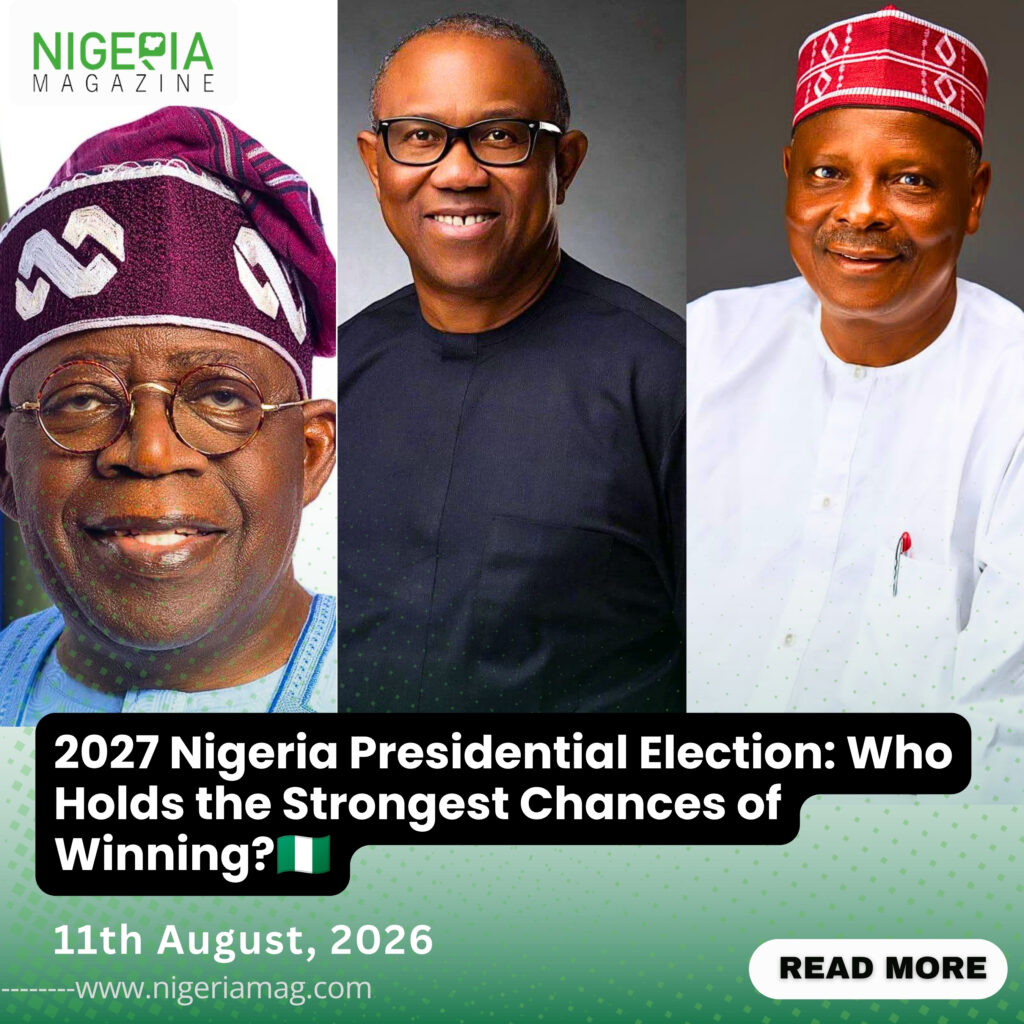

By Moses Chibuike Ezechukwu
As political realignments gather momentum ahead of Nigeria’s 2027 presidential election, the race is already generating intense debate across the country. While no candidate can be declared the definitive favourite at this stage, current political trends, party structures, public sentiment, and emerging alliances provide important clues about who may have the strongest path to victory.
Nigeria’s 2027 presidential election is gradually becoming one of the most anticipated political contests in Nigeria’s democratic history. Although the election is still some time away, conversations have already shifted from governance to campaign strategies, coalition building, and political calculations.
From Abuja to Lagos, Kano to Port Harcourt, political actors are repositioning themselves while Nigerians continue to assess the performance of the current administration and the credibility of opposition figures. Every election comes with surprises, but history shows that several factors—including incumbency, party strength, regional support, economic realities, and voter turnout—often determine the eventual outcome.
Rather than focusing on political propaganda, this article examines the major contenders and the factors that could shape the race for Aso Rock in 2027.
Why It Is Too Early to Predict a Winner
One mistake many political observers make is assuming that elections are won years before voters cast their ballots. Nigeria’s political history tells a different story.
Political alliances change quickly. Candidates defect between parties, new coalitions emerge, court rulings reshape party leadership, and national issues can dramatically influence voter preferences. In previous election cycles, events that occurred just months before election day significantly altered the political landscape.
For this reason, any claim that one candidate has already secured victory would be speculative rather than factual.
President Bola Ahmed Tinubu: The Incumbency Advantage
If President Bola Ahmed Tinubu seeks a second term under the All Progressives Congress (APC), he is expected to begin the race with one of the strongest political advantages available in Nigerian politics: incumbency.
Incumbent presidents traditionally benefit from an already established national political structure, easier mobilisation of party supporters, and the visibility that comes with occupying the nation’s highest office.
The APC also remains one of Nigeria’s most organised political parties with structures across all 36 states and the Federal Capital Territory.
However, incumbency alone does not guarantee victory.
The administration’s handling of economic reforms, inflation, fuel subsidy removal, exchange rate stability, unemployment, and national security will likely influence how millions of Nigerians vote in 2027. Public perception of these issues could either strengthen or weaken the president’s re-election prospects.
Can the Opposition Unite?
One of the biggest questions ahead of 2027 is whether opposition parties can avoid fragmentation.
The 2023 presidential election demonstrated that opposition votes can be divided among multiple candidates. Since then, discussions about broader coalitions and strategic alliances have continued across Nigeria’s political landscape.
Should major opposition figures eventually unite behind a single candidate, the race could become significantly more competitive. Conversely, if several prominent politicians contest separately, the ruling party could benefit from another split opposition. Reports throughout 2025 and 2026 have highlighted ongoing coalition talks involving several influential political figures, although no final arrangement has emerged.
Peter Obi and His Loyal Support Base
Peter Obi remains one of Nigeria’s most influential opposition politicians following his impressive performance in the 2023 election.
His appeal among young voters, professionals, urban populations, and many first-time voters remains significant. His emphasis on accountability, economic productivity, and prudent management of public resources continues to resonate with many Nigerians.
Nevertheless, political popularity must eventually translate into nationwide electoral success. Building stronger structures in states where his support was previously limited could become one of the biggest challenges for any future presidential bid.
Other Political Heavyweights to Watch
Beyond Tinubu and Obi, several experienced politicians continue to feature in conversations surrounding 2027.
Former Kano State governor Rabiu Musa Kwankwaso remains influential, particularly in northern Nigeria, while former Rivers State governor Rotimi Amaechi continues to attract attention whenever discussions about possible political coalitions arise.
Other established politicians may also emerge depending on party primaries, defections, or coalition agreements.
As Nigerian politics has repeatedly shown, unexpected candidates sometimes gain momentum closer to election season.
Issues That Will Decide the Election
More than campaign slogans, Nigerians are increasingly interested in practical solutions. Several issues are expected to dominate public debate:
Economic Recovery
Inflation, food prices, employment opportunities, exchange rate stability, and the overall cost of living will likely remain the biggest deciding factors for many voters.
Security
Persistent concerns over terrorism, banditry, kidnapping, and communal conflicts will continue to influence voter confidence in political leaders.
Youth Participation
Nigeria has one of the youngest populations in the world. Young voters have become increasingly active in elections, making them one of the country’s most important political blocs.
Good Governance
Transparency, anti-corruption efforts, infrastructure, healthcare, education, and electricity supply are expected to feature prominently during campaigns.
What Current Political Trends Suggest
Political analysts generally agree on one point: the 2027 election remains open.
President Tinubu appears to enjoy the institutional benefits that come with incumbency and the organisational strength of the APC.
However, opposition leaders continue to explore alliances that could reshape the contest if successfully implemented.
At the same time, independent voter sentiment may ultimately become the deciding factor. Nigerians today have greater access to information than ever before through traditional media and social media platforms, making campaigns more competitive and less predictable than in previous decades.
Several democracy observers have also noted that the competitiveness of the election will depend on the health of Nigeria’s democratic institutions, voter confidence, and the ability of opposition parties to remain viable alternatives.
Final Thoughts
As things stand today, no politician can honestly be described as the guaranteed winner of Nigeria’s 2027 presidential election.
President Bola Ahmed Tinubu currently enjoys the advantages associated with incumbency and an established political machinery, making him one of the strongest contenders. However, Nigerian elections have repeatedly demonstrated that voter expectations, economic realities, coalition politics, and campaign dynamics can significantly alter the political equation before election day.
Ultimately, the winner of the 2027 presidential election will not be determined by speculation or online debates but by millions of Nigerians exercising their democratic right at the ballot box.
Until then, the race remains open, competitive, and one that promises to reshape the future of Africa’s largest democracy.