Africa’s richest island nation forges deeper fisheries and blue economy ties with India after €23 million tuna deal with EU
Seychelles is moving to deepen fisheries and blue economy cooperation with India, just weeks after Africa’s richest island nation signed a €23 million tuna deal with the European Union, highlighting its growing push to generate more value from its vast marine resources.
 Black News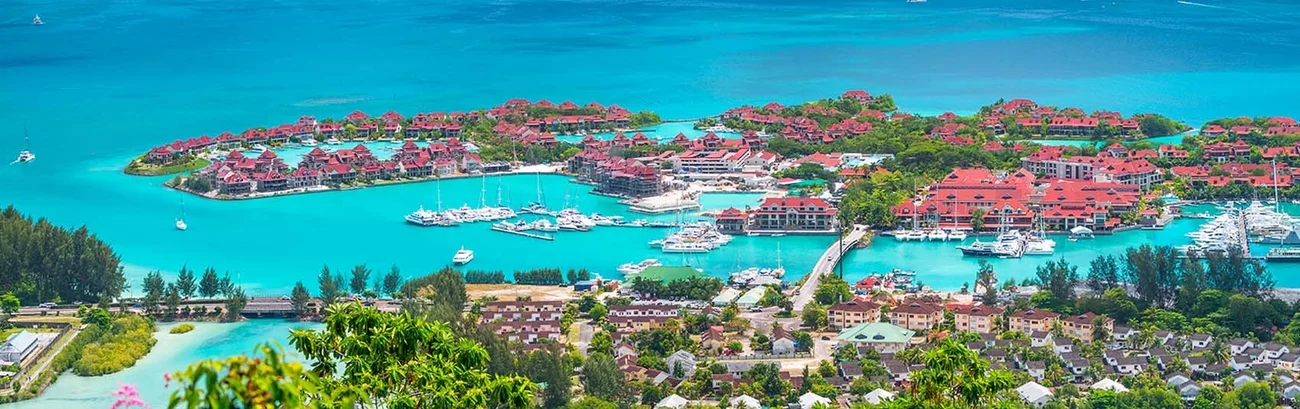


Seychelles is moving to deepen fisheries and blue economy cooperation with India, just weeks after Africa’s richest island nation signed a €23 million tuna deal with the European Union, highlighting its growing push to generate more value from its vast marine resources.
- Seychelles seeks to fast-track a fisheries and aquaculture agreement with India to strengthen its blue economy.
- High-level talks focused on cooperation in marine aquaculture, tuna fisheries, technology, and sustainable practices.
- They agreed to develop joint research plans, align regulations, and launch pilot projects for commercial opportunities.
- Both countries aim to enhance data systems, monitoring, surveillance, and AI in fisheries management.
The proposal was discussed during high-level talks on August 25 between Seychelles’ Minister of Fisheries, Agriculture and Blue Economy Wallace Cosgrow and India’s Department of Fisheries Secretary Abhilaksh Likhi.
Fisheries and technology take centre stage
The two sides reviewed existing cooperation and explored new areas, including marine aquaculture, modern hatcheries, tuna fisheries, fish stock assessment, post-harvest technology and marine conservation.
They also discussed technical studies, fisheries extension services, institutional training and greater use of digital technology.
In particular, both sides explored fisheries data systems, monitoring and surveillance infrastructure, as well as the use of artificial intelligence in harvest management.
They also identified opportunities in tuna processing, product diversification and sustainable fish waste management.

Seychelles looks to expand its blue economy
The talks come as Seychelles seeks to generate more economic value from its marine resources.
The country has Africa’s highest GDP per capita, one of the continent’s strongest passports and a growing global profile built partly on its environmental credentials.
In 2026, U.S. News & World Report ranked Seychelles as the world’s top eco-tourism destination and second in the Natural Environment category.
With a population of just over 120,000, Seychelles is Africa’s least populous sovereign state. Its economy relies heavily on tourism, fisheries and other marine activities, making the blue economy central to its development strategy.
That focus has increasingly shaped its relationships with major international partners.
In July, Seychelles signed a new four-year fisheries protocol with the European Union, allowing EU vessels to catch up to 55,000 tonnes of tuna and other migratory species annually in its waters.
Under the agreement, the EU will contribute €23 million over four years, including €3 million for sustainable fisheries development.
While the EU deal centres largely on fishing access and sector support, the proposed cooperation with India extends further into aquaculture, research, technology and processing.
India, meanwhile, brings considerable scale to the partnership, producing about 19.7 million tonnes of fish annually and recording seafood exports worth roughly $8.46 billion.
DON'T MISS: Seychelles retains top spot as Africa’s most powerful passport with visa-free entry for all
India broadens economic ties with Seychelles
The fisheries talks also build on wider economic and strategic cooperation between the two countries.
In June 2026, Indian Prime Minister Narendra Modi visited Seychelles and held talks with President Patrick Herminie on development, trade and security.
During the visit, Modi said work was progressing on India’s $175 million special economic package for Seychelles.
The package covers social housing, transport, skills development, food security, education and defence.
Trade remains tilted towards India
Despite the growing relationship, bilateral trade remains relatively small and heavily tilted in India’s favour.
Official Seychelles data showed imports from India stood at $91.73 million in 2024, while exports to India were just $2.46 million.
Against that backdrop, deeper fisheries cooperation could give Seychelles another route to expand exports, attract technology and generate more value from its marine resources.