Crashed plane could have landed—weather expert
Former Mzuzu Climate Change and Meteorological Station officer-in-charge Olive Chavunguma says the military plane that killed Vice-President Saulos Chilima and eight others could have landed at Mzuzu Airport despite the weather on June 10 2024. The witness, who was officer-in-charge at the time of the accident, told the Parliamentary Ad-hoc Committee investigating the Chikangawa plane …
 Black News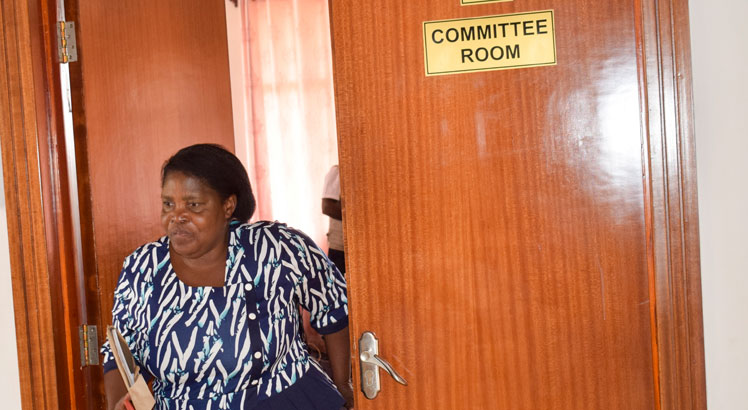

Former Mzuzu Climate Change and Meteorological Station officer-in-charge Olive Chavunguma says the military plane that killed Vice-President Saulos Chilima and eight others could have landed at Mzuzu Airport despite the weather on June 10 2024.
The witness, who was officer-in-charge at the time of the accident, told the Parliamentary Ad-hoc Committee investigating the Chikangawa plane crash that her weather station recorded visibility of eight kilometres at Mzuzu Airport that morning and that visibility improved in the afternoon.
“I have worked in aviation for 35 years and from my experience it was possible to land the plane on the day,” she said.
Chavunguma said the weather at Mzuzu Airport was generally overcast with drizzles and fog in the vicinity, but said the plane had previously operated and landed under similar conditions.
“The plane could have landed at Mzuzu airport. If there were limiting factors, then the challenges were enroute because the accident happened in Chikangawa,” she said.
But Chavunguma cautioned the committee against using the Mzuzu Airport’s weather records as an indication of conditions in Viphya Plantation, widely known as Chikangawa after one of the forests. The plane crashed at Nthungwa Hill.
She said the two locations have different terrain, elevation and atmospheric conditions, meaning weather can vary significantly between them.
“Weather can change from one place to another because of differences in location, elevation, terrain, cloud development, wind and other atmospheric conditions,” said the witness.
But Chavunguma said she could not certify that the crash was caused by bad weather or confirm whether the pilots encountered very low visibility in Chikangawa.
Blantyre Ndirande Malabada member of Parliament (MP) Ismail Mkumba (United Democratic Front) asked what the recorded eight-kilometre visibility meant in terms of the plane’s ability to land.
In response, Chavunguma said the visibility was adequate for a pilot to see and land.
She said the station would have issued a special weather report to the air traffic controller if visibility had improved to more than 10 kilometres while a further deterioration to five kilometres or less would also have prompted a special report.
Committee vice-chairperson James Mpunga questioned the station’s eight-kilometre visibility reading at 10am against the German Federal Bureau of Aircraft Accident Investigation (BFU) report which indicated visibility of less than eight kilometres.
Chavunguma said the difference could have resulted from the BFU’s assessment, maintaining that the station had recorded eight kilometres and that the reduction in visibility at 10am was insignificant.
Mulanje North MP Gilbert Khonyongwa (Democratic Progressive Party-DPP) asked whether the plane had previously landed at Mzuzu Airport under similar or worse conditions and the witness confirmed it did, including in Lilongwe although flights could be delayed when visibility deteriorated further.
But she could not confirm whether the pilots operating the aircraft on June 10 2024 had previously landed under similar conditions because her office was far from where the plane was parked.
Several committee members, including Dedza Kasina MP Joshua Malango (Malawi Congress Party) and Zomba Thondwe MP Dumisani Lindani (DPP) also asked whether the plane could have landed in Mzuzu under the prevailing conditions and Chavunguma maintained that it could.
Nkhata Bay North MP Mackenzie Nkhwazi (DPP) questioned whether the BFU experts had consulted the Mzuzu station for weather records from June 10 2024.
In response, Chavunguma said she did not see BFU experts visiting the station, but confirmed that a commission of inquiry established by former president Lazarus Chakwera visited Mzuzu Airport and inspected equipment used for detecting weather conditions.
The final investigative report on the plane crash by BFU attributed the cause of the accident to collision with terrain following adverse weather. The report said the flight crew operated in adverse weather conditions; leading to the crash.
The BFU report further noted that the Department of Meteorological Services did not provide any meteorological information on the planned route for the crew to use contrary to International Civil Aviation Organisation standards.
In January this year, President Peter Mutharika ordered a fresh inquiry after Minister of Justice and Constitutional Affairs Charles Mhango’s recommendation upon noting gaps in both reports by the BFU and the commission of inquiry set up by Chakwera.