Mwiya calls for sport funding overhaul
Namibia Sport Commission (NSC) chief administrator Freddy Mwiya has called for a fundamental transformation of sport financing models across the continent. Mwiya delivered his visionary presentation at the Association of National Olympic Committee of Africa (Anoca) Zone VI Secretaries General Seminar in Ezulwini, Eswatini. “We cannot build a sustainable sporting nation on unsustainable funding,” Mwiya […] The post Mwiya calls for sport funding overhaul appeared first on The Namibian.
 Black News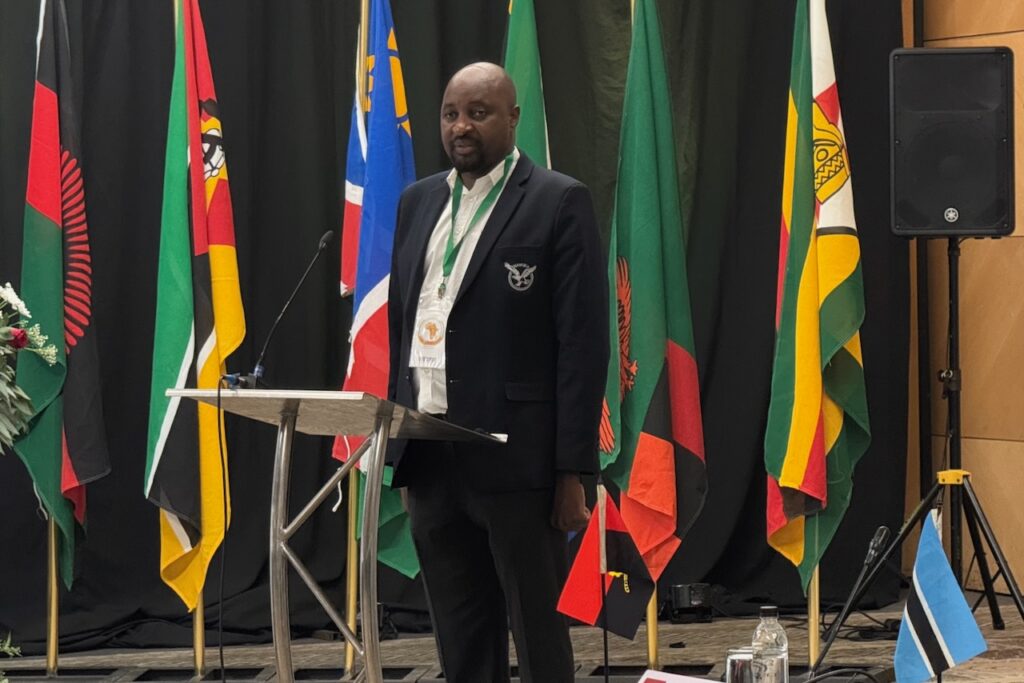

Namibia Sport Commission (NSC) chief administrator Freddy Mwiya has called for a fundamental transformation of sport financing models across the continent.
Mwiya delivered his visionary presentation at the Association of National Olympic Committee of Africa (Anoca) Zone VI Secretaries General Seminar in Ezulwini, Eswatini.
“We cannot build a sustainable sporting nation on unsustainable funding,” Mwiya says in his presentation titled ‘Sustainability of Sport Through Diversified Resource Mobilization and Funding Models – The Case in Namibia’.
He proposes a comprehensive five-layer financing architecture anchored in Namibia’s sixth National Development Plan (NDP6).
The proposal advocates moving from short-term, government-dependent models to diversified ecosystems that combine government anchor funding, strengthened development funds, philanthropic vehicles, permanent endowments, and commercial revenue generation.
“Commercialisation must finance inclusion, not replace it,” Mwiya says. “Commercial sport should subsidise and strengthen public-interest sport.”
His presentation aligns with continental frameworks including the African Union Policy for Sustainable Development of Sport in Africa and the SADC Protocol on Culture, Information and Sport.
“Our ultimate measure of success will not be how much money we raise, but how many lives we change with the resources we mobilise.”
Mwiya said the bold vision marks a significant step towards securing the future of sport development in Namibia and across the region.
“Sport is no longer simply a recreational activity or an arena for competitive excellence. Globally, sport has evolved into a significant social, economic and development sector with the capacity to create employment, stimulate enterprise development, promote health and well-being, develop human capital, strengthen social cohesion, foster national identity and create pathways for youth empowerment.
“For Namibia, this reality is now explicitly recognised in NDP6, which identifies sport development as a vehicle for sustainable socio-economic development, peace and social inclusion.”
Mwiya says the NDP6 sets a clear ambition by 2030, the contribution of sport to employment to increase from 1.0% to 3.5%, while the proportion of people participating in physical activity must increase from 29% to 34%.
“NDP6 further calls for improved multi-sport infrastructure, stronger sport professionalisation and commercialisation, and the development of an integrated sport data management system.”
Mwiya says the ambitions set out cannot be achieved through the traditional financing model alone.
“Namibia’s sport sector remains substantially dependent on annual government allocations through the fiscus and irregular or project-specific corporate sponsorships. Government funding remains indispensable, particularly for grassroots sport, disadvantaged communities, national representation and public-interest programmes.
“However, government funding alone cannot reasonably be expected to finance the entire sport ecosystem indefinitely. Similarly, ad hoc sponsorships, although valuable, are inherently vulnerable to changing corporate priorities, economic cycles and short-term market and economic considerations,” Mwiya says.
“The central proposition of this paper ism, therefore, that Namibia needs to move from a funding-dependent sport system to a diversified sport financing ecosystem. This requires a deliberate distinction between sustainable resource mobilisation and sustainable funding.”
RESOURCE MOBILISATION
Mwiya says resource mobilisation is the broader process of identifying, cultivating, securing and managing financial and non-financial resources from multiple sources.
“Sustainable funding, on the other hand, is the creation of reliable, predictable, diversified and longer-term financial mechanisms capable of financing sport programmes, infrastructure, institutions and development pathways over time.”
He says the two are complementary, in that resource mobilisation fills the financing pipeline while sustainable funding structures convert that pipeline into predictable and durable financial capacity.
“The paper proposes a national roadmap centred on strengthening and optimising the existing Sport Development Fund, establishing a Namibia sport foundation or comparable ring-fenced philanthropic vehicle under an appropriate legal arrangement associated with the NSC and establishing a Namibia sport endowment fund, developing multi-year strategic funding agreements with corporations and development partners.
“Creating a professional sport investment and commercialisation function within the NSC, mobilising development finance, grants and concessional funding for sport infrastructure and establishing public-private partnerships for sport facilities.”
Mwiya says the ultimate objective is not to commercialise the public mandate of the NSC.
“Rather, it is to commercialise appropriate elements of the sport ecosystem in order to strengthen the public-interest mandate of sport,” he says.
“The success of the proposed model will be measured not merely by how much money is raised, but by how effectively that money expands participation, identifies and develops talent, improves infrastructure, creates employment, increases access for disadvantaged communities, strengthens women and girls in sport, expands disability sport and ultimately contributes to Namibia’s prosperity,” Mwiya says.
The post Mwiya calls for sport funding overhaul appeared first on The Namibian.