URC grilled over Shs20.8bn Spanish railway project
Uganda Railways Corporation (URC) is facing parliamentary scrutiny over the expenditure of more than Shs20.8 billion allocated for staff capacity building under a Spanish-funded railway project, after MPs questioned how nearly all the money was spent on a handful of expatriates. The scrutiny is being conducted by Parliament’s Committee on Physical Infrastructure, chaired by Mwine […] The post URC grilled over Shs20.8bn Spanish railway project appeared first on Daily Star.
 Black News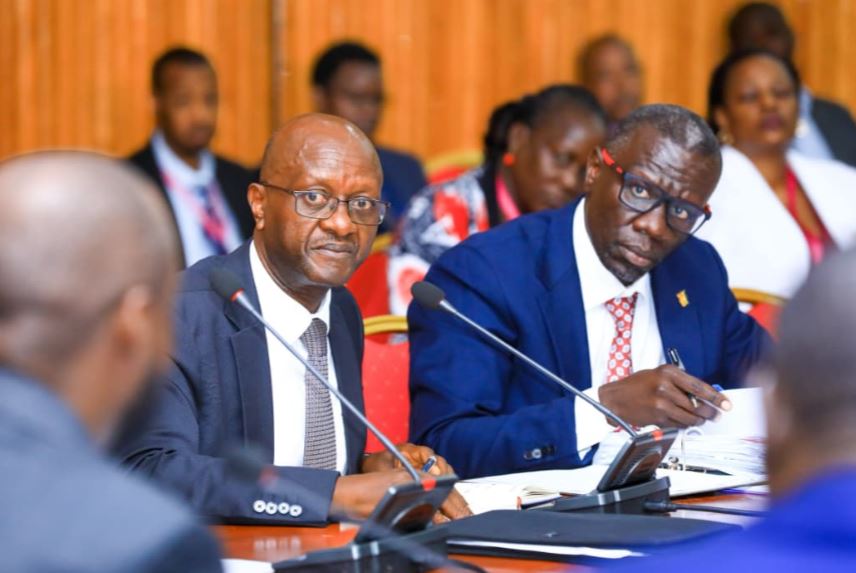

Uganda Railways Corporation (URC) is facing parliamentary scrutiny over the expenditure of more than Shs20.8 billion allocated for staff capacity building under a Spanish-funded railway project, after MPs questioned how nearly all the money was spent on a handful of expatriates.
The scrutiny is being conducted by Parliament’s Committee on Physical Infrastructure, chaired by Mwine Mpaka, which is investigating the utilisation of a €28.96 million Spanish loan, equivalent to about Shs125 billion under the figures presented to the committee.
At the centre of the inquiry is the capacity-building component, which was allocated €4.821 million, approximately Shs20.84 billion.
However, MPs have been told that five expatriates allegedly received €4.338 million, about Shs18.75 billion, over a three-year period.
The amount represents nearly 90 per cent of the money allocated for capacity building, raising questions about whether the programme delivered value for money and whether it achieved its intended purpose of building sustainable local expertise in railway operations.
The reported monthly remuneration for the expatriates ranged from €20,500 to €32,500, equivalent to about Shs88 million to Shs140 million.
Shs18.7bn for five expatriates
The expenditure has become a major point of concern for MPs, who are seeking explanations over the contracts, payment schedules, qualifications, deliverables and evidence of skills transferred to Ugandan railway workers.
Of the Shs20.84 billion allocated to capacity building, about Shs18.75 billion was allegedly spent on five expatriates, leaving approximately Shs2.1 billion for other capacity-building activities.
The committee is expected to establish the roles of the expatriates, the contractual basis for their payments and whether their engagement resulted in measurable improvements in the skills of URC staff.
The inquiry is also expected to examine the number of Ugandans trained under the programme and whether the skills acquired were retained by URC after the expatriates completed their assignments.
Spanish loan
The wider railway programme was financed through a €28.96 million Spanish loan, valued at about Shs125 billion.
The government contracted Spanish companies Consultrans S.A.U and Imathia to implement components of the railway rehabilitation programme, including works on the Kampala-Mukono railway corridor and other infrastructure interventions.
Consultrans also signed a memorandum of understanding with URC to undertake the capacity-building component.
The arrangement was intended to equip URC personnel with the skills required to operate and maintain an improved railway system.
However, the expenditure on expatriate personnel has now emerged as one of the most contentious aspects of the Spanish-funded programme.
MPs question value for money
Committee chairperson Mwine Mpaka has questioned the rationale for spending millions of euros on capacity building involving a relatively small number of railway employees, including training associated with train-driving programmes.
The concern, however, is not simply about the involvement of foreign consultants but whether their remuneration was proportionate to the results achieved.
At the reported maximum monthly rate of about Shs140 million, one expatriate would cost more than Shs1.6 billion a year.
If maintained at that rate for three years, the cost for one person would approach Shs5 billion.
The figures have raised concern given URC’s longstanding operational challenges, including inadequate infrastructure, rolling stock and technical capacity.
Railway revival
The Spanish-funded programme was intended to support Uganda’s efforts to revive its ageing metre-gauge railway network following years of underinvestment and deterioration.
The Kampala-Mukono corridor was among the railway sections targeted for rehabilitation, alongside other infrastructure and capacity-building interventions.
The programme was therefore designed to address both physical infrastructure and human-resource gaps within the corporation.
The expectation was that alongside rehabilitating the railway, the project would equip Ugandan personnel with the skills required to operate and maintain the network.
Parliament is now questioning whether the capacity-building component became disproportionately expensive compared with the results delivered.
The post URC grilled over Shs20.8bn Spanish railway project appeared first on Daily Star.