Wildfires Consume 30,000 Hectares Across Tolima, Criminal Groups Suspected
More than 30,000 hectares have been burned across Colombia’s Tolima department as firefighters battle one of the region’s worst wildfire emergencies in years, but authorities are now investigating a darker possibility: that some of the fires are being deliberately set by criminal groups seeking to divert security forces, destabilize communities and gain control of territory. Interior […]
 Black News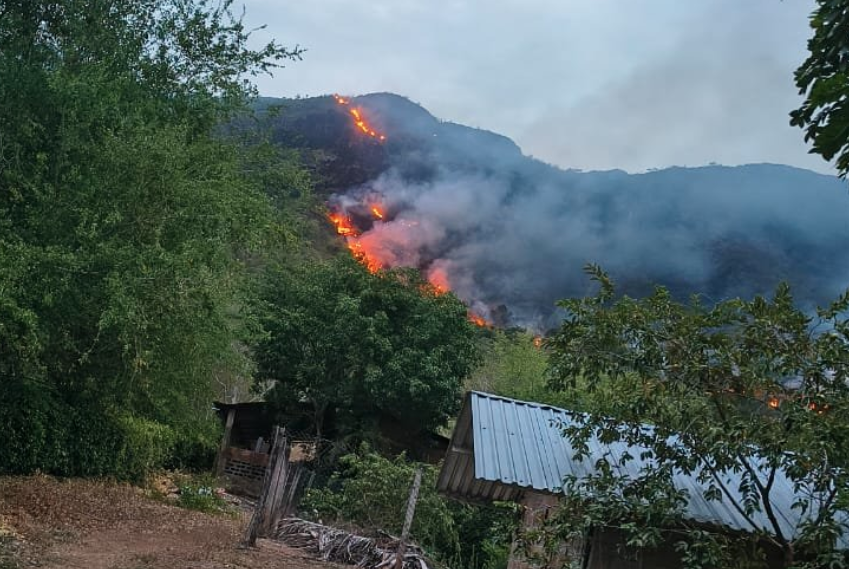

More than 30,000 hectares have been burned across Colombia’s Tolima department as firefighters battle one of the region’s worst wildfire emergencies in years, but authorities are now investigating a darker possibility: that some of the fires are being deliberately set by criminal groups seeking to divert security forces, destabilize communities and gain control of territory.
Interior Minister Rodrigo Lara says the government has information pointing to the alleged involvement of FARC dissidents and illegal-mining networks, while Tolima Governor Adriana Magali Matiz says authorities have evidence and “serious indications” of deliberate criminal activity behind some of the fires.
The allegations come as Tolima confronts a devastating combination of extreme dryness, the El Niño climate phenomenon and widespread human-caused burning. According to the regional environmental authority Cortolima, fires have consumed more than 30,000 hectares of vegetation across at least 28 municipalities.
As of Sunday, nine major fires remained active, with San Luis, Coello and Suárez among the municipalities considered most affected and vulnerable. Just one day earlier, authorities were dealing with 24 active fires across 13 municipalities.
The destruction has reached far beyond forests. Fires have damaged crops of lemon, maize, avocado, coffee, mango and plantain, while at least 18,000 head of cattle have reportedly been left without food as pastureland disappears beneath the flames.
More than 600 firefighters are currently deployed, supported by Police aircraft, Army helicopters and private agricultural aircraft. Some aircraft have been making water drops even after nightfall as crews attempt to contain the advancing fires.
In rural communities including Chagualá, residents have appealed for aerial assistance as flames approach homes. On Monday, August 24, fires reactivated in rural Coello, including the Potrerillo and Gualanday sectors, where residents reported that the flames were dangerously close to a gas tank.
Criminal investigation
Lara said authorities are investigating information suggesting that armed dissident groups and illegal mining structures may be deliberately starting fires in municipalities including Ortega.
The alleged objective, according to the minister, would be to distract the security forces, obstruct security operations and generate disorder.
“We are going to take measures to investigate basically the criminal hands that may be causing these fires,” Lara said during an official emergency briefing in Tolima.
Governor Matiz has gone further, saying authorities have evidence and serious indications that criminal actors are involved.
“We have evidence and serious indications of criminal hands in the forest fires, and we are going to pursue this to the ultimate consequences,” Matiz said. She warned that anyone found deliberately starting the fires could face prosecution under Article 350 of Colombia’s Penal Code, which establishes the crime of arson and carries prison sentences of up to 22 years.
The allegations have also emerged from communities in rural Venadillo and Lérida, where residents have reported seeing men traveling by motorcycle who allegedly move through the area shortly before fires begin. Authorities have not publicly identified any suspects, and the claims have yet to be independently substantiated.
Not every fire is organized crime
Cortolima has cautioned against attributing the entire wildfire emergency to organized criminal groups. Olga Lucía Alfonso, director of Cortolima, said that most forest fires are caused, deliberately or accidentally, by human activity, rather than necessarily being linked to armed groups or organized crime.
The environmental authority has already referred several cases and reports to the Fiscalía General de la Nación and has begun administrative proceedings against people responsible for unauthorized “controlled” burns.
That distinction is crucial. While the government investigates whether criminal organizations are deliberately igniting some of the fires for strategic purposes, the broader wildfire crisis also reflects a longstanding problem of uncontrolled agricultural burning and other human activity amplified by extreme dry conditions.
The result is a disaster of unprecedented scale for Tolima: forests and farmland are disappearing, livestock are losing pasture, communities are being threatened and hundreds of emergency workers are fighting fires across a vast and difficult landscape.
Colombian authorities now face another question alongside the battle against the flames: whether some of the fires are being used as a weapon against the new hardline administration of President Abelardo De La Espriella.