
Africa CDC warns 10 countries at risk as Congo Ebola outbreak worsens
Africa is racing to stop a deadly Ebola outbreak from turning into a full-blown continental crisis after health authorities warned that 10 countries are now at risk of infection from a fast-spreading virus already overwhelming parts of eastern Democratic Republic of Congo and spilling into Uganda.
 Black News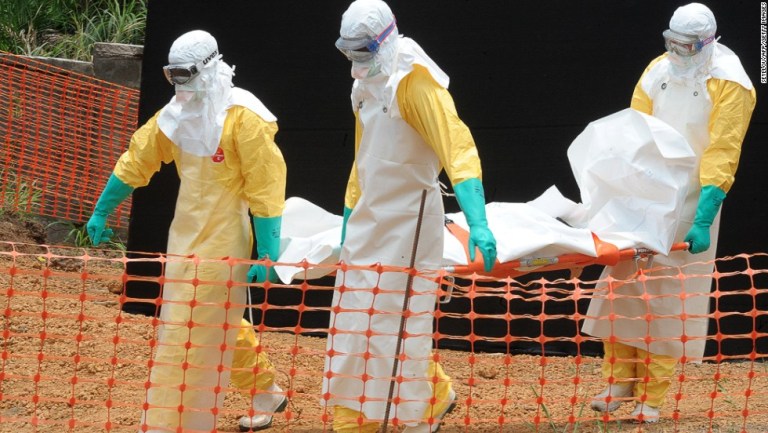

Africa is racing to stop a deadly Ebola outbreak from turning into a full-blown continental crisis after health authorities warned that 10 countries are now at risk of infection from a fast-spreading virus already overwhelming parts of eastern Democratic Republic of Congo and spilling into Uganda.
- Africa CDC has warned that 10 African countries are now at risk from the worsening Ebola outbreak centred in DR Congo and Uganda.
- The WHO has raised the outbreak threat level to “very high” as cases spread through conflict-hit regions with weak health systems.
- Uganda has confirmed new infections while governments tighten borders and intensify surveillance measures.
- Health agencies are seeking more than $314 million to stop the outbreak from turning into a wider continental emergency.
The outbreak, driven by the rare Bundibugyo strain of Ebola for which there are no approved vaccines or targeted treatments, is raising fears of another major cross-border health emergency with consequences for trade, travel, migration and regional stability.
The Africa Centres for Disease Control and Prevention (Africa CDC) said Angola, Burundi, Central African Republic, Republic of Congo, Ethiopia, Kenya, Rwanda, South Sudan, Tanzania and Zambia now face potential exposure alongside DR Congo and Uganda.
“We have 10 countries at risk,” Africa CDC Director General Jean Kaseya said, warning that insecurity and high population movement were accelerating the danger.
The warning comes as the World Health Organization upgraded the outbreak risk in DR Congo to “very high” and declared the epidemic an international public health emergency.
The crisis is unfolding in one of Africa’s most volatile regions, where armed conflict, weak state control and porous borders are complicating efforts to track infections and isolate patients.
DON'T MISS THIS: World Bank rushes emergency Ebola funding to Congo as outbreak spreads across East Africa
Uganda records new Ebola infections
Uganda on Saturday confirmed three additional Ebola cases, bringing the country’s total confirmed infections to five since the outbreak was detected earlier this month.
The new infections include a driver linked to an infected Congolese traveller, a health worker exposed while treating a patient, and a Congolese woman who travelled between Uganda and DR Congo before later testing positive.
Uganda has already suspended public transport links to DR Congo while authorities intensify contact tracing and border surveillance.
The WHO says DR Congo has recorded nearly 750 suspected cases and 177 suspected deaths, although confirmed figures remain lower because many infections are emerging in remote or insecure territories that are difficult to access.
Late Saturday, some reports indicated the suspected death toll may have crossed 200, highlighting fears that the outbreak could be spreading faster than authorities can officially confirm.
WHO Director-General Tedros Adhanom Ghebreyesus warned that the situation was “especially challenging” because health workers were battling the virus in conflict-hit areas with limited infrastructure and growing insecurity.
Conflict, trade routes and border movement raising fears
The epicentre of the outbreak lies in eastern DR Congo, a region bordering several countries and home to key trade and migration corridors connecting Central and East Africa.
Health officials fear the outbreak may have circulated undetected for weeks before authorities recognised its scale.
The disease has already spread from Ituri province into North Kivu and South Kivu, including areas reportedly controlled by the Rwanda-backed AFC/M23 rebel group.
That has complicated containment efforts and heightened concerns over cross-border transmission in densely populated urban centres such as Goma and Kampala.
Unlike previous outbreaks where vaccines helped slow transmission, scientists currently have no approved vaccine or treatment specifically designed for the Bundibugyo strain.
The outbreak is also beginning to trigger international reactions beyond Africa.
The United States has expanded temporary travel restrictions linked to the outbreak, including enhanced airport screenings and limits affecting some travellers from DR Congo, Uganda and South Sudan.
The US Centers for Disease Control and Prevention said the overall risk to Americans remains low, but officials are closely monitoring the situation.
Africa seeks $314 million to stop wider crisis
Africa CDC and the WHO are now seeking more than $314 million in emergency funding to finance treatment, surveillance, border monitoring and rapid-response operations across affected and high-risk countries.
DON'T MISS THIS: U.S. deploys $13 million, imposes travel restrictions as Ebola outbreak hits DR Congo and Uganda
The bulk of the funding will go to DR Congo and Uganda, while other high-risk countries will receive support for emergency preparedness, cross-border coordination and medical stockpiles.
The latest outbreak is reviving memories of past Ebola epidemics that devastated African economies, disrupted aviation and trade, overwhelmed fragile healthcare systems and killed thousands across the continent.
Since the virus was first identified in 1976, Ebola outbreaks across Africa have claimed more than 15,000 people and repeatedly disrupted economies, healthcare systems and cross border travel.
With regional mobility remaining high and conflict continuing in eastern Congo, health authorities now face a race against time to stop the virus from escalating into another major international emergency.













![Taylor Polidore Williams Says Indie Film ‘HPV: Her Pretty Vagina’ Is Bigger Than Entertainment: ‘I Knew It Was A Necessary Conversation’ [Exclusive]](https://bossip.com/wp-content/uploads/sites/28/2026/05/17794757122146.jpg?quality=80&strip=all&w=1024&crop=0,0,100,683px#)