IMF warns Nigeria over $5 billion Abu Dhabi Bank deal, flags opacity risks in borrowing plan
The International Monetary Fund (IMF) has raised concerns over Nigeria’s proposed $5 billion borrowing arrangement with First Abu Dhabi Bank, warning that such financial structures may be opaque, complex and difficult to fully assess in terms of risk exposure.
 Black News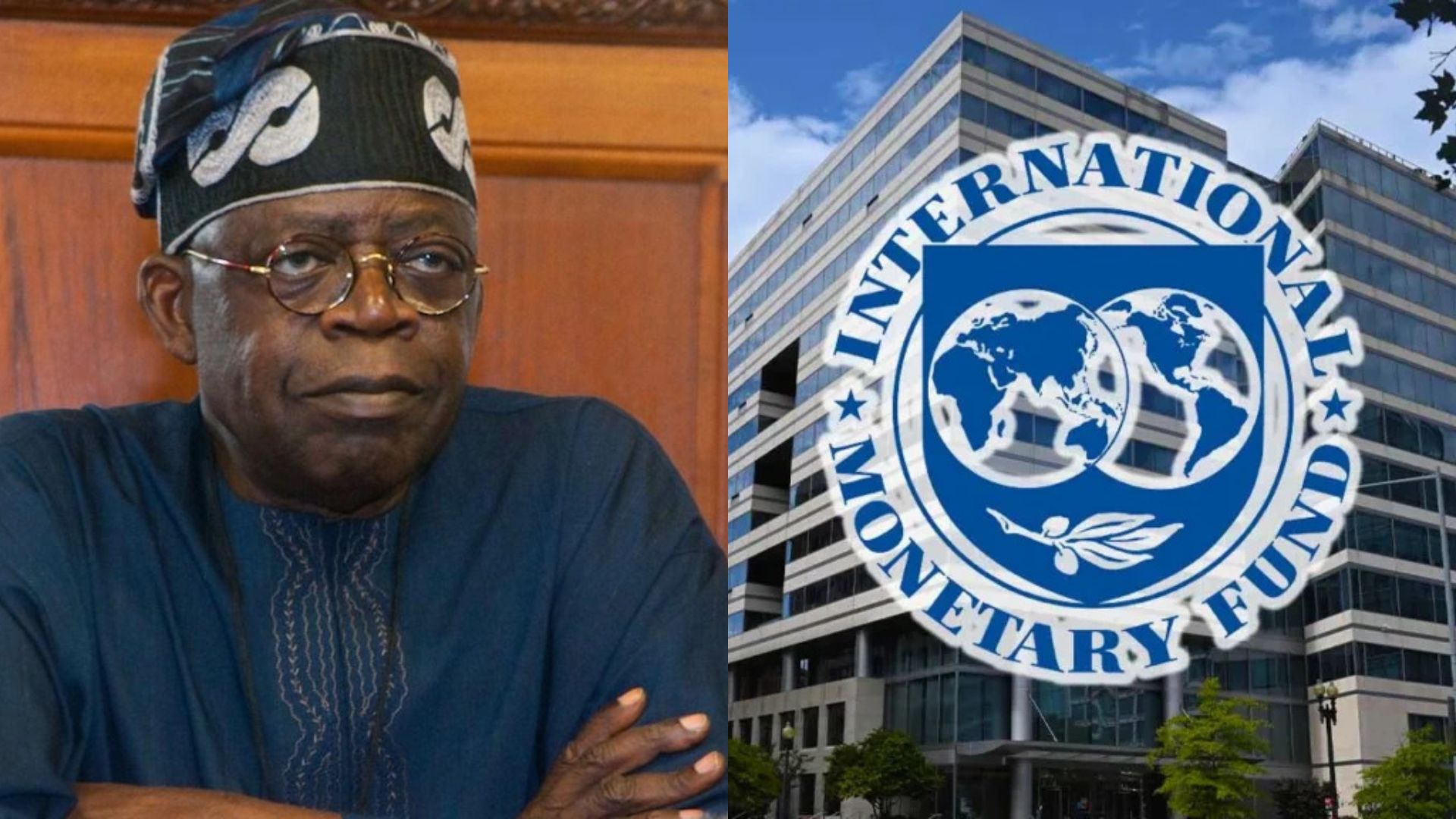

The International Monetary Fund (IMF) has raised concerns over Nigeria’s proposed $5 billion borrowing arrangement with First Abu Dhabi Bank, warning that such financial structures may be opaque, complex and difficult to fully assess in terms of risk exposure.
- The IMF expressed concerns over Nigeria's proposed $5 billion borrowing from First Abu Dhabi Bank.
- The Fund suggested Nigeria consider more transparent financing options like Eurobonds or concessional loans to reduce fiscal risks and boost investor confidence.
- Nigeria's government plans to use the borrowed funds to refinance costly debt and support infrastructure.
- The IMF praised President Tinubu's reforms for boosting Nigeria's macroeconomic stability and reserves but noted that poverty and food insecurity remain elevated.
Christian Ebeke, the IMF’s mission chief for Nigeria, said instruments such as Total Return Swaps (TRS) often lack transparency, making it harder for stakeholders to evaluate their terms and long-term fiscal implications.
"Our view is that transactions in these types of structures carry risks. Usually they are opaque so the terms are not always very transparent when we review these instruments across countries," Ebeke told reporters following the Fund’s latest Article IV consultation.
DON'T MISS THIS: UAE moves to secure Nigeria's $70 billion trade routes as global supply chains shift
Nigeria’s Senate approved the borrowing arrangement in April. The government intends to use the proceeds to refinance high-cost debt and fund infrastructure projects.
Similar structures have been used in parts of Africa, including Senegal and Angola, as governments seek alternative financing channels amid tighter global liquidity conditions.
The IMF suggested Nigeria could instead consider more transparent funding options such as Eurobond issuances or concessional financing, arguing that clearer structures would reduce fiscal risks and improve investor confidence.
IMF praises reforms but flags uneven economic impact
The warning comes alongside a broadly positive IMF assessment of Nigeria’s reform programme under President Bola Tinubu.
The Fund acknowledged that reforms introduced since 2023, including fuel subsidy removal, exchange rate liberalisation and tighter monetary policy, have strengthened macroeconomic stability, improved external buffers and enhanced policy credibility.
![Nigerian President Bola Ahmed Tinubu (L) meets UAE President Sheikh Mohammed bin Zayed al-Nahyan (R) during his official visit in Abu Dhabi, United Arab Emirates on September 11, 2023. [Photo by Presidency of Nigeria / Handout/Anadolu Agency via Getty Images]](https://ocdn.eu/pulscms/MDA_/b9eec52ea1e96bf19101052bd70dd156.jpg)
It noted that Nigeria’s foreign reserves have climbed to about $50 billion, the highest level in 17 years, while improved forex reforms have helped restore investor confidence and support renewed capital inflows.
DON'T MISS THIS: Nigeria and UAE seal technology pact to drive $200 million defence and space investment
However, the IMF warned that macroeconomic gains are not yet translating into broad-based welfare improvements, with poverty levels still high and food insecurity affecting millions.
It also flagged risks from reliance on volatile portfolio inflows and global shocks, including rising energy prices linked to geopolitical tensions.
Nigerian government mounts strong defence of reforms
In a detailed response, the Federal Government strongly defended its economic strategy, describing the IMF report as validation of its reform agenda under the leadership of President Tinubu.
Finance Minister Taiwo Oyedele said the IMF had effectively confirmed that Nigeria is now on a stronger macroeconomic footing, with improved resilience to external shocks, better foreign exchange market functioning and stronger fiscal discipline.
The government emphasised that difficult policy decisions, including subsidy removal, exchange rate reforms and tighter fiscal controls, were necessary to stabilise the economy and rebuild investor confidence after years of structural weaknesses.
It also pushed back against concerns over the $5 billion borrowing plan, arguing that Nigeria is actively diversifying its financing options to support infrastructure development and debt restructuring at a time of constrained global liquidity.
DON'T MISS THIS: Nigeria eyes UAE’s largest bank for $5 billion swap to shield economy from rising costs
According to the government, improved revenue mobilisation, fiscal transparency reforms and stronger public financial management systems will ensure that any borrowing is sustainable and directed toward productive investments.
Authorities further stressed that ongoing social interventions, agricultural investments and credit programmes are aimed at ensuring that macroeconomic gains translate into improved living standards, even as global risks continue to weigh on the outlook.
Despite the IMF’s caution, the government said it remains committed to maintaining reform momentum while pursuing inclusive growth and long-term economic stability.