Jeff Bezos moves to challenge Elon Musk’s Starlink in Africa with first satellite gateway in Kenya
Jeff Bezos is ramping up his challenge to Elon Musk’s Starlink in Africa, with Amazon seeking regulatory approval to establish its first satellite gateway on the continent in Kenya, a move that could reshape competition in the region’s fast-growing satellite internet market.
 Black News
Jeff Bezos is ramping up his challenge to Elon Musk’s Starlink in Africa, with Amazon seeking regulatory approval to establish its first satellite gateway on the continent in Kenya, a move that could reshape competition in the region’s fast-growing satellite internet market.
- Amazon is moving to challenge Starlink in Africa by seeking approval to build its first satellite gateway in Kenya, deepening competition in the region’s fast-growing broadband market.
- The facility would connect Amazon’s low-Earth orbit satellite network to terrestrial internet infrastructure, improving speed and reducing latency.
- Kenya’s strong tech ecosystem and Starlink’s rapid growth have made the country a key battleground for satellite internet providers.
- The Bezos-Musk rivalry could accelerate internet access, coverage and competition across Africa’s underserved regions.
Amazon’s local unit, Amazon Kuiper Kenya Limited, has applied to the Communications Authority of Kenya for an International Gateway Operator licence, according to a notice published in the Kenya Gazette.
If approved, the licence would allow the company to establish and operate satellite earth stations and related infrastructure used to transmit internet traffic between Kenya and international networks.
The application marks Amazon’s most significant infrastructure push yet in Africa and signals a deeper commitment to challenging Starlink, Musk’s satellite broadband service, which has built an early lead across several African markets.
The proposed facility would serve as a critical gateway connecting Amazon’s low-Earth orbit satellite network, Amazon Leo, formerly known as Project Kuiper, to terrestrial internet infrastructure.
Ground stations play a central role in satellite broadband operations by linking satellites in orbit to internet users on the ground.
By shortening the distance data travels, they reduce latency and improve connection quality for services such as video streaming, voice calls and online gaming.
Amazon’s decision to place its first African gateway in Kenya highlights the country’s growing importance as a regional technology and connectivity hub.
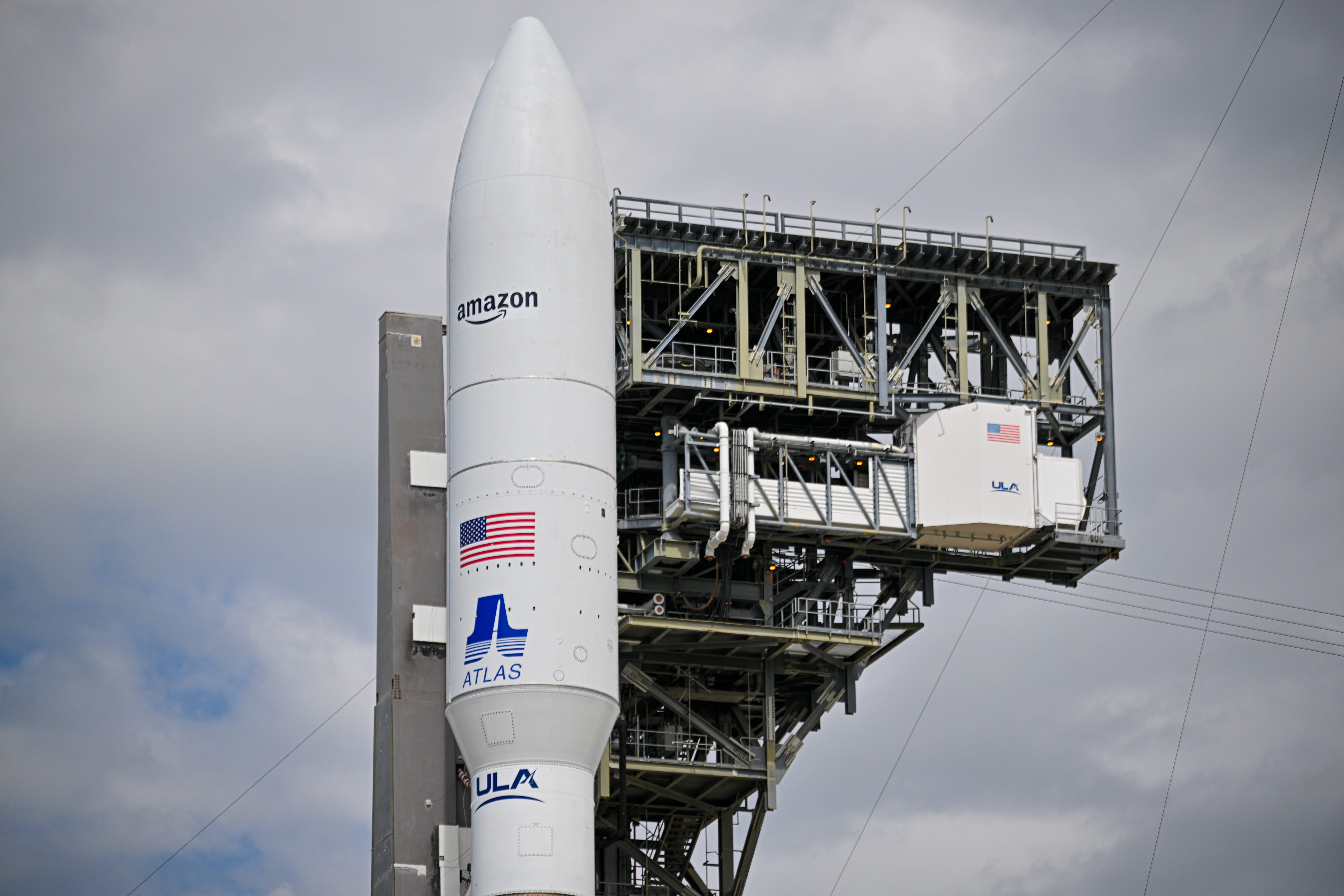
Bezos takes the fight to Starlink
Amazon’s move sets the stage for a direct battle between two of the world’s most influential technology billionaires over Africa’s digital future.
Starlink entered Kenya in 2023 and quickly gained traction among households, businesses and institutions seeking alternatives to traditional broadband providers.
The company now has more than 22,000 subscribers in Kenya and ranks among the country’s fastest-growing internet service providers.
The SpaceX-owned service strengthened its position by introducing hardware financing plans and expanding coverage in underserved areas where fibre and mobile broadband infrastructure remain limited.
Amazon is now seeking to carve out its own share of the market.
The company plans to deploy more than 3,200 low-Earth orbit satellites globally by 2028 as part of its effort to compete with Starlink in delivering high-speed, low-latency internet services.
Amazon has positioned Leo as a broadband network capable of serving households, businesses, governments and telecommunications operators.
Industry reports indicate Amazon is targeting download speeds of up to 400 Mbps for standard users and significantly higher speeds for enterprise customers, placing it in direct competition with Starlink’s offerings.
![Amazon targets Starlink’s African lead with first satellite gateway in Kenya. [Photo by VINCENT FEURAY/Hans Lucas/AFP via Getty Images]](https://ocdn.eu/pulscms/MDA_/9cd6fce9aeeef462b928e1f584c8b278.jpg)
Why Kenya?
Kenya has emerged as one of Africa’s most attractive technology markets, thanks to its relatively advanced digital infrastructure, vibrant startup ecosystem and strong demand for reliable internet services.
The country has also become a testing ground for satellite broadband adoption.
Starlink’s rapid growth in Kenya demonstrated that consumers and businesses are willing to pay for satellite connectivity when conventional broadband options fall short.
That success appears to have encouraged Amazon to accelerate its own plans for the market.
A gateway in Kenya could also allow Amazon to support neighbouring markets from a single regional hub, strengthening its position across East Africa while reducing dependence on infrastructure located outside the continent.
The company had earlier applied for a Network Facilities Provider licence in Kenya, another regulatory step toward deploying communications infrastructure in the country.
Africa’s next connectivity race
Africa is increasingly becoming a key battleground for satellite internet providers.
Despite rapid growth in mobile and fibre networks, hundreds of millions of people across the continent still lack access to reliable high-speed internet, particularly in rural and remote communities.
Satellite broadband is widely seen as one of the fastest ways to bridge that gap because it bypasses the need for costly terrestrial infrastructure.
Amazon is also pursuing partnerships with telecommunications companies to expand its reach.
Earlier this year, Amazon Leo signed an agreement with Vodafone to connect remote 4G and 5G mobile sites across Europe and Africa using satellite technology.
The rollout in Africa is expected to be carried out through Vodacom, Vodafone’s African subsidiary.
The partnership could have significant implications for Kenya, where Safaricom, the country’s largest telecoms operator, is partly owned by Vodafone.
Starlink has pursued a similar strategy. SpaceX has partnered with telecommunications operators across Africa, including Airtel Africa, as satellite companies increasingly look beyond direct consumer services and toward supporting mobile networks.
A strategic foothold
If approved, Amazon’s Kenyan gateway would become one of only a limited number of ground stations supporting low-Earth orbit satellite networks globally.
Deloitte estimates that only around 100 such gateway stations were operational worldwide at the end of 2025.
For Amazon, the project represents far more than a licence application.
It is a strategic foothold in a continent where demand for connectivity continues to outpace infrastructure development and where Starlink has already demonstrated the commercial potential of satellite broadband.
For Africa, the growing rivalry between Bezos and Musk could ultimately deliver faster internet, wider coverage and greater competition as two of the world’s richest entrepreneurs compete for a larger share of the continent’s digital infrastructure market.