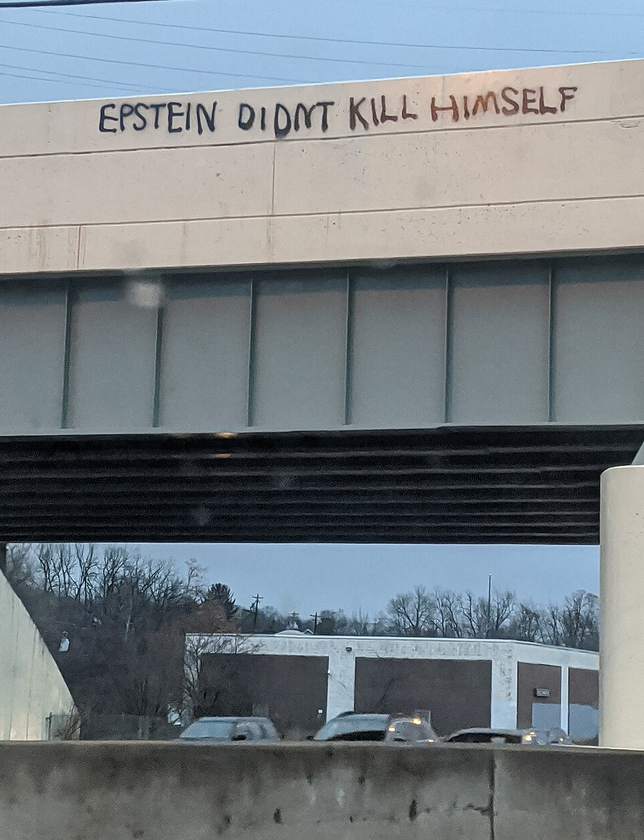
8 Unanswered Questions About Jeffrey Epstein’s Death
By Prem Thakker|Zeteo Photos: YouTube Screenshots|Wikimedia Commons Seven years ago, Jeffrey Epstein – the shadowy financier and pedophile intimately linked to powerful people around the world, including Donald Trump – died in jail. He was found dead in his jail cell at the Metropolitan Correctional Center in New York City, where he was awaiting trial for federal sex trafficking charges. Questions surrounding Epstein and his legacy have dogged Trump, particularly throughout his second presidency. Last year, due to significant public pressure, Congress passed a law mandating the Justice Department release its files related to Epstein. The Trump administration has been accused of slow-walking and covering up the release of the files, while members of its administration have refused to productively meet with Epstein’s victims. Epstein’s death, which was ruled a suicide, would have possibly been the first suicide in the Metropolitan Correctional Center in more than 20 years. That and many other puzzling questions and facts have left millions wondering: Did Jeffrey Epstein really commit suicide? The confluenceof procedural failures and dubious events surrounding his death has done nothing to quell suspicion. Here are eight unanswered questions about Epstein’s death: 1. Why weren’t required inmate checks performed? Between approximately 10:30pm on Aug. 9, 2019, until approximately 6:30am on Aug. 10, officers did not conduct any inspection of inmates in the unit that Epstein was being held in. Officers are meant to be doing rounds every 30 minutes of the unit – which means, over the course of the eight hours they skipped their duties, the officers skipped at least 15 mandated rounds of inspection. The officers, Tova Noel and Michael Thomas, submitted documentation falsifying those rounds to make it seem as if they did do their rounds. Thomas and Noel actually sat at their desk, browsing the internet. Noel searched “latest on Epstein in jail” at 5:42am and again at 5:52am. She and Thomas found Epstein dead less than 40 minutes later. Noel has testified that she had no role in Epstein’s death and blamed some of the problems that arose on the “dysfunctional culture” at the prison facility, including “severe understaffing, a lack of adequate training, inadequate communication between management and frontline correctional officers, and other systemic failures.” She acknowledged the submission of falsified records, but said it was not related to Epstein’s death, or an attempt to cover it up. In November 2019, Noel and officer Michael Thomas were charged with falsifying records and conspiring to make false records – the charges were later dismissed as part of a plea deal. 2. How did Epstein ‘injure himself’ on July 23? On July 23, Epstein was found lying semi-conscious on the floor in his cell, with red marks on his neck. He was escorted out and placed on suicide watch. There, Epstein indicated that his cellmate had tried to kill him and was harassing him, and that he informed his attorney about this. But hours later, Epstein said he did not know what happened, couldn’t explain the marks on his neck, and didn’t want to talk about the events leading up to his injury. He also, though, maintained he would not have tried to kill himself, at one point saying to jail staff that week he was “too much of a coward” to do that, and wondered aloud to someone else if the incident was a prank gone wrong. 3. Why was he removed from suicide watch? Given the uncertainty about what happened on July 23, it was notable how quickly Epstein was removed from suicide watch. He was downgraded to psychological observation just over a day later. Lawmakers and observers were puzzled by why Epstein was removed, considering the series of events that had occurred. While Epstein was reportedly removed from suicide watch by a psychological professional, others questioned how he could be back in a position in a matter of a few weeks to attempt suicide. “When removing such a high risk individual from suicide watch it would be critical to do it in a step-down fashion so that there is still some extra monitoring on the high-risk individual,” Lisa Boesky, a clinical psychologist and jail suicide expert from San Diego, told USA Today. She also said Epstein was still “a high risk for suicide” because of the nature of his crimes, the humiliation he was experiencing, and the reported suicide attempt just weeks before his eventual death. “This would increase his risk for suicide significantly.” While Epstein was mandated to have a cellmate after being removed from suicide watch, his cellmate was transferred out of the detention center one day before Epstein died. 4. Why was the rope he allegedly used to kill himself not specifically documented? Much of the scene of Epstein’s death was disheveled and rearranged by the time FBI agents arrived. Epstein’s body had been moved, and his belongings had b
 Black News

By Prem Thakker|Zeteo
Photos: YouTube Screenshots|Wikimedia Commons
Seven years ago, Jeffrey Epstein – the shadowy financier and pedophile intimately linked to powerful people around the world, including Donald Trump – died in jail. He was found dead in his jail cell at the Metropolitan Correctional Center in New York City, where he was awaiting trial for federal sex trafficking charges.

Questions surrounding Epstein and his legacy have dogged Trump, particularly throughout his second presidency. Last year, due to significant public pressure, Congress passed a law mandating the Justice Department release its files related to Epstein. The Trump administration has been accused of slow-walking and covering up the release of the files, while members of its administration have refused to productively meet with Epstein’s victims.
Epstein’s death, which was ruled a suicide, would have possibly been the first suicide in the Metropolitan Correctional Center in more than 20 years. That and many other puzzling questions and facts have left millions wondering: Did Jeffrey Epstein really commit suicide?
The confluenceof procedural failures and dubious events surrounding his death has done nothing to quell suspicion. Here are eight unanswered questions about Epstein’s death:
1. Why weren’t required inmate checks performed?
Between approximately 10:30pm on Aug. 9, 2019, until approximately 6:30am on Aug. 10, officers did not conduct any inspection of inmates in the unit that Epstein was being held in. Officers are meant to be doing rounds every 30 minutes of the unit – which means, over the course of the eight hours they skipped their duties, the officers skipped at least 15 mandated rounds of inspection. The officers, Tova Noel and Michael Thomas, submitted documentation falsifying those rounds to make it seem as if they did do their rounds.
Thomas and Noel actually sat at their desk, browsing the internet. Noel searched “latest on Epstein in jail” at 5:42am and again at 5:52am. She and Thomas found Epstein dead less than 40 minutes later.
Noel has testified that she had no role in Epstein’s death and blamed some of the problems that arose on the “dysfunctional culture” at the prison facility, including “severe understaffing, a lack of adequate training, inadequate communication between management and frontline correctional officers, and other systemic failures.” She acknowledged the submission of falsified records, but said it was not related to Epstein’s death, or an attempt to cover it up.
In November 2019, Noel and officer Michael Thomas were charged with falsifying records and conspiring to make false records – the charges were later dismissed as part of a plea deal.
2. How did Epstein ‘injure himself’ on July 23?
On July 23, Epstein was found lying semi-conscious on the floor in his cell, with red marks on his neck. He was escorted out and placed on suicide watch. There, Epstein indicated that his cellmate had tried to kill him and was harassing him, and that he informed his attorney about this. But hours later, Epstein said he did not know what happened, couldn’t explain the marks on his neck, and didn’t want to talk about the events leading up to his injury.
He also, though, maintained he would not have tried to kill himself, at one point saying to jail staff that week he was “too much of a coward” to do that, and wondered aloud to someone else if the incident was a prank gone wrong.
3. Why was he removed from suicide watch?
Given the uncertainty about what happened on July 23, it was notable how quickly Epstein was removed from suicide watch. He was downgraded to psychological observation just over a day later. Lawmakers and observers were puzzled by why Epstein was removed, considering the series of events that had occurred.
While Epstein was reportedly removed from suicide watch by a psychological professional, others questioned how he could be back in a position in a matter of a few weeks to attempt suicide.
“When removing such a high risk individual from suicide watch it would be critical to do it in a step-down fashion so that there is still some extra monitoring on the high-risk individual,” Lisa Boesky, a clinical psychologist and jail suicide expert from San Diego, told USA Today.
She also said Epstein was still “a high risk for suicide” because of the nature of his crimes, the humiliation he was experiencing, and the reported suicide attempt just weeks before his eventual death. “This would increase his risk for suicide significantly.”
While Epstein was mandated to have a cellmate after being removed from suicide watch, his cellmate was transferred out of the detention center one day before Epstein died.
4. Why was the rope he allegedly used to kill himself not specifically documented?
Much of the scene of Epstein’s death was disheveled and rearranged by the time FBI agents arrived. Epstein’s body had been moved, and his belongings had been rearranged, preventing the full ability to preserve evidence as it was, or to run basic forensic tests.
While evidentiary photos include documentation of things like a strip of range cloth tied into a noose-like shape, it’s unclear if that was even the rope Epstein had allegedly used to kill himself. There is no clear indication which strips of ligature recovered in the cell were actually used by Epstein. A rendering of the documented noose was included in the official autopsy report, but the Justice Department later revealed in 2023 that “the noose depicted is not the ligature Epstein used to kill himself.”
In fact, multiple strips of cloth were found in Epstein’s cell tied into noose shapes. Photos show an inordinate amount of extra linens and clothing strewn around Epstein’s cell.
Kristin Roman, the New York City medical examiner who performed Epstein’s autopsy, was skeptical whether the noose that came to the morgue with Epstein’s body was even the one he actually used.
5. Did he hang himself, or did someone strangle him?
Epstein’s family hired their own pathologist to weigh in on the case: Dr. Michael Baden, who served a brief stint as the chief medical examiner for New York City in the 1970s before acting as a forensic witness in high-profile cases. Baden maintained that the evidence points to a homicide rather than suicide, due to fractures of Epstein’s hyoid bone and larynx, which he argued were more indicative of strangulation.
Baden was at the autopsy. Roman, the aforementioned examiner who later said she was skeptical about the noose that came to the morgue, had shared misgivings and did not make a final determination of death during the autopsy. Roman later said the delay was due to extra diligence, given that there were people who could have conceivably wanted to kill Epstein. Days later, Roman’s superior, Barbara Sampson – who was not at the autopsy – officially ruled Epstein’s death a suicide.
Roman later affirmed that she stood by her office’s findings, and pushed back against Baden’s arguments suggesting that the injuries proved Epstein was strangled.
6. What were these bank transactions?
One of the officers who was not doing the required periodic rounds at the time of Epstein’s death, and who discovered his body, was Tova Noel. She made 12 cash deposits between April 2018 (before Epstein’s incarceration) and July 2019 – the largest of which was $5,000 on July 30, less than two weeks before Epstein’s death.
Those deposits were flagged by her bank for suspicious activity and were later reported to the FBI in a “suspicious activity report” that was filed in November 2019.
Noel, again, was the officer who also performed an internet search for “latest on Epstein in jail” in the final hour before Epstein was found dead. She has said she does not recall the searches.
Noel has maintained the source of the money she was depositing had “nothing to do with Epstein,” and that it’s solely related to her personal savings.
7. What was up with the cameras?
Many questions have been raised about the footage of the prison facility at the time of Epstein’s death. CBS News found that footage released by the FBI did not prove that no one entered Epstein’s cell area. Meanwhile, a DOJ report stated that while there were 11 cameras in the unit Epstein was held in, 10 were not recording at the time due to malfunctioning hard drives.
In that report, the DOJ cited another camera that covered a different entrance to the unit, but the footage was never released, and the report stated it did not show anything revelatory about Epstein’s death.
An FBI analysis did find a flash of “orange” looking to be going up the stairs towards Epstein’s cell, around 10:39pm on July 9, the night before Epstein died.
An internal FBI briefing revealed that the motion was “believed to be Tova Noel” (one of the officers who found Epstein), who was carrying “linen or inmate clothing” up to the area of Epstein’s cell.
Moreover, Wired revealed that nearly three minutes of footage were cut from the only functioning camera near Epstein’s cell from the night before he was found dead – contradicting claims that the DOJ and FBI made about the footage being a “full raw” surveillance video.
Even further, surveillance footage outside the area outside Epstein’s cell from his first alleged suicide attempt in July was also missing.
8. What exactly did then-President Donald Trump know at the time?
It’s unclear what Donald Trump, who has been deeply linked to Epstein, knew or didn’t know at the time of his death.
In the immediate aftermath, Trump’s attorney general, Bill Barr, said he was “appalled” to learn about Epstein’s death “from an apparent suicide,” and that it raised “serious questions that must be answered.”
Meanwhile, Trump retweeted a post alleging that Bill Clinton was connected to Epstein’s death. Asked about the post, Trump said, “What we’re saying is we want an investigation. I want a full investigation, and that’s what I absolutely am demanding. That’s what our attorney general – our great attorney general – is doing.”
Pushed further on the Clinton allegation, Trump said he had “no idea,” but fanned the flames of conspiracy, adding “you have to ask: Did Bill Clinton go to the island? That’s the question. If you find that out, you’re going to know a lot.”
While the New York City medical examiner affirmed Barr’s initial claim that the death was a suicide less than a week later, Trump flouted that. Over the course of years, he would continue to suggest Epstein may have been killed, or that something “weird” had gone on.
The oscillation is notable on its own, given Trump’s ties to Epstein – but no less given he was, again, president at the time. If there were any answers to be had, he perhaps had the highest possibility to find them.