Capacity Substitution: How Tunisia’s Problems Became Someone Else’s Priorities
In the summer of 2023, a young man from Gafsa tried to cross the Mediterranean on a small boat. He did not make it. His story is one of thousands — and it is increasingly understood by Tunisian institutions through the language of border management. It is also a story about who defines what a problem is. In June 2023, the European Commission announced a package for Tunisia: up to €900 million in proposed macro-financial assistance, €150 million in budget support, and €100 million for border management, search and rescue, anti-smuggling, and returns. In July, the EU and Tunisia signed […] The post Capacity Substitution: How Tunisia’s Problems Became Someone Else’s Priorities appeared first on African Arguments.
 Black News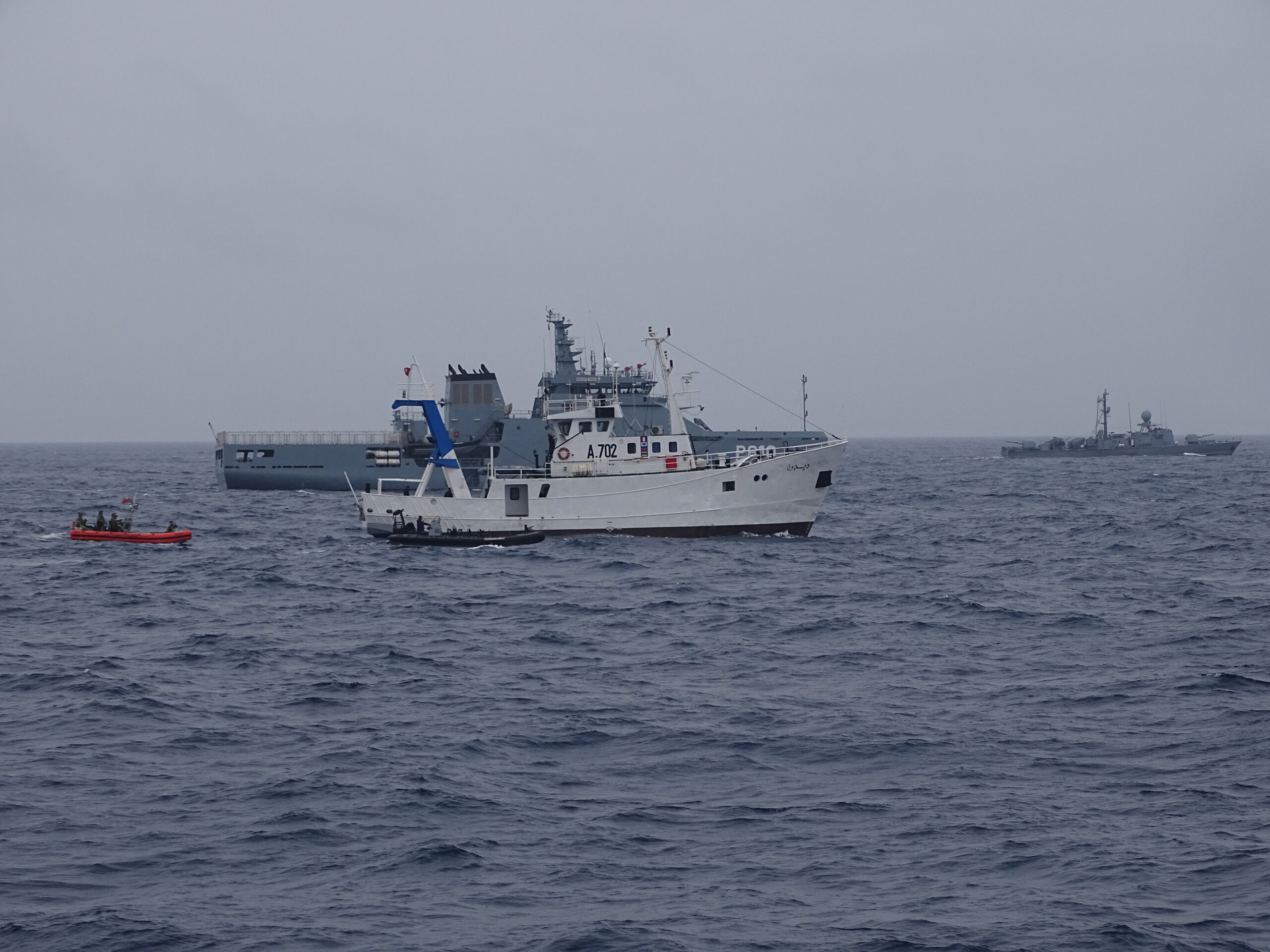
In the summer of 2023, a young man from Gafsa tried to cross the Mediterranean on a small boat. He did not make it. His story is one of thousands — and it is increasingly understood by Tunisian institutions through the language of border management. It is also a story about who defines what a problem is.
In June 2023, the European Commission announced a package for Tunisia: up to €900 million in proposed macro-financial assistance, €150 million in budget support, and €100 million for border management, search and rescue, anti-smuggling, and returns. In July, the EU and Tunisia signed a Memorandum of Understanding formalising the partnership. By September, a further €105 million was allocated to migration-related programmes. By December, the €150 million budget-support programme was operational.
The sequence is documented. What it produces institutionally is less visible. This article examines a mechanism I call capacity substitution. Capacity building strengthens a state’s ability to solve its own problems. Capacity substitution makes a state more efficient at solving problems defined by someone else. The distinction is simple. Its consequences are not.
Consider Tunisia’s migration apparatus. The EU–Tunisia Memorandum links European support to border management, anti-smuggling operations, search and rescue, and returns. These are legitimate European objectives. They are also objectives that European institutions can define, fund, monitor, and measure. European support has equipped units, funded training, and strengthened interception capacity.
What it has not done — and was not designed to do — is strengthen Tunisia’s capacity to address the economic conditions that generate migration. Youth unemployment stood at 35.4 percent in 2026. Graduate unemployment was 26.6 percent. Regional inequality remains entrenched.
The argument is not that European funding caused these figures. It is that external funding concentrates institutional development on a specific set of functions. Those functions become better equipped, better staffed, and more internationally connected. The functions that would address the structural conditions producing migration are not developed through an equivalent institutional investment. This is what capacity substitution describes.
A young unemployed person in Gafsa is unlikely to attempt to cross the Mediterranean simply because Tunisia lacks another surveillance system. The deeper driver is the narrowing of his economic and social horizon. If institutional capacity is concentrated on managing his departure, while the capacities that would address the conditions producing it are not developed through an equivalent investment, then the state becomes more effective at managing the symptom. It remains structurally less equipped to govern the cause. It does not require coercion. It does not require a conspiracy. It only requires that the external priority be better resourced than the domestic one.
Migration is not the only domain where this mechanism operates. European energy cooperation with Tunisia is another. EU funding for renewable energy, electricity interconnection, and green hydrogen is increasingly organised around projects that also serve European energy security: cross-Mediterranean interconnection such as the ELMED project, export capacity, and the decarbonisation of European supply chains.
Domestic energy challenges subsidy reform, grid reliability, and energy poverty are not absent from the relationship. But they are not the organising priority around which much of the external financing is structured. The result is a similar pattern: institutional capacity is strengthened in functions that serve externally defined priorities, while capacities addressing domestic structural conditions do not necessarily receive an equivalent institutional investment.
What migration and energy share is not a conspiracy. It is a logic. External resources tend to come attached to externally legible priorities. And externally legible priorities tend to be those that serve external needs.
MEDITERRANEAN SEA (April 23, 2021) A Tunisian navy boarding team boards a target vessel during a boarding exercise, while a second team from USCGC Charles Moulthrope (WPC 1141) provides support in the Mediterranean Sea on April 23, 2021. Charles Moulthrope and USCGC Robert Goldman (WPC 1142) are en route to their new homeport in Bahrain in support of the Navy’s U.S. Fifth Fleet and U.S. Coast Guard Patrol Forces Southwest Asia. The U.S. Coast Guard patrol vessels are conducting operations in the U.S Naval Forces Sixth Fleet area of operations supporting U.S. national interests and security in Europe and Africa. (U.S. Coast Guard photo by Petty Officer 1st Class Sydney Niemi/Released)
Tunisia is not unique in this respect. It is illustrative of a broader problem: external resources can strengthen African states in functions that matter most to external partners without necessarily strengthening their capacity to define and address their own priorities. The most consequential dimension of capacity substitution is not material. It is about how the state understands its own problems.
A state governs not only by allocating money and deploying personnel, but by deciding what the problem is. Migration can be defined as a border-management problem. It can also be defined as an unemployment problem, a regional inequality problem, or a social mobility problem. These definitions lead to different institutions, different indicators, and different funding streams.
The danger begins when the externally preferred framework becomes institutionally dominant not necessarily because it is more accurate, but because it is attached to funding, technical expertise, and measurable targets. The state begins to see its own crisis through categories supplied from outside.
The mechanism is cumulative. First, external funding reinforces a specific institutional function. Then that function becomes more measurable, more staffed, and more internationally connected. Then it becomes the reference point through which the problem itself is understood. By the time the state notices, the problem has already been redefined — and the institutions capable of defining it differently have been comparatively weakened.
The state does not stop governing. It gradually loses the institutional vocabulary through which governing is defined. Tunisia is not a puppet. It negotiates, accepts, rejects, delays, and reshapes external demands. It retains formal agency. But agency without sufficient economic and institutional autonomy is constrained agency.
Tunisia can, in principle, redirect its external relationships. The question is at what cost. The European Union accounts for approximately 59.5 percent of Tunisia’s total trade and 73.2 percent of its exports. European investors represent roughly 85 percent of foreign direct investment stock. The relationship is too structurally important to disengage from without substantial economic and institutional costs.
Accepting cooperation without protecting institutional autonomy creates a different trap: dependency becomes embedded inside the very institutions that are supposed to exercise sovereignty. It is not a puppet. It is a node in a network whose architecture it did not design and cannot unilaterally alter.
The question is not whether Tunisia should cooperate with Europe. Cooperation is difficult to avoid given the depth of the relationship. The question is what kind of cooperation it should seek.
The measure of successful cooperation should not be: How much capacity did Europe help Tunisia build? It should be: Did that capacity make Tunisia more capable of defining and solving Tunisian problems independently? If the answer is no — if Tunisian institutions become increasingly efficient at implementing priorities defined elsewhere while remaining less equipped to address the structural causes of their own crises — then capacity building has become capacity substitution.
The most dangerous migration does not occur at airports. It occurs when the state remains in place, but its capacity to define its own priorities has already migrated elsewhere.The quiet erosion of sovereignty does not begin when a state loses the ability to govern. It begins when it increasingly governs problems defined elsewhere.
And once that happens, reversing the institutional imbalance becomes considerably harder.
The post Capacity Substitution: How Tunisia’s Problems Became Someone Else’s Priorities appeared first on African Arguments.