Dangote’s Kenya bet is about more than capital
For decades, Africa has asked the world to believe in its potential. We have courted multinational companies, addressed investment forums and made the case that Africa is not simply a continent of risk, but of extraordinary opportunity. We were right to make that case. We should continue making it. But Aliko Dangote’s investment in Kenya […] The post Dangote’s Kenya bet is about more than capital appeared first on New African Magazine.
 Black News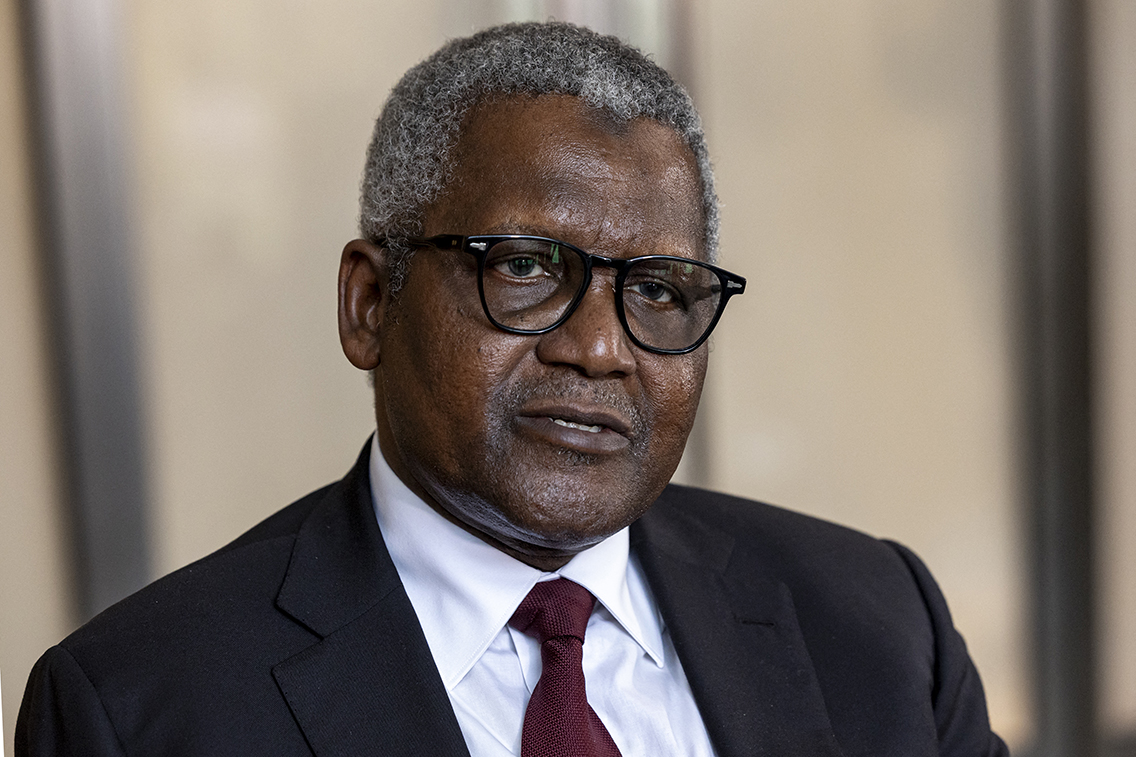
For decades, Africa has asked the world to believe in its potential. We have courted multinational companies, addressed investment forums and made the case that Africa is not simply a continent of risk, but of extraordinary opportunity. We were right to make that case. We should continue making it.
But Aliko Dangote’s investment in Kenya raises another question, one that may matter even more to Africa’s economic future. Do we have enough faith in one another to invest in one another? That is what makes this investment significant. The numbers will attract attention, as large numbers always do. But capital alone is not the most interesting part of this story. What matters is the conviction behind it: an African entrepreneur prepared to make a substantial, long-term industrial bet beyond his own country. That is an expression of faith in the continent. Africa needs more of it.
There is no contradiction between welcoming global capital and wanting African capital to move more confidently across African borders. International investment, technology and markets will remain essential to our growth. But a continent cannot achieve its full economic potential if its own capital remains hesitant about crossing borders. For all our declarations about African integration, we still trade too little with one another, invest too cautiously in one another and too often think of opportunity within national boundaries.
A Nigerian investing in Kenya should not be remarkable. Nor should a Kenyan company building in Ghana. African capital should be able to identify opportunity across the continent and act on it. That requires more than ambition. It requires trust. Long-term capital needs confidence in institutions, contracts and the rules of the game. This is why Kenya’s responsibility in this story matters as much as Dangote’s.
The measure of success is not simply whether we attract investment. It is whether we create conditions in which investment can endure and produce value beyond the original transaction. As I argue in Beyond the Ballot, democracy is ultimately strengthened by institutions that command trust beyond the political moment. The same principle applies to investment. Strong institutions create certainty. Certainty reduces risk. Trust gives investors, citizens and communities the confidence to plan for the long term. An investment of this magnitude should neither become political property nor be insulated from legitimate scrutiny. Government should be able to welcome it. Opposition should be able to question it. Citizens should be able to ask what Kenya gains from it. These positions need not be contradictory.
The questions are practical. Will Kenyan businesses enter the supply chain? Will new skills and industrial capabilities be created? Will young Kenyans gain pathways into technical and managerial roles? Will communities closest to the investment participate meaningfully in the opportunities it creates? Those communities matter. Large industrial projects may be conceived in boardrooms and negotiated in government offices, but they take root in real places, among people with histories, livelihoods and ambitions of their own.
The most enduring investments understand this. They create more than jobs. They create ecosystems. Local businesses become suppliers. Young people acquire new skills. Entrepreneurs find opportunities in new value chains. Infrastructure attracts further investment. The strongest legacy of capital is not simply what it builds, but what it enables others to build. That is particularly important for Africa.
For generations, we have exported raw materials and imported much of the value created from them. Along the way, we have also exported jobs, skills and opportunities that might have been created at home. Industrialisation offers the possibility of changing that equation. But it requires investors willing to think at scale, governments capable of providing certainty and communities that can see themselves in the prosperity being created. It also requires us to make African integration real.
Governments can negotiate trade agreements and remove barriers. But integration ultimately happens when businesses cross borders, supply chains connect countries, African savings finance African industry, and entrepreneurs see opportunity beyond their home markets. That is why Dangote’s Kenya investment matters beyond Kenya.
Twenty years from now, its most important measure should not be the billions committed at the beginning. It should be the businesses that grew around it, the capabilities it created, the lives it changed and the investments that followed. Africa will continue to ask the world to invest here. We should. But perhaps we are entering a more consequential phase, one in which Africans increasingly make that case to one another.
Dangote has made his bet. It is a bet on Kenya, certainly. But it is also something larger: a statement of faith in Africa’s capacity to build, industrialise and create opportunity for itself. Our responsibility is to make that faith worthwhile. For too long, Africa has asked the world to believe in us. The next chapter should be about believing in one another.
The post Dangote’s Kenya bet is about more than capital appeared first on New African Magazine.