For real security, Africa must construct its own defence
Africa is being torn apart by foreign interests, fighting their battles on African soil, using their weapons and destroying lives and countries. The continent does not need more deadly weapons from outside – it needs to build its own security apparatus using the skills that are already available. When I last wrote in these pages […] The post For real security, Africa must construct its own defence appeared first on New African Magazine.
 Black News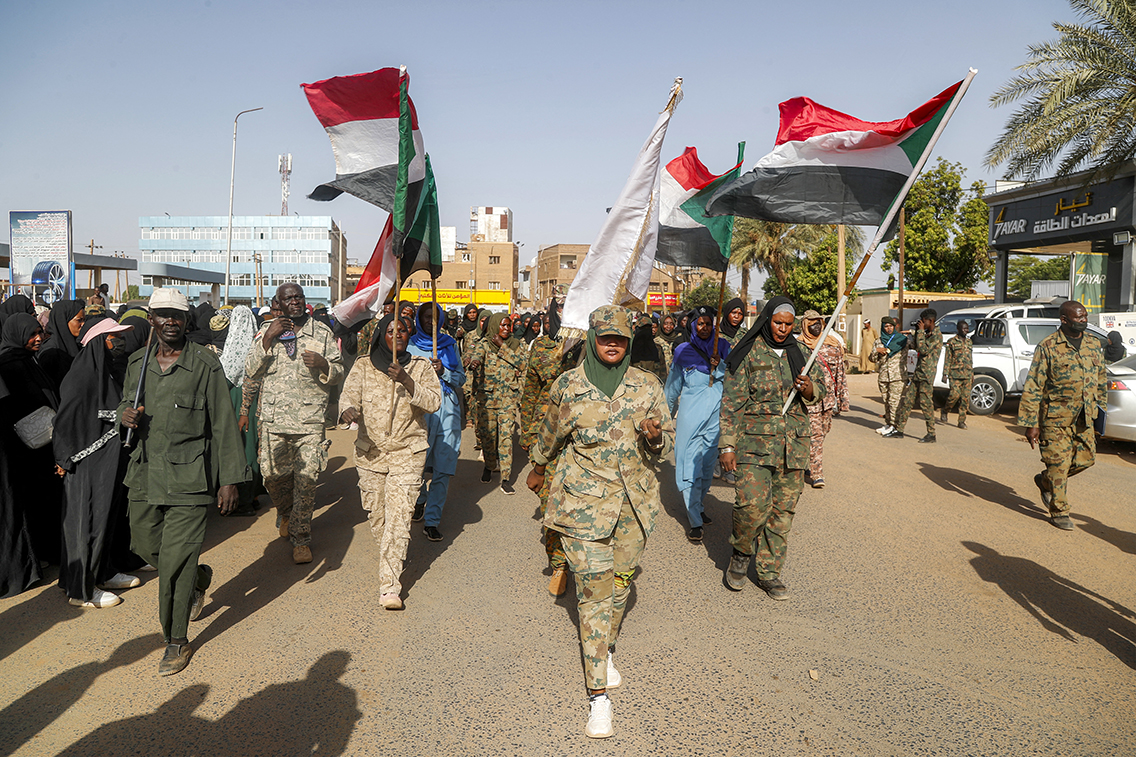
Africa is being torn apart by foreign interests, fighting their battles on African soil, using their weapons and destroying lives and countries. The continent does not need more deadly weapons from outside – it needs to build its own security apparatus using the skills that are already available.
When I last wrote in these pages about African security, I argued that a continent which outsources its defence outsources its destiny. I take no satisfaction in how thoroughly events have proven the point.
Consider what has happened since. El Fasher – the capital of North Darfur, Sudan – fell in October 2025 after an 18-month siege in the ongoing civil war and the UN documented more than 6,000 killings in the first three days alone. A fact-finding mission has now concluded that what happened in Darfur bears the hallmarks of genocide.
In the Sahel, jihadist coalitions blockaded the fuel supply of a national capital and launched coordinated attacks across an entire country. The insurgency that was once contained to the tri-border area is now probing Benin, Togo and the coastal states of the Gulf of Guinea. This is not looming insecurity. It is insecurity that has arrived.
And it has arrived with new tools. The character of war has changed faster in the last three years than in the previous 30. In Mali, armed groups that relied on motorcycles and Kalashnikovs a decade ago now field strike drones; recorded drone attacks by Jama’at Nusrat al-Islam wal-Muslimin (JNIM) alone rose from fewer than 10 in 2024 to around 80 in 2025. Shahed-type loitering munitions, refined on the battlefields of Ukraine, have appeared in the Sahel. Researchers count more than nine hundred drone strikes across 15 African countries, with thousands of dead. Artificial intelligence is compressing the time between detection and destruction. A weapon that costs less than a motorbike can now destroy an aircraft that costs more than a hospital.
The uncomfortable truth is that Africa has become the proving ground for other people’s technology and other people’s rivalries. Foreign powers arm proxies on our soil. Foreign missions arrive, fail and withdraw, leaving governments more exposed than they found them.
Mercenaries fill the vacuum and answer to capitals thousands of kilometres away. Every one of these arrangements has the same flaw: the security of Africans is somebody else’s business decision. When priorities shift in Washington, Moscow, Paris or Abu Dhabi, the equipment stops arriving, the advisers go home, and the ammunition runs out.
Listen to African youth
So what should Africa do? Start by listening to Africans. The 2026 African Youth Survey, commissioned by the Ichikowitz Family Foundation, interviewed 4,901 young people aged 18 to 24 across sixteen countries, including Burkina Faso, Chad, Somalia, Mozambique and the DRC, places where insecurity is not an abstraction. Their answers should reframe this entire debate.
Seventy per cent of young Africans say they feel safe in their country, and satisfaction with police and security services is at its highest level since the survey began. But scratch the surface, and the picture sharpens. Asked to name the biggest threat to safety in their communities, 54% do not say terrorism or invasion. They say unemployment and poverty. Asked what governments should prioritise to improve security, 56% say job creation for young people, well ahead of military investment at 35%.
At the same time, 78% worry about armed groups crossing borders, 79% about weapons and drug smuggling and 80% about human trafficking. And when asked what they want from international partners, only 29% prioritise military and security support. They want infrastructure, investment, respect for our resources and technology transfer.
There is no contradiction here. The message is not that Africa needs less security capacity. It is that security cannot be built by military capability alone. Young Africans understand that a secure country needs both the ability to defend its territory and the economic and institutional foundations to make society resilient. They know something that too many security planners do not: security and development are not separate budget lines. They are the same project.
The Global Terrorism Index confirms that the Sahel now accounts for the majority of the world’s terrorism deaths, and researchers find that the single biggest driver pushing young recruits into extremist groups is not ideology but abuse at the hands of state security forces, compounded by the absence of work and dignity.
Every unemployed young man in a neglected border region is a recruitment opportunity for somebody. Every job created is a counterterrorism operation that costs nothing to sustain.
This is why the answer to Africa’s security crisis is not simply to buy more weapons from abroad. It is to build defence and security capability at home. Sovereign defence industrial capacity does three things at once. It guarantees that African armies can sustain, repair and adapt their own equipment without waiting for a foreign patron’s permission. It creates exactly the skilled industrial jobs – in engineering, electronics, software and advanced manufacturing- that our young people are demanding. And it ensures that the technologies now reshaping war, unmanned systems, counter-drone defences, and AI-enabled surveillance are developed by people accountable to African governments and African citizens.
A model that works
I have spent more than three decades proving this model works. Technology can be transferred. Production can be localised. African engineers can design and build aircraft, armoured vehicles and unmanned systems that compete with anything in the world, and partner nations can manufacture them on their own soil.
What has been missing is not capability. It is the political will to treat defence industrialisation as a development strategy rather than an indulgence.
The continent also needs to organise. No single African state can afford to master counter-drone defence, secure communications and AI-enabled intelligence alone.
Regional standardisation of equipment, pooled procurement, shared training academies and a continental framework for responsible use of autonomous systems are not luxuries. They are the minimum requirements for operating in the world that Sudan and the Sahel have revealed.
Rwanda, where 99% of young people told our survey they feel safe, shows what is possible when a state treats the safety of its citizens as the foundation of everything else. Safety builds confidence, confidence attracts investment, and investment creates the jobs that make societies resilient.
As leaders gather in New York this September, Africa’s message should be unapologetic. We are not asking the world for protection, because rented protection has failed
us everywhere it has been tried.
We are asking for partnership on our own terms: investment, technology transfer and the industrial cooperation that lets Africans defend Africans. The young people of this continent have told us, in their tens of thousands, what security means to them. It means a job, a border that holds and a government that delivers. It is time we built all three ourselves.
Ivor Ichikowitz is the founder of Paramount Group and chairman of the Ichikowitz Family Foundation.
The post For real security, Africa must construct its own defence appeared first on New African Magazine.