Houston Black judges lead fight to save democracy
Houston judges urge citizens to defend voting, courts, election integrity, and the rule of law.
 Black News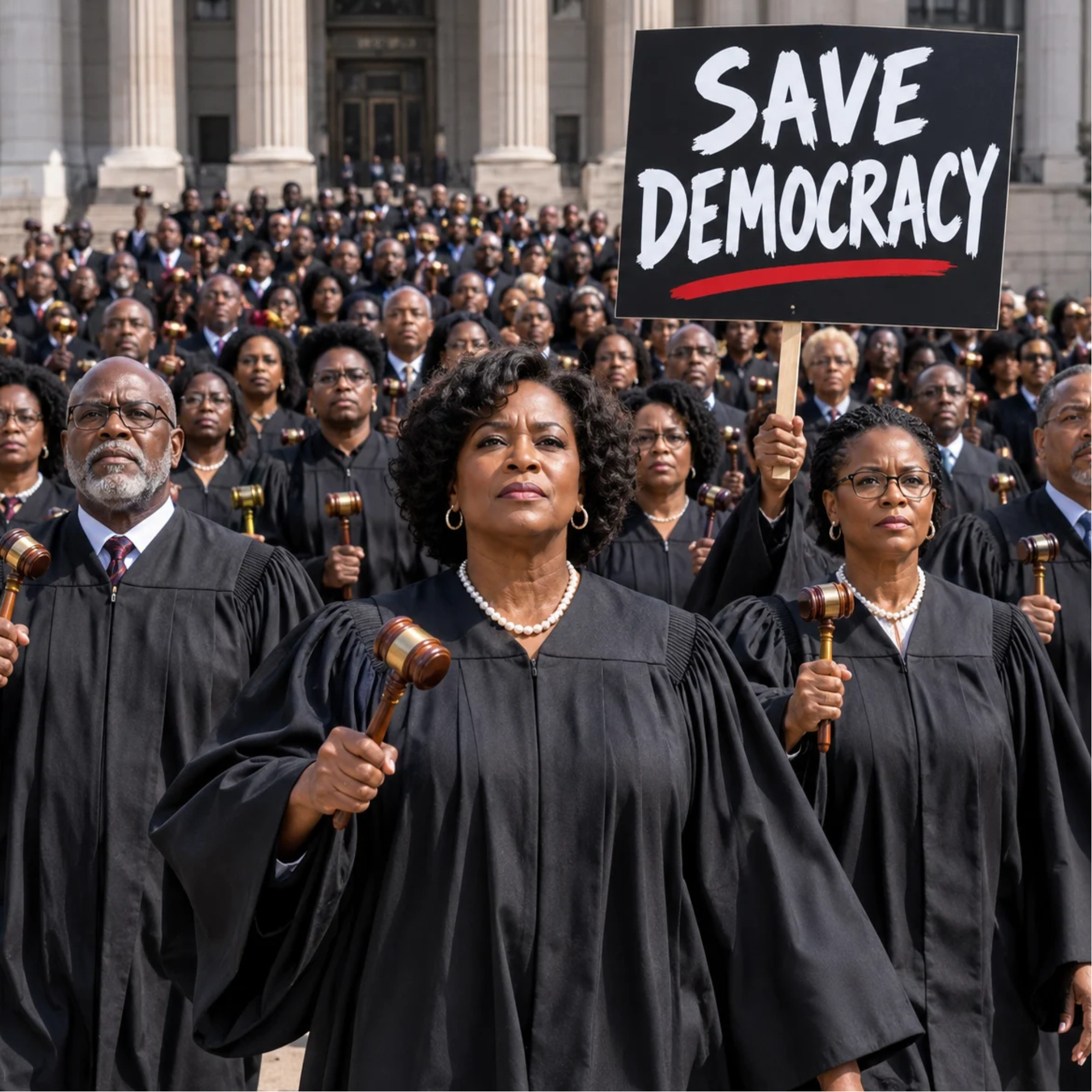


In an era of deep political polarization, democracy advocates increasingly worry about the institutions designed to prevent political power from becoming unchecked.
Among those institutions is the judiciary.
Former U.S. District Judge Vanessa Gilmore believes protecting democracy requires protecting courts that can operate independently, judges who can make decisions without political intimidation, and citizens who understand how elections and the legal system actually work.
“The need to protect our democracy, and how the judiciary is an integral part of protecting our democracy, the right to vote, and the right to free and fair elections,” said Gilmore.

That conviction has led the Houston-area jurist into civic education work with Keep Our Republic and its Article III Coalition, a national group of retired federal judges committed to judicial independence, separation of powers, and the rule of law. The coalition includes former judges appointed by presidents from both parties.
Gilmore is not alone locally. Fort Bend County Justice of the Peace Roderick Garner also sees judicial independence as essential to maintaining public confidence in the courts.
“Judicial independence is the most effective manner in which the Justice system can provide fair, impartial, and consistent renderings of justice,” said Garner.
Independence is the point
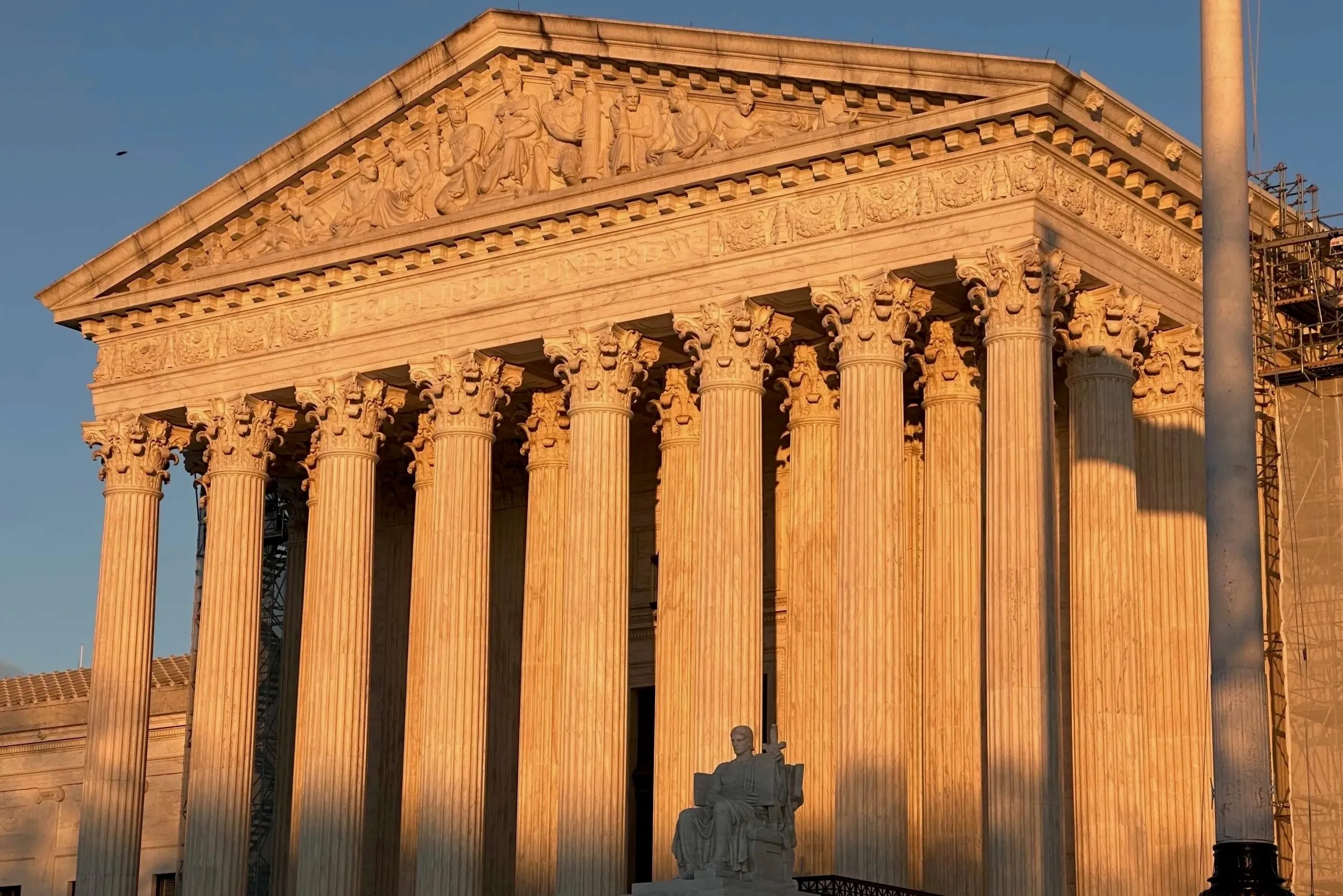
For Gilmore, the concern isn’t simply whether people approve of particular Supreme Court decisions. It’s whether Americans continue believing that courts are institutions where the Constitution, evidence, and law—not political pressure—ultimately prevail.
“We have to believe in the integrity of the judiciary if we believe in the democratic process,” she said.
Gilmore cautions against responding to controversial SCOTUS decisions by destroying public confidence in the judiciary itself.
“The attacks on the judiciary really are dangerous,” said Gilmore, noting that federal judges receive lifetime appointments precisely to insulate them from political pressure.
Still, hundreds of federal judges have received a wave of violent threats against themselves and their families this year, according to the U.S. Marshals Service. It comes amid a litany of verbal and written attacks by President Donald Trump and his administration on judges who have ruled against them. The U.S. Marshals Service reported security incidents of “significant concern” jumped nearly 60% in the 2025 fiscal year.
Multiple federal judges—including U.S. District Judges John McConnell and Mark Norris—have been targeted with unsolicited pizza deliveries to their personal homes ordered in the name of Daniel Anderl. Anderl is the slain son of federal Judge Esther Salas, who was murdered at the family home in 2020, making the use of his name an explicit psychological intimidation tactic.
“We want judges to feel free,” she said. “We also want judges to be free from fear, personal fear of their own safety.”

Garner contends SCOTUS, along with other federal courts, has always been chosen along party-line and presidential-affiliation lines. He sees the divide, from a democratic perspective, as never more prevalent than it is under the current administration.
“Currently, our federal judiciary is a vehicle for the executive branch of government; a dangerous precedent,” said Garner. “The remedy isn’t to change the philosophical culture of the Court, but to create a climate where qualified Justices from a cross-section of our country are able to render opinions and decisions without fear of retribution or ostracization.
“A judge should not be compelled to follow an ideology that contradicts the very Constitution he or she is sworn to uphold and protect.”
Protect the whole election
Gilmore’s work also emphasizes that democracy doesn’t begin and end when a voter marks a ballot.
“I think that we have several obligations as citizens of this country if we want to protect our democracy,” stated Gilmore. “We have to protect the vote. We have to protect the count. We have to protect the certification. And we have to protect the rule of law.”
Part of that protection involves shoring up logistics. Texas had more than 11.3 million cast ballots in the November 2024 presidential election. Harris County alone operates an election system covering city, county, state, and federal contests. County Clerk Teneshia Hudspeth, Harris County’s chief election official, famously stated, “Storms cannot stop democracy,” after the May 2024 primary runoff when severe weather disrupted voting locations.
But the protections Gilmore and others are focusing on involve ensuring that registered individuals can vote and that their votes are counted and certified, free from partisan interference.
Black voices in the fight
Houston’s Black political leadership has also been vocal about protecting voting rights and representative democracy. U.S. Rep. Al Green, a longtime Houston congressman, called a 2026 Supreme Court ruling concerning Louisiana’s congressional maps “a profound setback for voting rights and representative democracy.” He argued that electoral maps should reflect the communities they serve rather than dilute their political power.
The concern has particular resonance in Houston, where congressional redistricting has already reshaped Black political representation. Republican-led redistricting in Texas placed Green and fellow Democrat Christian Menefee into the same newly drawn congressional district, producing a highly consequential Democratic primary contest.
“I think that we have several obligations as citizens of this country if we want to protect our democracy. We have to protect the vote. We have to protect the count. We have to protect the certification. And we have to protect the rule of law.”
Judge Vanessa Gilmore
Education is defense
Gilmore believes one of the most important democratic weapons available to ordinary people is education. She points to voter-registration education, early voting, assistance for elderly and disabled voters, transportation to polling locations, and community-based voter education.
She specifically cited Houston’s Wheeler Avenue Baptist Church and its Ballot Boot Camp as an example of civic engagement.
“Citizens need to know and learn how elections work,” said Gilmore, aware of the power of misinformation to stymie voter participation.
“The biggest thing is we need to fight misinformation,” she said. “If you see information on the internet that doesn’t look like it makes sense to you, double-check it. Triple check it.”
Garner makes a similar argument.
“The most effective answer to most issues plaguing the general public is education,” he said, comparing partisan political manipulation and misinformation to Lucy repeatedly pulling the football away from Charlie Brown.
Country over party
The challenge facing democracy, Gilmore suggests, centers on whether Americans can maintain institutions strong enough to survive efforts to undermine the idea of “one person, one vote.”
That means protecting voters, election workers, judges, the counting process, and protecting the public’s ability to distinguish evidence from misinformation.
The Brennan Center’s 2026 survey found that 32% of local election officials had experienced threats, harassment, or abuse. Half said they were worried about political leaders interfering with their work, while 45% expressed concern about politically motivated investigations.
The pressures are real, as is the responsibility.
“Put country over party,” said Gilmore. “Our elections belong to the American people, and our courts belong to the rule of law. And our democratic institutions belong to all of us.”