Kampala summit fails to secure Somalia’s AUSSOM future
MOGADISHU (Somaliguardian) – A summit convened specifically to keep Somalia’s African Union peacekeeping mission functioning has instead confirmed how unresolved its future remains, according to Amani Africa‘s analysis of the gathering, published this week under the title “With no viable collective plan emerging from the AU and Kampala summit, it falls on each AUSSOM TCC […]
 Black News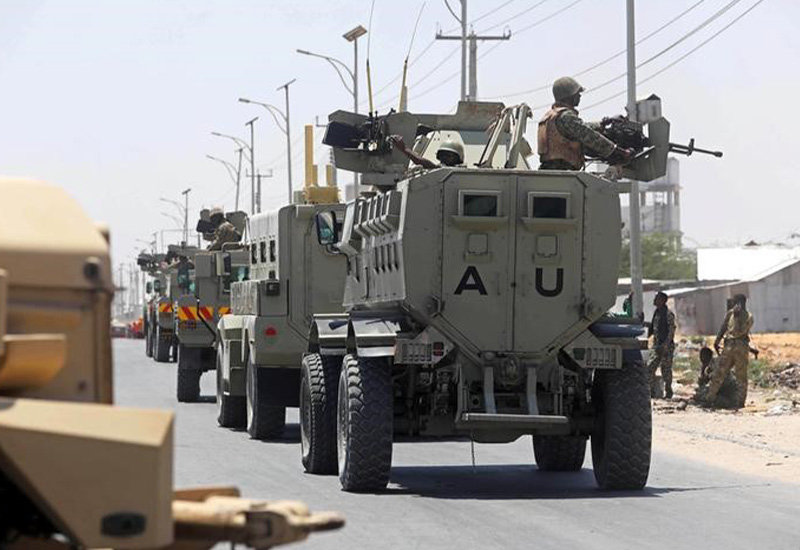

MOGADISHU (Somaliguardian) – A summit convened specifically to keep Somalia’s African Union peacekeeping mission functioning has instead confirmed how unresolved its future remains, according to Amani Africa‘s analysis of the gathering, published this week under the title “With no viable collective plan emerging from the AU and Kampala summit, it falls on each AUSSOM TCC to plan for saving itself individually.”
The second Extraordinary Summit of AUSSOM troop-contributing countries (TCCs) and the Federal Government of Somalia met in Kampala on 31 July 2026, called into being by a blunt warning from Washington. On 1 July, the United States Mission to the African Union notified the AU Commission it would not support extending the UN Support Office in Somalia (UNSOS) beyond AUSSOM’s current mandate expiry on 31 December 2026. The US added that while it would not object to AUSSOM’s mandate itself being renewed, it would refuse to back any UN Security Council resolution preserving UNSOS or authorising UN logistical and operational support — the machinery that keeps the mission’s troops fed, fuelled and mobile.
Amani Africa is unambiguous about what that letter means in practice: AUSSOM may still hold a mandate after December, but without the logistical architecture required to implement it. Kampala was meant to close that gap. By Amani Africa’s own account, it did not.
Failure One: No Financing Was Actually Secured
The summit’s headline outcome — a call for a UN-mandated integrated support arrangement to sustain AUSSOM for 18 to 24 months — sounds decisive. Amani Africa’s analysis treats it as largely aspirational. The summit tasked TCC foreign ministers with forming a Joint Task Force to pursue “diplomatic outreach” and organise a donors’ conference, but committed no actual funds and secured no binding pledge.
The think tank is pointed about why this matters: an earlier attempt at a full donors’ conference never materialised at all, and when a High-Level Financing Event was held on the margins of the UN General Assembly in September 2025, it raised only around $44 million — nowhere close to what the mission requires. Troop-contributing countries have effectively been left to subsidise AUSSOM out of their own budgets, and efforts to draw in non-traditional donors have “repeatedly produced little.”
Amani Africa’s verdict on repeating this playbook is blunt: there is little reason to assume another round of fundraising will fundamentally change the situation, given that international partners’ priorities have shifted and the political consensus that sustained the mission for two decades has visibly weakened.
Failure Two: The Financing Plan Rests on Assumptions Kampala Didn’t Secure
Even the 18-to-24-month framework the summit did agree to is, in Amani Africa’s assessment, built on a foundation that doesn’t yet exist. Its feasibility depends entirely on financing and logistical support that are — in the think tank’s words — “now least certain.” A companion Amani Africa analysis notes that Uganda’s Chief of Defence Forces used the Kampala gathering to call for “African-led alternative arrangements that would sustain the mission beyond 2026” — but acknowledged this option is contingent on the US reversing a decision it has shown no sign of reversing.
Given that, Amani Africa argues the more honest planning horizon isn’t 18 to 24 months at all — it’s a compressed six-to-twelve-month orderly wind-down, run in parallel with a replacement arrangement such as bilateral security deployment, rather than a longer transition the summit has no real means of funding.
Failure Three: Somalia Rejected the Political Deal — Again
Where Amani Africa’s analysis turns sharpest is on the summit’s political failure. Since the first Extraordinary Summit in Kampala in April 2025, TCCs have pushed for a parallel political accountability process to accompany the security transition. IGAD Deputy Executive Secretary Mohamed Abdi Ware told the ministerial meeting preceding the summit that Somalia “must insist” on assuming responsibility for its sovereign territory “in the shortest possible time,” and pressed the summit to secure an “iron-clad commitment” from Mogadishu toward political settlement. At the Chiefs of Defence Forces meeting on 29 July, Uganda pushed for Somalia to produce a roadmap for inclusive political dialogue; Somalia and Djibouti sought to defer the matter to the leaders’ level instead.
It was deferred, then rejected outright. President Hassan Sheikh Mohamud, as he had in April 2025, firmly and repeatedly objected to including political matters in the communiqué, insisting Somalia’s political affairs were a sovereign matter for Somalis alone to resolve. The provision was struck. Amani Africa’s framing is exact on what this cost: for the second consecutive summit, the opportunity for mutual accountability and a shared commitment was lost.
The consequences reach directly into the financing failure above. Amani Africa argues that stripping the political clause from the communiqué robbed the TCCs of “a much-needed bargaining tool” in their outreach to Washington and other partners – making it harder, not easier, to convince the mission’s key backers to keep funding it.
Failure Four: No Plan for the Worst Case
The most consequential gap, in Amani Africa’s assessment, is what the summit failed to produce even as a backstop. The think tank had argued in earlier analysis that a contingency plan for AUSSOM’s full withdrawal by December 2026 needed to be on the table. It wasn’t adopted. Amani Africa’s verdict is unambiguous: with no viable collective plan emerging from the AU and Kampala summit, it falls on each AUSSOM TCC to plan for saving itself individually.
In practice, that means each troop-contributing nation is now left drafting its own contingency plan in isolation — with no shared framework, no coordinated fallback, and no guarantee that individual national plans will align with each other if AUSSOM’s funding and logistics collapse simultaneously in December.
The Backdrop the Summit Didn’t Resolve
None of these failures occurred in isolation from Somalia’s deepening internal crisis. Relations between the Federal Government and the Federal Member States have deteriorated sharply, with Jubaland and Puntland formally suspending cooperation with Mogadishu. Disputes over constitutional amendments and the electoral process have widened the rift, and in June, tensions spilled into armed clashes in Mogadishu between federal government forces and opposition-aligned fighters. A government unable to demonstrate political cohesion at home, Amani Africa’s analysis implies, has a weaker hand in persuading international partners to keep underwriting its security abroad.
What Comes Next
With the summit’s communiqué offering aspiration rather than commitment, Amani Africa’s central warning is that the question facing the AU, the TCCs and Somalia is no longer simply how to preserve AUSSOM for another two or three years — it is how to keep the mission’s mounting financial and logistical strain from ending in a disorderly collapse, with serious consequences for the thousands of AU troops who have paid for the mission in lives and limbs, and for two decades of stabilisation investment now hanging on decisions still unresolved.
Contact us: info@somaliguardian.com