South Africa’s White DA Party Attempting To Win Economic Heartland In Local Elections
By Semafor Africa Photos: YouTube Screenshots|Wikimedia Commons South Africa’s Democratic Alliance promised an end to political appointments in public administration as the second-largest party in the ruling coalition aims to capture the country’s economic heartland in upcoming local government elections. The polls represent the first major electoral test for Cape Town Mayor Geordin Hill-Lewis, (shown above) who became DA leader in April, as he seeks to translate his local success into nationwide momentum. South Africa’s 247 municipal councils, which control more than $33 billion in annual local budgets, are up for grabs in the Nov. 4 polls. Survey data from the Social Research Foundation, a policy think tank, finds the DA leading in Johannesburg with 42% of the vote, while the rival African National Congress party had 18% support among likely voters, down from 30% earlier in the year. Separate research by Ipsos indicates that only 38% of South Africans consider their local municipal performance adequate. The elections threaten to entrench multiparty coalition rule after the ANC lost its outright majority across key metropolitan councils in 2021 — a showing that foreshadowed its historic loss of a parliamentary majority in 2024. The ANC is expected to release its manifesto next week.
 Black News

By Semafor Africa
Photos: YouTube Screenshots|Wikimedia Commons
South Africa’s Democratic Alliance promised an end to political appointments in public administration as the second-largest party in the ruling coalition aims to capture the country’s economic heartland in upcoming local government elections.
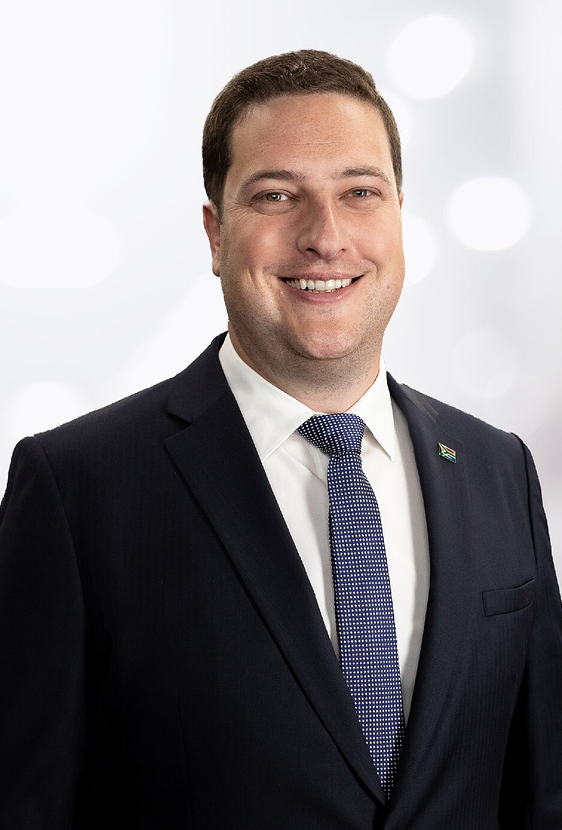
The polls represent the first major electoral test for Cape Town Mayor Geordin Hill-Lewis, (shown above) who became DA leader in April, as he seeks to translate his local success into nationwide momentum.
South Africa’s 247 municipal councils, which control more than $33 billion in annual local budgets, are up for grabs in the Nov. 4 polls. Survey data from the Social Research Foundation, a policy think tank, finds the DA leading in Johannesburg with 42% of the vote, while the rival African National Congress party had 18% support among likely voters, down from 30% earlier in the year. Separate research by Ipsos indicates that only 38% of South Africans consider their local municipal performance adequate.
The elections threaten to entrench multiparty coalition rule after the ANC lost its outright majority across key metropolitan councils in 2021 — a showing that foreshadowed its historic loss of a parliamentary majority in 2024. The ANC is expected to release its manifesto next week.