Tanzania installs GPS trackers on flamingoes to monitor the great birds’ migration patterns across East Africa
Over 80 percent of this global population of flamingos, according to Dr John Sulle, a scientist at the Tanzania Wildlife Research Institute, usually breeds at Lake Natron striding Longido, Monduli and Ngorongoro Districts of Arusha Region.
 Black News

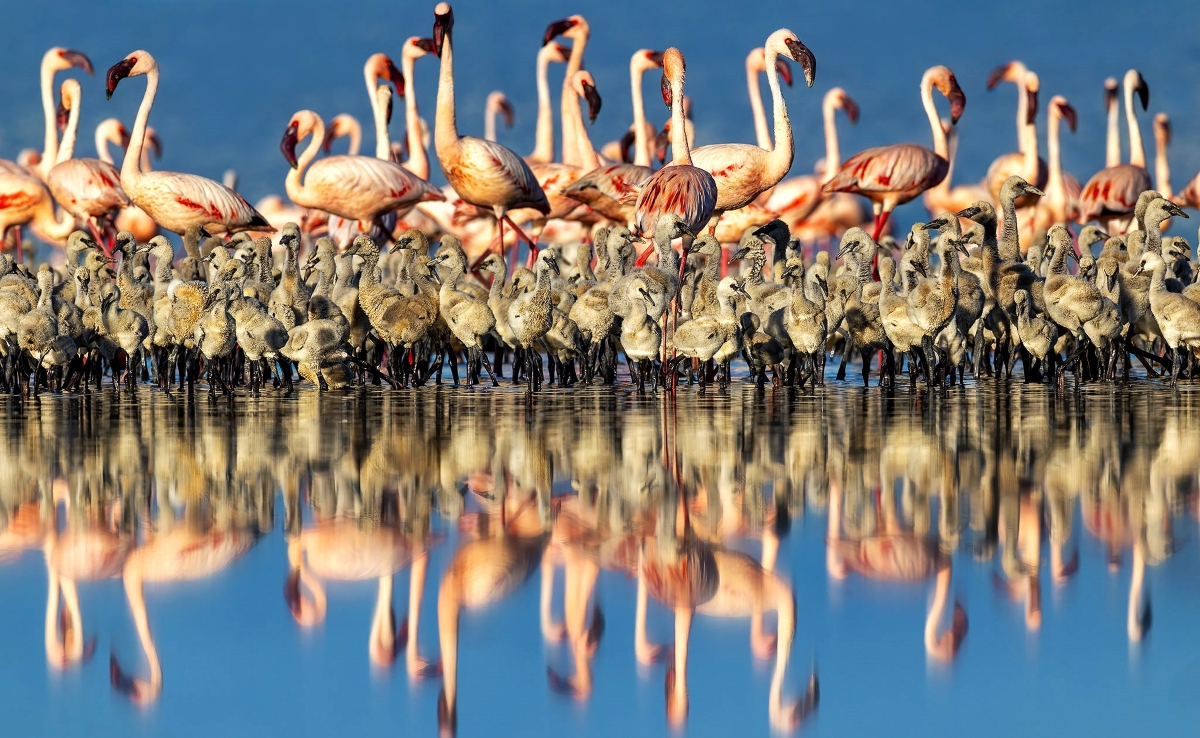
While the whole world seems to be interested in the Serengeti wildebeest migration, Tanzania, according to zoologists, is also home to another mass movement of birds traversing across the East African region.
As a result, Tanzanian experts have fixed Global Positioning System (GPS) radios on two lesser flamingo birds at Lake Natron to track the movements of their flocks and monitor the migratory birds’ patterns.
The results, as recently documented by the scientists, have also been interesting.
Dr Emmanuel Mgimwa, who is the Eastern and Southern Africa Coordinator for the International Union for Conservation of Nature (IUCN), Special Survivor Commission (SSC) Flamingo Specialist Group, revealed here that each of the two radioed birds displayed different movements.
“One travelled from Lake Natron, flew into the Ngorongoro Conservation Area, went into the caldera and stayed at the crater lake, before taking off again to the Engaruka escarpments of Monduli and later crossed the border to Kenya and was traced at Lake Magadi,” Dr Mgimwa, who is also the Director of Nature Tanzania, explained.
Natron in Tanzania and Magadi in Kenya are both Rift Valley Lakes of high alkalinity and it is being believed that at one time they were part of a single water body.
Meanwhile, according to the tracking results, the other tagged lesser flamingo travelled much further, up north.
The bird also moved from Natron and crossed the border into the neighboring country, but this other flamingo flew on to Lake Logipi, which is a saline, alkaline water body that lies at the further tip of the arid Suguta Valley in the northern Kenya Rift.
Lake Logipi is highly seasonal and according to experts, also ephemeral, with the water body being known for extreme alkalinity. It usually attracts large numbers of flamingos when conditions allow.
Wildlife experts continue to trace the two birds’ movement across Kenya and Tanzania, which signifies how the flocks of lesser flamingos, currently numbering up to 3.5 million in the world move across the region.
Over 80 percent of this global population of flamingos, according to Dr John Sulle, a scientist at the Tanzania Wildlife Research Institute (TAWIRI), usually breeds at Lake Natron striding Longido, Monduli and Ngorongoro Districts of Arusha Region.