Tanzania’s vice president resigns after concluding President Samia wanted a different deputy
Tanzania’s Vice President Emmanuel Nchimbi has resigned less than a year after taking office, saying he had become convinced that President Samia Suluhu Hassan wanted a different deputy.
 Black News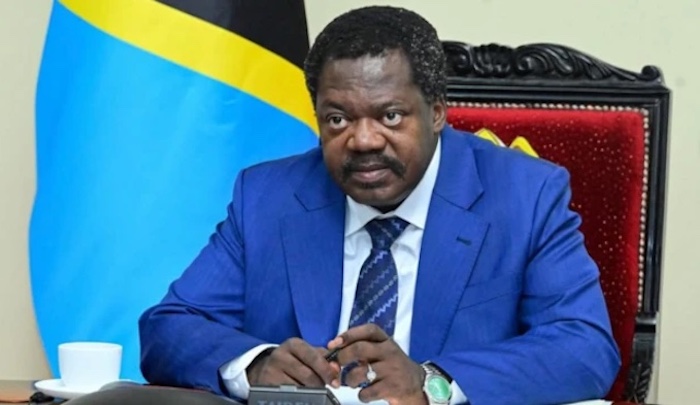


Tanzania’s Vice President Emmanuel Nchimbi has resigned less than a year after taking office, saying he had become convinced that President Samia Suluhu Hassan wanted a different deputy.
- Tanzania’s Vice President Emmanuel Nchimbi has resigned less than a year after taking office.
- He said President Samia Suluhu Hassan wanted a different deputy.
- Nchimbi will also retire from active politics and public service on September 4.
- Hassan must now nominate his replacement amid ongoing constitutional reform debates.
Nchimbi, who assumed office in November 2025, submitted his resignation to Hassan on Tuesday and announced that he would also retire from active politics and public service. His departure will take effect on September 4.
President Hassan has accepted the resignation, according to Tanzania’s chief government spokesperson, who said constitutional procedures to appoint another vice president would follow.
The government did not publicly give a reason for his departure. Nchimbi, however, provided an unusual insight into his decision.
He recalled making a commitment to Hassan in August 2025 that he would serve her and Tanzania faithfully, but would leave whenever she believed another person should occupy the vice presidency.
Nchimbi said recent developments had convinced him that the time for that change had arrived.
The resignation brings an abrupt end to a tenure that began after Hassan selected the former secretary-general of the ruling Chama Cha Mapinduzi, or CCM, as her running mate ahead of Tanzania’s 2025 general election.
It also makes Nchimbi the first Tanzanian vice president to voluntarily resign while serving in office.
A resignation after a politically sensitive speech
Nchimbi’s departure comes about a month after he publicly urged Tanzanians to continue pushing for a new constitution, an intervention that generated debate within the country’s political establishment.
DON'T MISS THIS: U.S. steps up pressure on Tanzania as election violence raises global concern
Speaking at an event organised by the Tanzania Human Rights Defenders Coalition in Dar es Salaam on July 24, Nchimbi said constitutional reform should remain a national priority.
He urged politicians, activists and other groups to pursue a constitution capable of advancing not only economic development but also human dignity.
The intervention was notable because demands for constitutional reform have long been championed by Tanzania’s opposition and civil society groups.
Some members of CCM subsequently criticised Nchimbi’s remarks. His comments also came at a particularly sensitive time for Hassan’s government.
Tanzania is still dealing with the fallout from the October 2025 election, in which Hassan was declared the winner with nearly 98% of the vote after major opposition candidates were excluded.
The election descended into the country’s worst political violence in decades.
A government-appointed commission of inquiry said in April that at least 518 people died from unnatural causes during the unrest, although its chairman acknowledged that the actual toll could be higher.
DON'T MISS THIS:EU lawmakers push to block $179 million EU funding for Tanzania over election and rights concerns
More than 2,000 people were injured, while hundreds sustained gunshot wounds.
The opposition rejected the commission’s conclusions and accused the government of attempting to avoid responsibility for the violence.
Hassan has promised reconciliation and further investigations into the unrest.
Constitutional reform has subsequently returned to the centre of Tanzania’s political debate, making Nchimbi’s July intervention particularly significant.
There has been no official confirmation that his position on constitutional reform caused his departure.
Samia now has another major political decision
Nchimbi’s resignation leaves Hassan with the task of selecting a new second-in-command less than a year into her latest presidential term.
Under Tanzania’s Constitution, when the vice presidency becomes vacant, the president nominates a replacement who must be confirmed by the National Assembly.
The position carries particular weight because Tanzania’s vice president is first in the presidential line of succession.
Hassan herself demonstrated the importance of that arrangement.
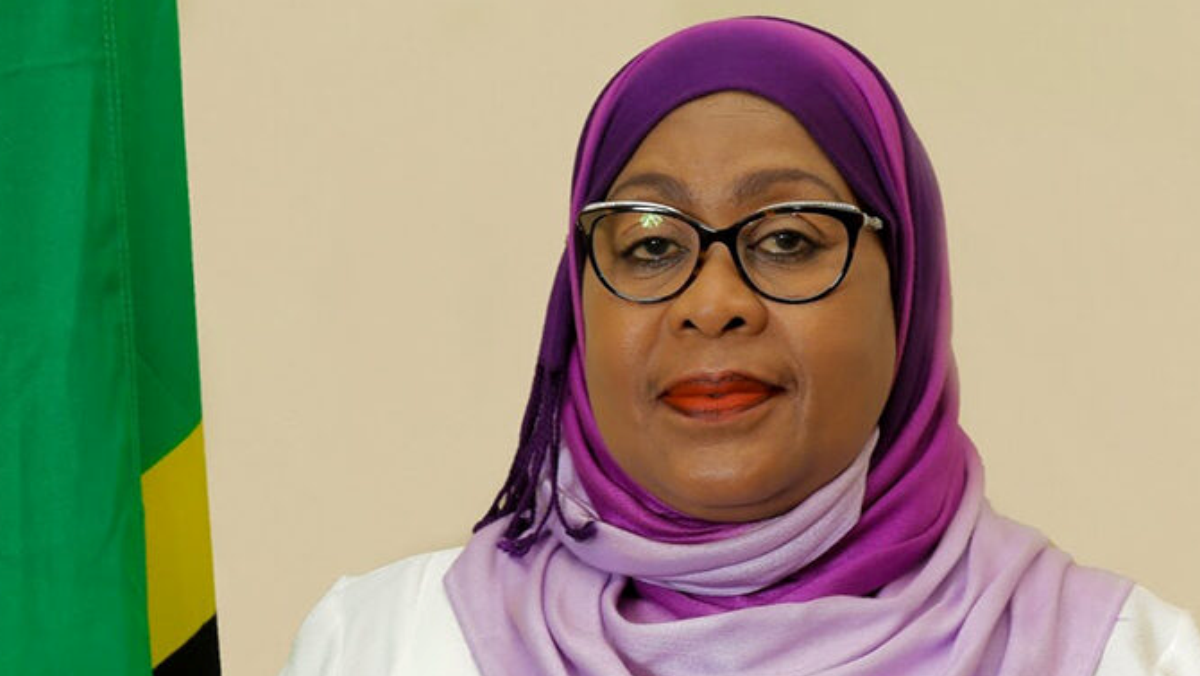
She was vice president under John Magufuli and automatically became Tanzania’s first female president following Magufuli’s death in March 2021.
Nchimbi’s predecessor, Philip Mpango, served as Hassan’s vice president from 2021 until 2025 before retiring from politics ahead of the election.
Nchimbi’s selection was therefore part of Hassan’s attempt to construct a new leadership team for her second term. Less than a year later, she will have to do so again.
The identity of his replacement will now be closely watched for what it could signal about Hassan’s political priorities, the balance of power inside CCM and the future of Tanzania’s increasingly prominent constitutional reform debate.