The Agency of Access
In her book The Agency of Access, disabled curator and art historian Amanda Cachia examines how disabled artists are increasingly making art that engages a range of senses, based on their lived experience of disability: “contemporary disabled artists are moving away from representations of disability and instead, creating an art of access, or access aesthetics, ... The Agency of Access
 Black News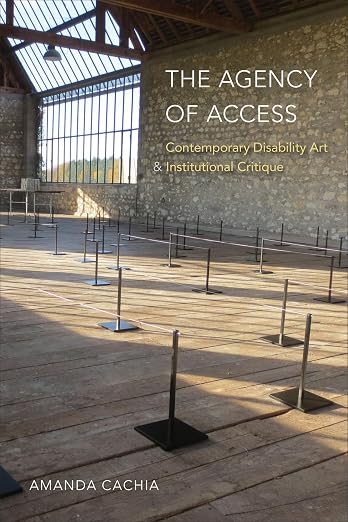
In her book The Agency of Access, disabled curator and art historian Amanda Cachia examines how disabled artists are increasingly making art that engages a range of senses, based on their lived experience of disability:
“contemporary disabled artists are moving away from representations of disability and instead, creating an art of access, or access aesthetics, through artworks that center… sensory expansion”.
Cachia explores disabled artists who challenge the dominance of vision through touch, sound, movement, sensory experience and alternative forms of communication. She demonstrates that access is not simply a matter of removing barriers; it can be a source of creativity.
She goes on to argue that this multi-sensory art is also bringing about improvements to accessibility in galleries and museums. This is supported by artists expanding their roles into curatorial functions.
Cachia is spot-on, I think, at identifying these shifts and trends by disabled artists. Her work is mainly in the United States and Canada, so most of the artists she profiles are based or have exhibited there. You might have heard of many of them: Christine Sun Kim, Carmen Papalia and Carolyn Lazard, for example. But I was interested to learn of artists who are new to me, such as Sugandha Gupta, who makes sensory textile work (I’m always drawn to textile art).
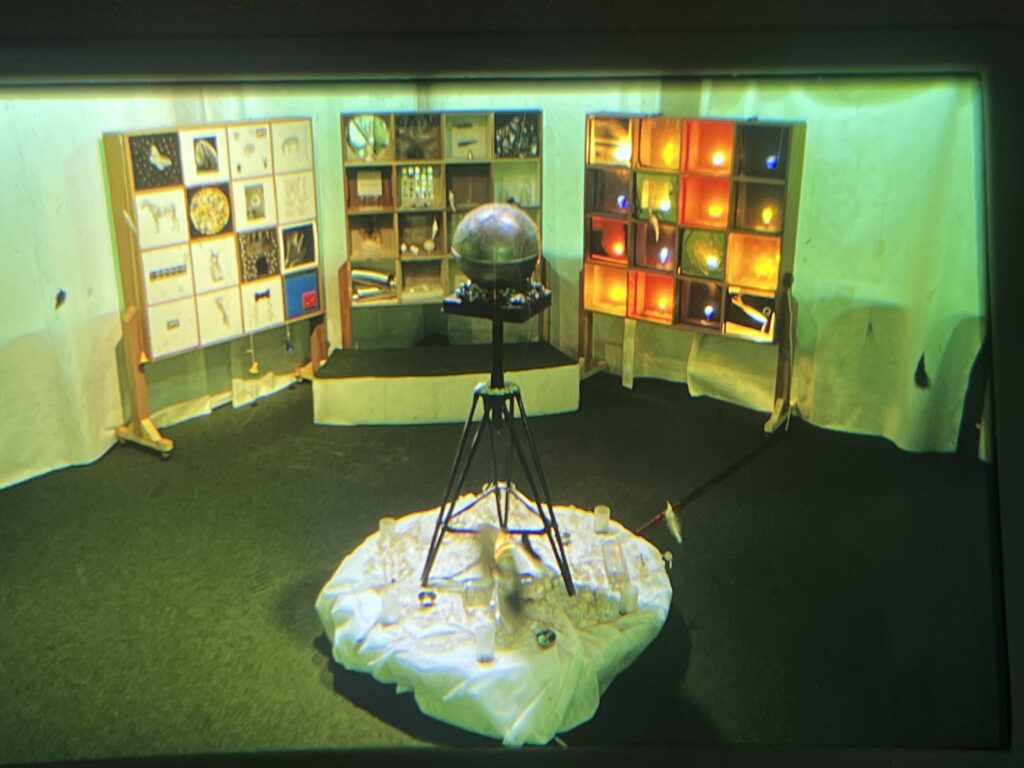
I found myself making connections with artists and ideas I have encountered in my own research and practice. This particularly resonated with my research into Audrey Barker, a pioneering disabled artist whose multi-sensory installations explored different ways of seeing and experiencing the world. Barker’s work informed my own curatorial project last year, Another Way of Seeing, in which disabled and neurodivergent artists created works intended to be explored through more than sight. Reading Cachia made me think about Barker’s practice within a much wider and longer history of artists who experimented with sensory art. This book has given me some ideas that I’d like to return to.
It also prompted me to think about connections with contemporary UK artists including Joe Rizzo-Nandi, Aaron McPeake, Tony Heaton, David Johnson, Michelle Duxbury and Sam Metz. Their practices demonstrate the breadth of this field, from creative and experimental audio description and sound to touch, movement and alternative ways of navigating gallery spaces.
In the chapter Please Touch, Cachia challenges the “tactile amnesia” of art history, asking why touch has so often been treated as a special accommodation rather than a legitimate way of producing knowledge. Throughout the book, Cachia places contemporary disability art within a broader art history, while highlighting how disabled artists and disability-led approaches have been overlooked.
The book throws down a challenge to curators. Disabled artists are increasingly doing more than producing artworks for galleries to display. They are curating, designing exhibitions, questioning institutional conventions and determining how audiences encounter their work. This is disability art as activism: changing the institution from within while also challenging its assumptions.
Cachia’s discussion of crip time, care and even unfinished work also raises important questions about how exhibitions are produced. The idea that work can be late, in progress or made differently – and still be professionally and publicly valued – is particularly relevant to disability-led practice.
The Agency of Access has reinforced my sense that access can be an artistic language in its own right. It is also a call for disability art to be recognised as part of art history.
*****
The Agency of Access by Amanda Cachia is published by Temple University Press, Philadelphia and is available from a range of sellers.