Unit Committee members seek stronger role in local development
The National Dialogue of Unit Committee Members has called for urgent reforms to provide Unit Committee members with the resources, capacity and clear mandate required to effectively drive development at the grassroots. The call was made at the three-day National Dialogue of Unit Committee Members in Accra yesterday, where members and other local government stakeholders … The post Unit Committee members seek stronger role in local development appeared first on Ghanaian Times.
 Black News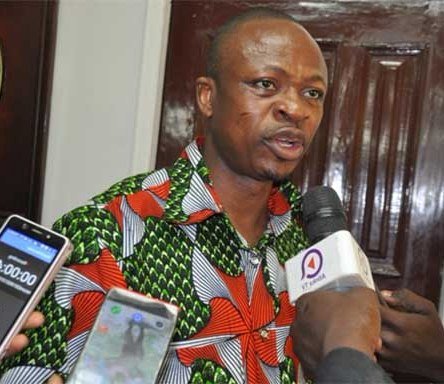
The National Dialogue of Unit Committee Members has called for urgent reforms to provide Unit Committee members with the resources, capacity and clear mandate required to effectively drive development at the grassroots.
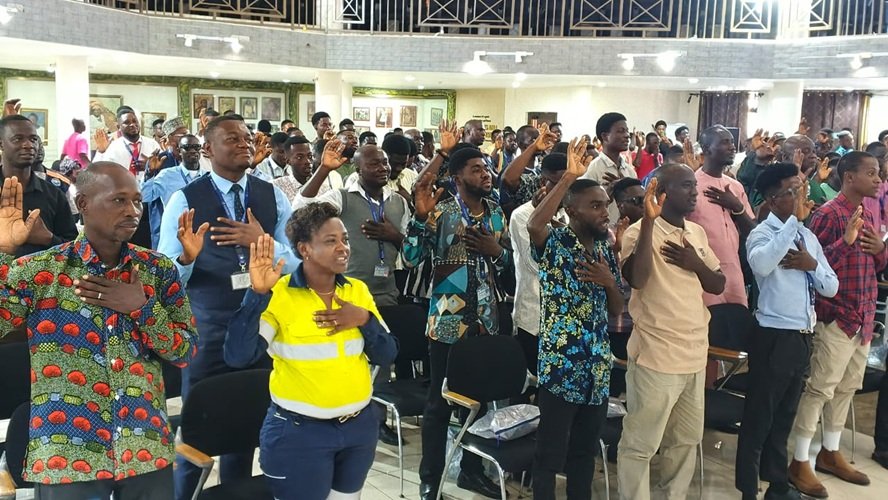
The call was made at the three-day National Dialogue of Unit Committee Members in Accra yesterday, where members and other local government stakeholders discussed challenges confronting grassroots governance and explored practical measures to strengthen community development.
The General Secretary of the National Dialogue of the Unit Committee Members Association, Reverend Augustine Saakuur-Karbo, said Unit Committee members remained critical partners in national development because of their direct connection with communities.
He said although Unit Committee members were mandated to serve as the “ears, eyes, legs and hands” of the government at the community level, many lacked the resources and capacity to effectively perform those functions.
Rev. Saakuur-Karbo said the situation had left several Unit Committee members feeling neglected, despite their constitutional and legal recognition within Ghana’s decentralised governance system.
He, therefore, called for a review of the relevant constitutional and legal provisions to give Unit Committee members greater recognition, resources and operational capacity to enable them to contribute meaningfully to national development.
He stressed that grassroots actors should be treated as co-developers in the country’s development process, noting that their proximity to communities placed them in a strategic position to identify and report challenges requiring government intervention.
According to him, Unit Committee members were well placed to identify issues such as illegal mining, flooding and other social and environmental challenges and help local authorities respond to them.
Rev. Saakuur-Karbo also expressed concern about inadequate coordination among Unit Committee members, Assembly Members, Presiding Members and Metropolitan, Municipal and District Assemblies (MMDAs), saying the situation created gaps and fragmentation in community development.
“You can’t build a super structure when the foundation is hollow,” he said, stressing that neglecting grassroots governance structures could undermine broader national development efforts.
He appealed to churches, traditional authorities, opinion leaders, businesses and other institutions to support the dialogue, describing it as a non-partisan platform for identifying challenges and opportunities at the community level.
He said the national dialogue would serve as a precursor to similar regional dialogues across all 16 regions, with the objective of strengthening grassroots participation and ensuring that community development was owned by local actors and supported by the central government and other stakeholders.
A Unit Committee Member for the Gbalonyo Electoral Area in the Bawku West District of the Upper East Region, Mr Ayariga Fredrick Apini, called for continuous dialogue among local representatives to address challenges confronting communities.
He said the initiative provided an opportunity for Assembly Members and Unit Committee members to bring pressing concerns from their respective communities to the attention of the appropriate authorities for action.
Mr Apini said although the initiative might face challenges, it had the potential to contribute to positive changes in communities and the wider society.
He stressed that the initiative was not intended to benefit individuals but to identify and address issues affecting communities.
He urged Assembly Members, Unit Committee members and other local stakeholders to actively participate in the dialogue and contribute ideas towards finding lasting solutions to developmental challenges.
Mr Apini said regular meetings would also enable members to assess existing challenges, identify gaps and collectively work towards addressing them.
BY EUGENE AMPIAW
You can now read the *Ghanaian Times* and *The Spectator* newspapers digitally on [TimesNewsPlus](https://timesnewsplus.com/newspapers).
Follow our WhatsApp Channel now! https://whatsapp.com/channel/0029VbAjG7g3gvWajUAEX12Q

The post Unit Committee members seek stronger role in local development appeared first on Ghanaian Times.