What future will college Class of 2030 create?
Incoming freshmen share hopes and concerns as experts forecast a rapidly changing America by graduation.
 Black News


This fall, college campuses across the country will welcome a new class of freshmen carrying backpacks full of textbooks, ambitions, and unanswered questions.
By the time they receive their diplomas in 2030, they will enter a world likely transformed by artificial intelligence, shifting demographics, climate pressures, and ongoing debates over democracy, equity, and opportunity. Experts predict these students will graduate into an America with a majority-nonwhite workforce, rapidly evolving industries, and ongoing political battles over diversity, equity, and inclusion (DEI).
The question isn’t simply what kind of world will they inherit. It’s also what kind of world they hope to build.
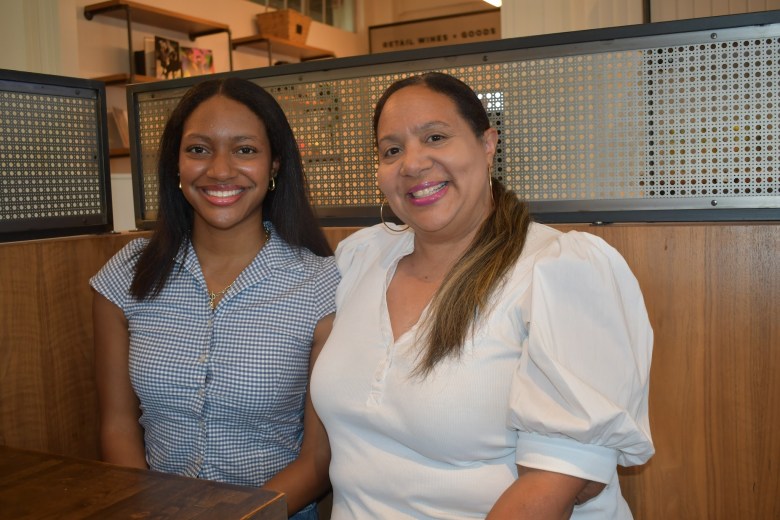
For incoming University of Texas student Carly Campbell, the answer begins with across-the-board respect.
“I want to see a world with compassion and opportunity,” she said. “I hope everybody is treated fairly and equally, no matter their gender, race, or sexuality.”
Her mother, Kim Haydel, admits the transition to college brings mixed emotions.
“I’m going to miss my baby,” Haydel said. “But I’m excited for her to take on the world and conquer new challenges.”
Graduating into uncertainty
Researchers say the Class of 2030 will enter adulthood during one of the most consequential decades in recent history. Organizations, including the International Labour Organization, World Economic Forum, and other economic forecasters, predict that artificial intelligence will fundamentally reshape work, while aging populations, climate change, and geopolitical instability place increasing pressure on governments and economies.
Automation could eliminate or transform millions of existing jobs even as it creates entirely new industries. Investments in renewable energy, sustainable infrastructure, and advanced technology could generate enormous economic opportunities—but only for workers prepared with new skills.
At the same time, growing demographic diversity is reshaping America itself. Younger generations are becoming increasingly multicultural, creating new opportunities for leadership, innovation, and representation while also fueling political conflict over immigration, voting rights, and inclusion.
For many students preparing to begin college, these aren’t abstract policy debates—they’re personal realities.
Looking beyond today’s divisions
Campbell believes society has lost some of the momentum toward greater understanding that seemed possible just a few years ago.
“It feels like we’re going backward,” she said. “During the Black Lives Matter movement, conversations were about treating everyone fairly and equally. Now, removing DEI from workplaces, I feel like we’re going backward.”
Her mother shares that concern.
“We’re in a state of divisiveness,” Haydel said. “I’d like to see everyone coming together, with equal opportunity and fair treatment for all, no matter what you look like, believe, or where you’re from.”
Those hopes stand in contrast to a political landscape that many legal scholars believe will continue evolving through the end of the decade.
Following recent Supreme Court rulings that have negatively affected voting rights and other civil rights protections, advocacy organizations are increasingly shifting their legal strategies toward state constitutions, local policymaking, and long-term constitutional challenges. Rather than relying primarily on federal protections, many civil rights groups are preparing for battles over the 2030 Census, voting access, redistricting, and economic equity.
Meanwhile, corporations are also adapting. Many companies have modified their approaches to diversity initiatives, emphasizing inclusive hiring practices, employee belonging, and socioeconomic opportunity while restructuring programs to withstand legal scrutiny.
As DEI strategist Lily Zheng has argued, “DEI is far from dead… This is our moment to double down on our impact, not just good intentions.”
Building an empathetic future
UT-bound freshman Amari Walker says today’s political climate weighs heavily on many students entering adulthood.

“It weighs on us a lot,” said Walker, pointing to immigration enforcement, concerns within communities of color, and challenges facing LGBTQ+ individuals. “It can be very challenging and discouraging for us coming into this new world.”
Still, he refuses to surrender hope.
“We need to move forward with a lot less hate in our hearts,” Walker said. “We need to be a lot more forgiving and empathetic when making decisions.”
His vision for life after graduation isn’t focused on wealth.
“I want a world where normal people aren’t super uncertain about how we’re going to live, make money, and spend time with the people we love,” Walker said.
Experts note that by 2030, economic inequality, housing affordability, and workforce disruption will remain defining issues for young adults. At the same time, advances in artificial intelligence and automation could dramatically improve productivity if governments and employers invest in worker retraining and education.
The decade ahead may reward adaptability as much as technical expertise.
Change through the arts
Neither Campbell nor Walker believes change happens only through politics. Both see the arts as powerful tools for healing, communication, and community building.
Campbell hopes to pursue professional dance while becoming a physical therapist.
“I want to contribute with kindness, respect, and leadership,” she said. “The arts create a sense of belonging and connect people from different backgrounds. Dance connects people without even saying anything.”
Walker plans to use his public relations education to help him become a change agent.
“I want to see a world with compassion and opportunity. I hope everybody is treated fairly and equally, no matter their gender, race, or sexuality.”
Carly Campbell
“I want to use my skills to be an advocate for the arts,” he said. “The arts are a great tool for people to make their voices heard.”
Their perspectives reflect a broader trend among many younger Americans who increasingly view creative expression, community engagement, and mental well-being as essential parts of civic life rather than separate from it.
Hope remains defining characteristic
Despite headlines filled with political polarization, technological disruption, and economic uncertainty, Haydel remains optimistic about the generation preparing to enter college. Watching her daughter interact with people from different backgrounds gives her confidence.
“I’m proud of the person she is,” Haydel said. “She’s accepting of everyone and very non-judgmental. That makes me hopeful for our future generation.”
Walker also finds hope in community.
“I keep close with the people who I love and who love me,” he said. “We remind each other everything will be fine if we keep working toward our goals.”
Campbell offers similarly simple advice to her classmates preparing for their first semester away from home.
“Keep pushing,” she said. “Have each other’s backs and keep being positive.”
By 2030, today’s freshmen will become tomorrow’s teachers, engineers, artists, healthcare professionals, entrepreneurs, and public servants. They will inherit enormous challenges—but also unprecedented opportunities to redefine work, strengthen communities, and reshape democracy. Ultimately, the future awaiting the Class of 2030 may depend less on the world they inherit than on the one they choose to create.