When A Black Son Dies, Why Is His Mother The One Put On Trial?
A mother wants to know what happened to her son. That should not be controversial. It should not make her a target. It should not lead a country to ask her to be quieter, calmer, or more gracious while she is grieving. But after the Jackson County, Mississippi, grand jury ruling in the death of […]
 Black News
A mother wants to know what happened to her son. That should not be controversial. It should not make her a target. It should not lead a country to ask her to be quieter, calmer, or more gracious while she is grieving.
But after the Jackson County, Mississippi, grand jury ruling in the death of 18-year-old Nolan Wells, his mother, Christine Wonsley, has faced public criticism for continuing to ask questions. She has not been charged with a crime. She has not been accused of harming anyone. She is a mother trying to understand how her son died.
Christine Wonsley deserves answers about her son’s death, just like any other mother would. That should never have to be argued.
This is Successful Black Parenting Magazine’s analysis and opinion, alongside reported facts. The case remains ongoing, additional information is being released, and details may change.
Short Answer: The grand jury’s no-true-bill decision means jurors declined to indict anyone based on the evidence presented to them. It does not erase the family’s unanswered questions. It also does not make a grieving Black mother suspicious simply because she wants an independent, transparent process. No mother should have to earn the right to know what happened to her child.
Why This Matters for Parents of Black Children
What happens when your child dies and the official explanation does not answer every question you have? You may seek medical records, forensic reviews, phone data, witness statements, and outside help. That is not automatically an accusation. It is often what responsible family advocacy looks like.
Ask yourself honestly what you would do. If your child was found dead and the explanation did not add up to you, you would ask questions. You would ask for records. You would ask who examined what and when. You would not accept ‘we’ll never know’ as the final word about your own child. Christine Wonsley is doing exactly what any loving mother would do — the only difference is that she is being criticized for it instead of comforted.
The Wells family’s concerns are especially important because Nolan’s cause and manner of death were listed as undetermined by both the Mississippi State Medical Examiner and the independent pathologist retained by the family. The grand jury said the circumstances were consistent with drowning, but also acknowledged that drowning is a “diagnosis by exclusion”, meaning other possible causes must be ruled out.
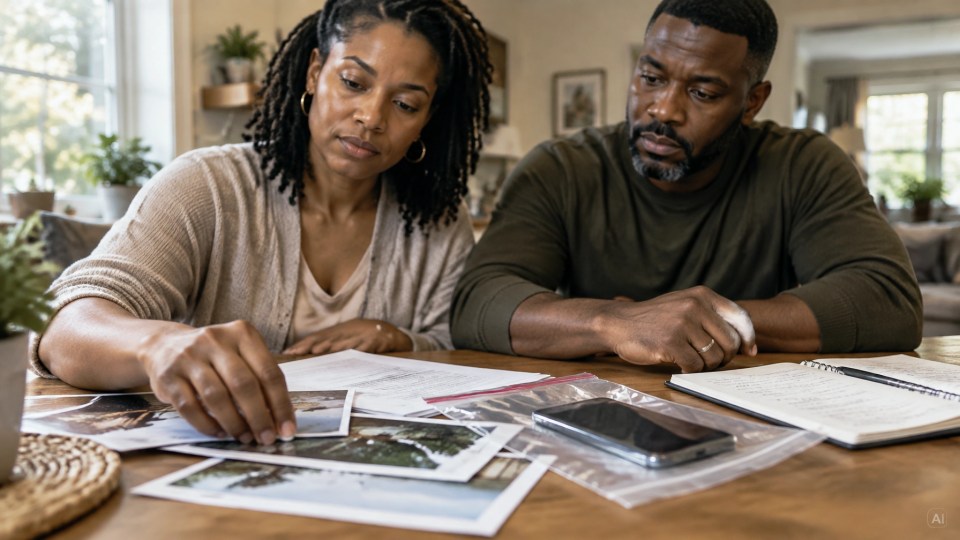
Christine and Elmore Wonsley are not required to accept uncertainty with a smile. At the same time, the grand jury’s finding and the family’s request for a federal review should not be treated as proof of a crime or proof of innocence. All named individuals deserve fair treatment while the dispute continues.
That balance matters. You can respect the grand jury process and still believe a family deserves more explanation. You can reject internet rumors without demanding that a grieving mother stop asking questions.
What Did The Grand Jury Decide In The Nolan Wells Case?
What exactly did the grand jury decide, and what did it leave unresolved?
Nolan Xavier Wells was 18 and lived in Ocean Springs, Mississippi. He traveled by boat with friends to Horn Island to celebrate July 4, 2026. He did not return with the group. His body was found off Horn Island on the morning of July 6.
The Jackson County grand jury met from September 14 through September 18. It included 23 members, issued 132 subpoenas, and heard from 43 witnesses. On September 21, District Attorney Angel Myers McIlrath announced that the grand jury unanimously returned a no true bill, meaning it declined to indict anyone.
The redacted grand jury report said jurors found no credible evidence that anyone aboard the Triton, Palm Beach, or Tideline engaged in criminal conduct connected to Nolan’s death. It described allegations against those individuals as the result of “public clamor and private malice.”
The report also stated that Nolan was the only Black friend in the group that traveled to Horn Island and the only person from that group who did not return. The grand jury found no evidence that his disappearance or death was racially motivated. Those facts must be reported together, without turning either into a conclusion that the evidence does not support.
Both autopsies found bruising on the back of Nolan’s head. The grand jury said the injury was not fatal and that its exact cause remained uncertain. A witness testified under oath that Nolan slipped awkwardly from the side of a boat around 3:30 p.m. on July 4, continued socializing, and did not appear injured afterward. The two autopsies also disagreed about bruising on his buttocks and shoulder, according to WLOX’s reporting on the family’s response.
The report said Mississippi has no statute of limitations on homicide cases. It also said the matter should be presented to another grand jury if credible evidence emerges suggesting Nolan’s death was non-accidental.
That is a significant detail. “No true bill” is not the same as “every question has been answered.” It means the grand jury did not find a basis to indict anyone on the evidence before it.
What Is Happening With Nolan Wells’ Phone And Messages?
Why does the phone matter so much to Nolan’s parents? Because when a young person dies, a phone may hold one of the clearest independent records of their final hours.
Nolan’s parents have said they believed messages had been deleted from his phone before they received it. That is the family’s stated concern, not an established fact.
The district attorney has offered a different account. According to the Mississippi Free Press, her office received a 14-page preliminary report from the family’s forensic team stating that no one besides Nolan’s family had accessed the phone and that nothing had been deleted since Nolan last used it. The DA said she never received the complete extraction data or a full extraction report. After the grand jury convened, the Crump team provided a 282-page selection of reports from the phone.
Attorney Ahmad Smith, who is working with the Crump team, said the family never inspected the phone with officials because they did not agree to the DA’s terms, which he described as dropping the phone off and leaving it with law enforcement.
On September 24, attorney Ben Crump and digital forensic examiner Andrew Garrett of Garrett Discovery held a press conference in Orlando about the family’s independent examination. The presentation focused on metadata and Snapchat communications, and the family said the findings could help address unresolved questions about Nolan’s final hours.
A forensic expert has disputed the DA’s characterization of why the planned joint examination did not occur. WAPT reported that Garrett challenged the account, while WLOX reported on the family’s phone findings announcement. As of publication, both sides’ claims remain contested, and the family’s full independent findings are still being released.
To be clear: There is no established finding that evidence was destroyed. There is an unresolved dispute about access, examination procedures, metadata, and what the digital records show.
For your family, the lesson is simple. If a child dies unexpectedly, you deserve to know:
- Who has custody of the phone and other evidence?
- Who examined the device?
- What extraction method was used?
- Were complete reports shared with investigators?
- Can an independent expert review the same material?
Those are process questions. Asking them is not the same as accusing a specific person of a crime.
Why Are Black Families Compared To Lindsay Clancy Being Treated So Differently?
Can we acknowledge two tragedies while also examining the unequal sympathy surrounding them? We must.
The deaths of Lindsay Clancy’s three children (Cora, Dawson, and Callan) were devastating. Their lives mattered, and their family’s grief deserves compassion. Clancy, a white mother from Duxbury, Massachusetts, was tried in 2026 for the 2023 killings. The trial centered not on whether the children died at her hands, but on whether she could be held criminally responsible because of her mental state.
On September 4, after roughly a week of deliberations, the judge declared a mistrial when jurors deadlocked. WBUR reported that 11 jurors reportedly favored a finding of not guilty by reason of lack of criminal responsibility, with one holdout. The Plymouth County district attorney’s office said it would decide whether to retry her.
Hundreds of supporters gathered outside the courthouse wearing pink and argued that the mental health system had failed Clancy. A fundraising campaign for her parents received more than 27,000 donations. Those supporters also raised a legitimate issue: postpartum psychosis is real, serious, and capable of creating a psychiatric emergency. Maternal mental health care gaps deserve attention, including from the National Maternal Mental Health Hotline.
Now compare the public posture toward Christine Wonsley. She has not been charged with harming Nolan. She is the mother of a Black son whose cause and manner of death remain undetermined. Yet when she spoke publicly and continued pressing for answers, an anonymous complaint triggered a Mississippi Board of Nursing investigation into her professional license. The investigation was later closed, and reporting indicated she had no prior complaints. Her attorney called the complaint an intimidation tactic. The Mississippi Free Press covered the complaint and closure, and the Clarion Ledger reported on the investigation’s closure.
This comparison is not about whose grief is more valid. It is not about minimizing the Clancy children or dismissing maternal mental health.
It is about who is presumed credible, who is presumed dangerous, and who is expected to remain quiet and gracious while waiting for answers. In one case, a white mother facing charges related to her children’s deaths received organized sympathy, benefit of the doubt, and fundraising support. In the other, a Black mother grieving her son’s death was publicly criticized for investigating and speaking out.
Grieving mothers should not have to meet a higher standard to be believed. Maternal mental health deserves compassion, and so does maternal grief. Christine Wonsley is not asking for special treatment. She is asking for the same benefit of the doubt, the same patience, and the same presumption of good faith that any other grieving mother in the same position would be given. She deserves answers, just like any other mother would.
That difference should make us uncomfortable.
Why Black Families Do Not Automatically Trust Mississippi Officials
If you are a Black parent in Mississippi, distrust of institutions did not begin with social media. It has a documented history.
In March 1956, Mississippi created the State Sovereignty Commission after Brown v. Board of Education. For 17 years, the state agency spied on civil rights workers, gathered information on people challenging segregation, funneled money to pro-segregation causes, and distributed propaganda. Its records were sealed for decades and only began opening to the public in 1998, according to the Mississippi Department of Archives and History.
Mississippi’s medical examiner system has also faced documented problems, including years when the state medical examiner position went unfilled, criticism of autopsy volume handled by one pathologist, and severe backlogs and delays. These concerns were documented by the Mississippi Performance Evaluation and Expenditure Review Committee and the Associated Press.
The federal government’s investigation into the 1964 murders of James Chaney, Andrew Goodman, and Michael Schwerner also documented how state and local officials obstructed justice for decades. The Justice Department’s case materials make clear that mistrust is not simply an emotional reaction.
So when a Black family asks for independent examinations, complete records, federal oversight, and transparent evidence handling, that request is rooted in history. It is not automatically paranoia. It is not automatically an accusation against one official.
It is a demand for a process strong enough to earn trust.
We Are Still Losing Our Black Sons
How do you grieve a child when the headlines reduce him to a number?
According to the Centers for Disease Control and Prevention, homicide is the leading cause of death for Black youth and young adults ages 10 to 24 in the United States. Firearms account for the large majority of those homicides, according to the Violence Policy Center.
But Nolan is not a statistic. His parents are not statistics. The families who bury Black sons are not statistics.
Grief deserves dignity whether a death is ruled a homicide, a drowning, an accident, or undetermined. A Black boy should be allowed to be remembered as a whole person (funny, loved, complicated, brilliant, and deeply connected to his family) not only as a headline in a case file.

As Successful Black Parenting Magazine has written about the strengths of young Black boys, Black children deserve to be seen through their humanity and potential. That same principle must guide how we discuss Black children after death.
What Can Families Do When They Need Answers?
What can you do if your family faces an investigation and the official explanation does not resolve your concerns?
You can create steadiness in a chaotic process by keeping careful records. This is not legal advice, so consult a qualified attorney about your specific situation.
- Write down dates, times, names, and conversations. A simple timeline can help your family identify gaps and remember who said what.
- Keep copies of every request. Save emails, letters, reports, text messages, and responses from law enforcement or prosecutors.
- Ask for the investigation status in writing. Written questions create a clearer record than social media arguments or verbal conversations.
- Ask who holds each piece of evidence. This includes phones, clothing, medical specimens, photographs, videos, GPS data, and witness recordings.
- Ask whether an independent expert can review the evidence. A second medical or digital examination may help explain technical information.
- Request that your expert’s findings be shared with investigators. Ask your attorney how and when that should happen.
- Seek oversight when appropriate. Civil rights organizations, elected officials, and qualified counsel may help you understand whether additional review is available.
- Learn which agency has jurisdiction. Horn Island is mainly federal land managed by the National Park Service, one reason NAACP General Counsel Kristen Clarke called for federal involvement.
- Remember that Mississippi has no statute of limitations on homicide. That does not guarantee a future prosecution, but credible new evidence may matter.
The goal is not to turn grief into a public performance. The goal is to protect the truth, preserve family stability, and make sure your child’s story is handled with care.
Learning Moment For Black Parents
What should you teach your child about justice and self-advocacy?
Teach them that asking respectful questions is not disrespect. Teach them that records matter. Teach them that a calm voice and a written timeline can be powerful. Teach them that seeking help from an attorney, advocate, counselor, faith leader, or trusted community organization is a sign of wisdom, not weakness.
You can also tell your child that institutions are made of people, and people can make mistakes. That does not mean every official is dishonest. It does mean your family has the right to understand decisions that affect your child’s safety and future.
If this story is difficult for your family, limit repeated exposure to graphic commentary and rumor-driven videos. Talk about what is confirmed, what is disputed, and what remains unknown. Children need truth delivered in age-appropriate language, not the burden of adult speculation.
And teach your children that a Black mother asking what happened to her son is not a threat, a spectacle, or a hashtag. She is a mother. She deserves the same answers any other mother would demand.
If grief, fear, or trauma becomes overwhelming, call or text 988 for crisis support. New and expecting mothers can contact the National Maternal Mental Health Hotline at 1-833-TLC-MAMA.
Key Takeaways
What should you carry with you from this case?
- A no-true-bill decision means no indictment was returned; it does not mean every question has been answered.
- Christine Wonsley deserves answers about her son’s death, just like any other mother would.
- The phone and message dispute remains contested. No evidence destruction has been established.
- Black families have historical reasons to request independent review and transparent records in Mississippi.
- The contrast with Lindsay Clancy is about public sympathy and credibility, not about whose children mattered more.
- A grieving Black mother should not be treated as suspicious because she wants answers about her child.
- Nolan Wells was a person, not a hashtag or a statistic.
Frequently Asked Questions
Was anyone indicted in Nolan Wells’ death?
No. On September 21, 2026, the Jackson County grand jury unanimously returned a no true bill and declined to indict anyone. The grand jury said the matter could be presented again if credible evidence suggests Nolan’s death was non-accidental.
Did the grand jury rule that Nolan definitely drowned?
No. The report said Nolan’s death was consistent with drowning, but both the state medical examiner and the family’s independent pathologist listed the cause and manner of death as undetermined. The report also described drowning as a diagnosis by exclusion.
Were messages deleted from Nolan Wells’ phone?
That remains disputed. Nolan’s parents have said they believed messages were deleted. The district attorney said a preliminary family forensic report found nothing had been deleted since Nolan’s last use. The family’s forensic examiner has challenged parts of the DA’s account, and the full independent findings are still being released.
Why are Black families asking for federal involvement?
The family and supporters have called for federal review because Horn Island is mainly federal land managed by the National Park Service. They also point to unresolved questions about the medical findings, digital evidence, and investigative process.
What should a family do if it does not trust the official investigation?
Keep a dated record, request information in writing, preserve all documents, ask who controls the evidence, consider an independent expert, and consult a qualified attorney. Civil rights organizations and elected officials may also help families identify oversight options.
A grieving mother should not have to prove her love by becoming silent. Christine Wonsley is allowed to ask what happened to Nolan. Black families are allowed to seek truth without being treated as threats. And every child, especially every Black son whose life was full of promise, deserves to be remembered with dignity, care, and the full weight of his humanity.
Photos and some content may be AI generated.