Why Kiswahili is Africa’s and the world’s language
PRETORIA, SA: As Kiswahili’s popularity grows, connecting more than 200 million people, Tanzania’s High Commissioner to South Africa, James Bwana, says its significance extends far beyond the number of speakers, reaffirming that an African language can also serve as a powerful vehicle for diplomacy, regional integration and sustainable development. The High Commissioner made the remarks … The post Why Kiswahili is Africa’s and the world’s language appeared first on Daily News.
 Black News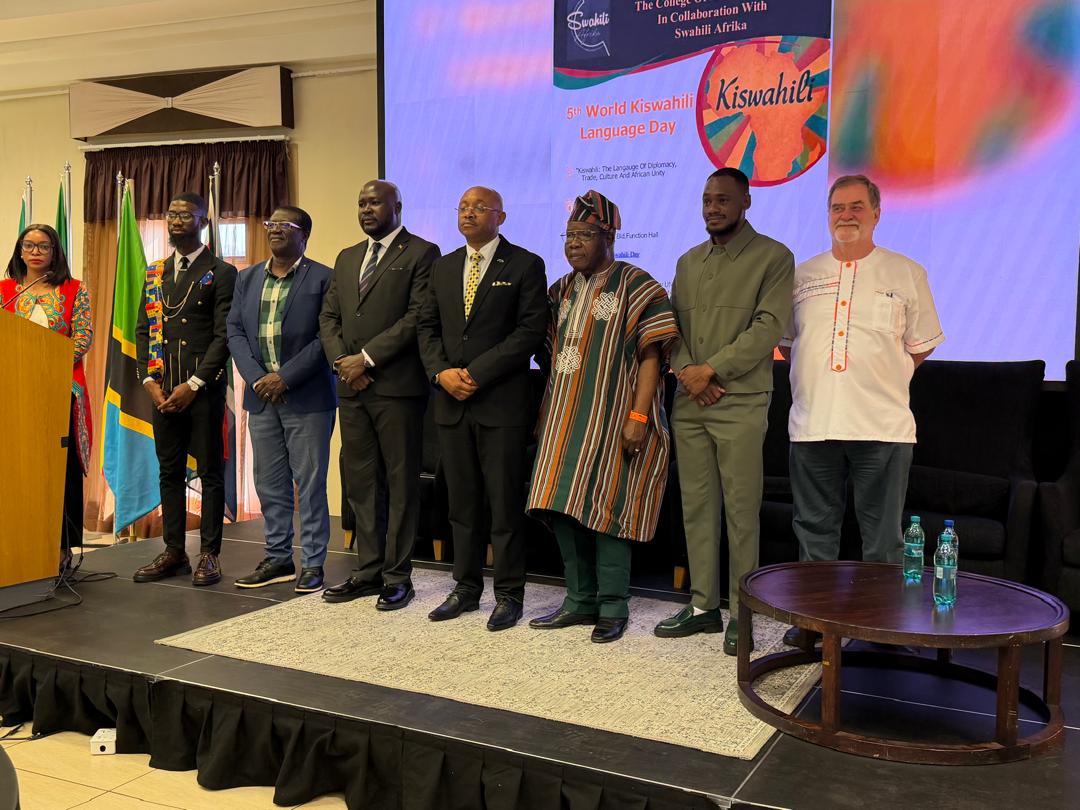

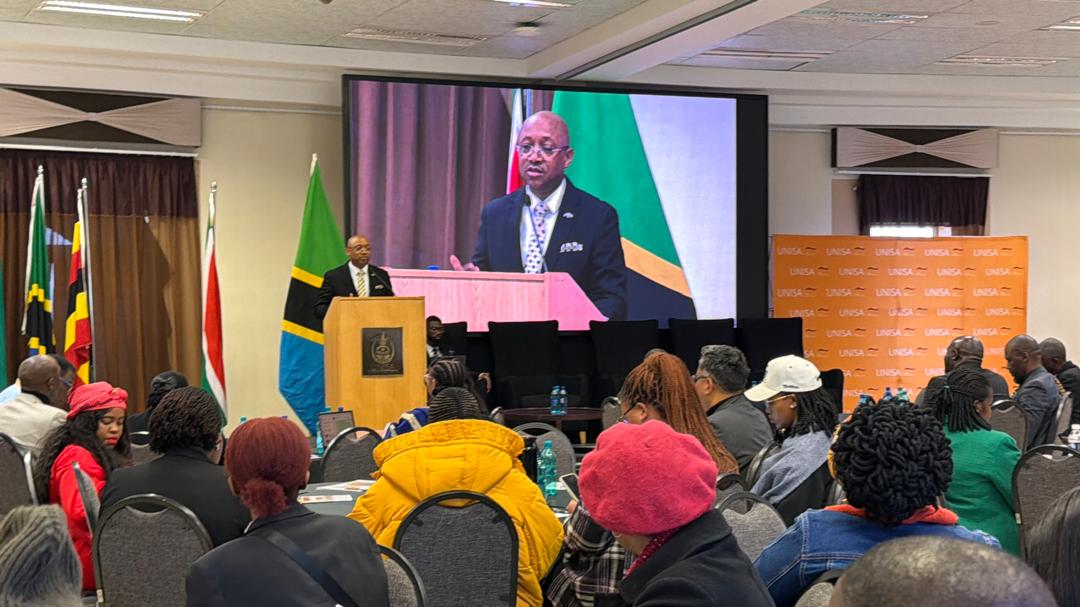
PRETORIA, SA: As Kiswahili’s popularity grows, connecting more than 200 million people, Tanzania’s High Commissioner to South Africa, James Bwana, says its significance extends far beyond the number of speakers, reaffirming that an African language can also serve as a powerful vehicle for diplomacy, regional integration and sustainable development.
The High Commissioner made the remarks during World Kiswahili Language Day celebrations held at the University of South Africa (UNISA) on Friday, which brought together diplomats representing their respective countries in South Africa, policymakers, academic staff and scholars.
The diplomat said Africa’s confidence in Kiswahili is reflected in its growing institutional recognition. Today, Kiswahili is an official working language of the East African Community (EAC), the Southern African Development Community (SADC) and the African Union (AU).
“These key milestones are far more than administrative decisions. They reaffirm that an African language can also serve as a powerful vehicle for diplomacy, regional integration and sustainable development. That continental confidence has increasingly been matched by international recognition of the Kiswahili language,” he stressed.
The envoy recalled that in November 2025, during the 43rd Session of the UNESCO General Conference in Samarkand, Uzbekistan, Kiswahili became the seventh official language of the UNESCO General Conference, joining Arabic, Chinese, English, French, Russian and Spanish, making it the first language of African origin to receive this distinction.
According to High Commissioner Bwana, the historic milestone reiterates that African languages have a rightful place in global governance, international dialogue and the world’s intellectual landscape.
He noted that the experience shows that Africans have often found themselves obliged to express their ideas through borrowed languages before they could be heard on international platforms. However, he said, the story changed in Samarkand, “where Kiswahili, an African language, did not simply enter the room, but took its rightful place at the table as a formal language.”
ALSO READ: Tanzania marks World Kiswahili Language Day 2026 in Malawi
Earlier this month, governments, scholars, diplomats and language practitioners gathered at UNESCO Headquarters in Paris to commemorate the Fifth World Kiswahili Language Day under the theme, “Kiswahili for Peace, Solidarity and Global Economic Diplomacy.”
This year’s celebrations extended well beyond Paris, with official celebrations also taking place in Zanzibar and numerous events held around the world. Particularly encouraging was the growing participation of scholars and language practitioners from Benin, Burkina Faso, Cameroon, Côte d’Ivoire, The Gambia, Madagascar, Mali and Senegal.
“Their participation demonstrates that Kiswahili is no longer confined to its traditional geographical space. It has now become an integral part of the continental conversation on African identity, scholarship, diplomacy and sustainable development,” he said.
According to him, the reality before us is therefore no longer whether Kiswahili deserves global recognition, since that recognition has already been achieved. What is required now is to sustain this progress by investing in the teaching of Kiswahili and expanding its use in diplomacy, education, science, technology, innovation and international cooperation.
“While Africa’s diversity is one of its greatest strengths, Kiswahili reminds us that our unity is equally one of our greatest assets. Kiswahili is our own continental language, now reaching global platforms,” the High Commissioner noted.
He thanked Swahili Afrika, the University of South Africa, distinguished members of the Diplomatic Corps, scholars, language practitioners and all institutions whose vision and commitment have helped transform World Kiswahili Language Day into a truly Pan-African platform for scholarship, dialogue, cultural exchange and forging stronger friendships.
The post Why Kiswahili is Africa’s and the world’s language appeared first on Daily News.