8 Black-Sand Beaches in the Caribbean With Volcano Views, Hidden Coves, and Beach Bars
A trail drops through thick tropical vegetation in Dominica and ends at a beach moviegoers have already seen on a cinema screen. In Martinique, tables at a legendary beach bar stand just beyond dark volcanic sand, with ti’ punch and grilled fish coming out of the kitchen. On another part of the island, steep cliffs rise behind a […] The post 8 Black-Sand Beaches in the Caribbean With Volcano Views, Hidden Coves, and Beach Bars appeared first on Caribbean Journal.
 Black News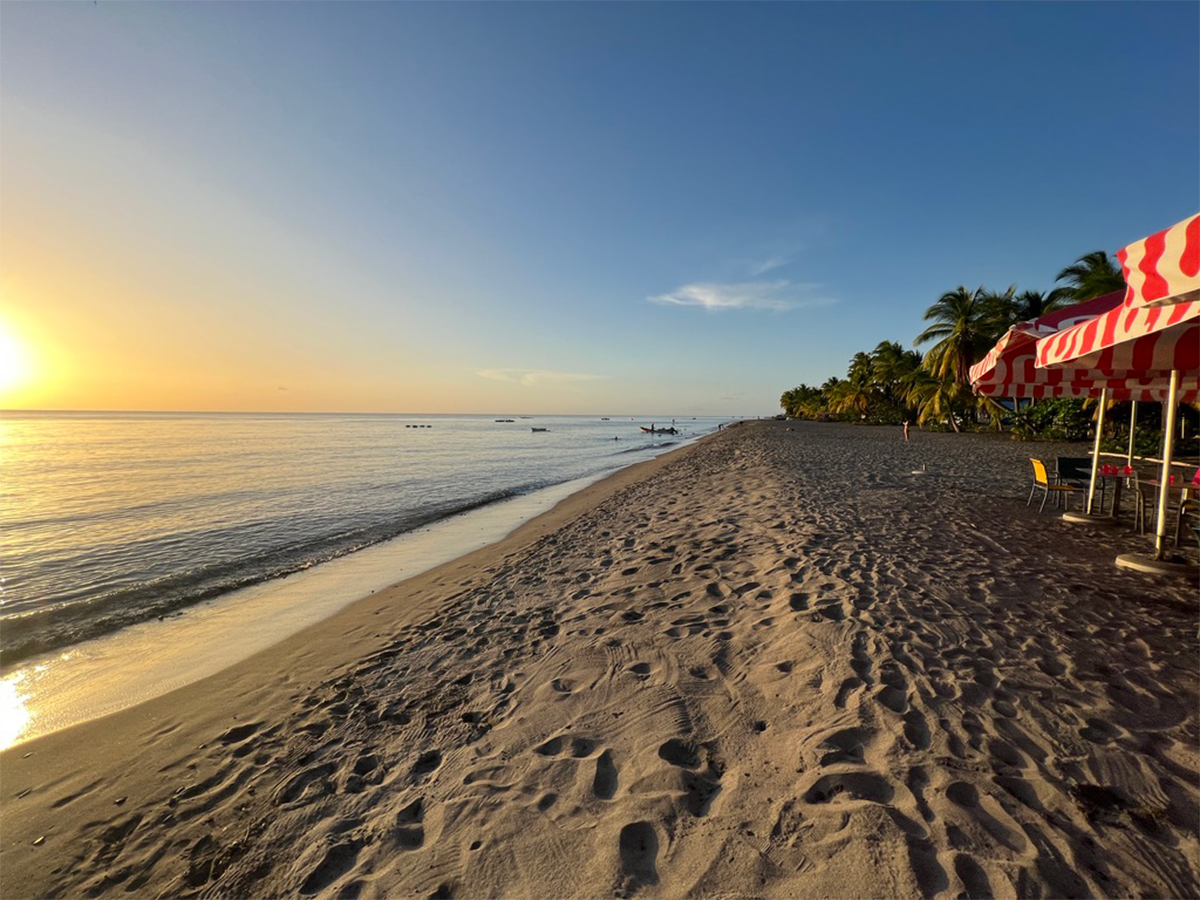

A trail drops through thick tropical vegetation in Dominica and ends at a beach moviegoers have already seen on a cinema screen. In Martinique, tables at a legendary beach bar stand just beyond dark volcanic sand, with ti’ punch and grilled fish coming out of the kitchen. On another part of the island, steep cliffs rise behind a tiny cove reached by a long staircase.
The Caribbean’s volcanic islands have produced some of the region’s most dramatic beaches, with black and charcoal-colored sand, jungle-covered hills, cliffs, volcanic peaks, fishing villages, and French Caribbean beach towns all appearing along the same trip.
You’ll find many of them in Martinique, Dominica, St. Vincent, and St. Kitts, islands where volcanic geology remains visible almost everywhere you travel. Some beaches stretch for miles. Others hide at the bottom of steep footpaths. A few have beach bars close enough for lunch and rum. Several can feel almost empty even during the heart of the Caribbean travel season.
These are 7 of the best black-sand beaches in the Caribbean, and each gives you a very different reason to go.
Le Carbet, Martinique: Black Sand, Ti’ Punch, and One of the Caribbean’s Great Beach Towns
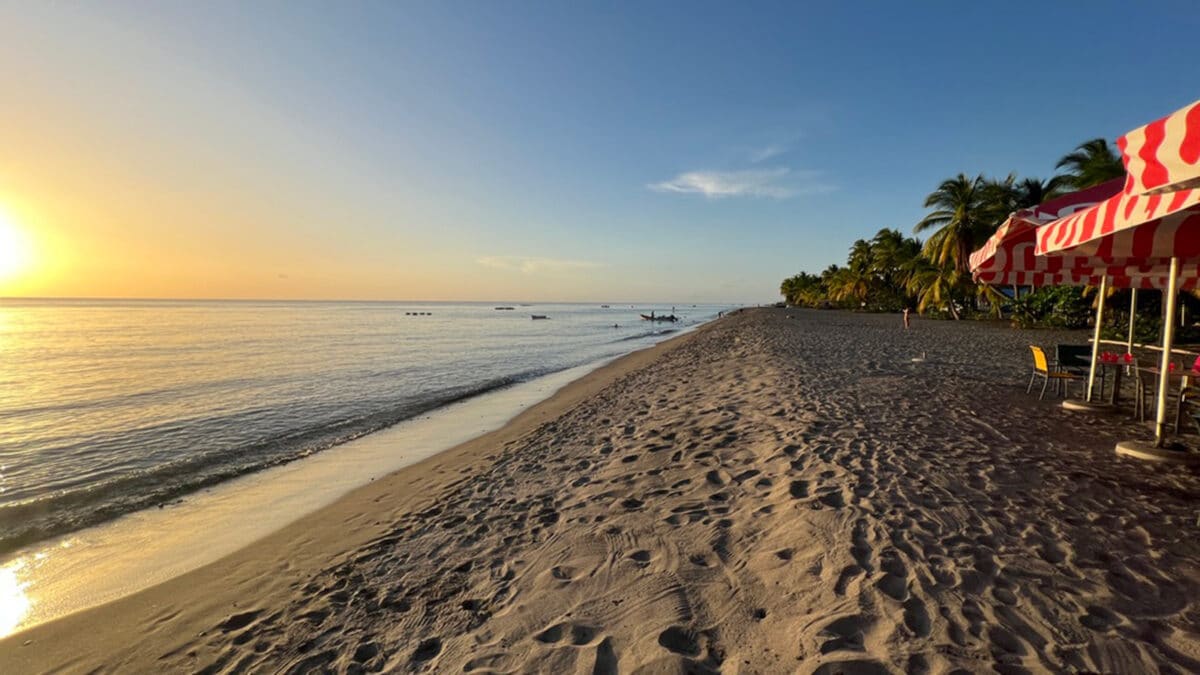
There’s a particular pleasure in spending an afternoon in Le Carbet because the beach and town remain closely connected. You can swim, walk back onto the dark sand and make your way toward a restaurant or bar while still wearing your beach clothes.
The long black-sand beach runs beside one of the most enjoyable small towns in Martinique, on the island’s Caribbean side north of Fort-de-France. Hills rise inland, fishing boats appear offshore and the dark beach gives the entire scene a visual character you rarely encounter on neighboring islands.
Le Carbet also gives you one of the strongest reasons to turn a beach stop into an entire afternoon: Le Petibonum.
Number One Beach, Dominica: The Caribbean Beach You May Know From the Movies
The hike is part of the experience at Number One Beach.
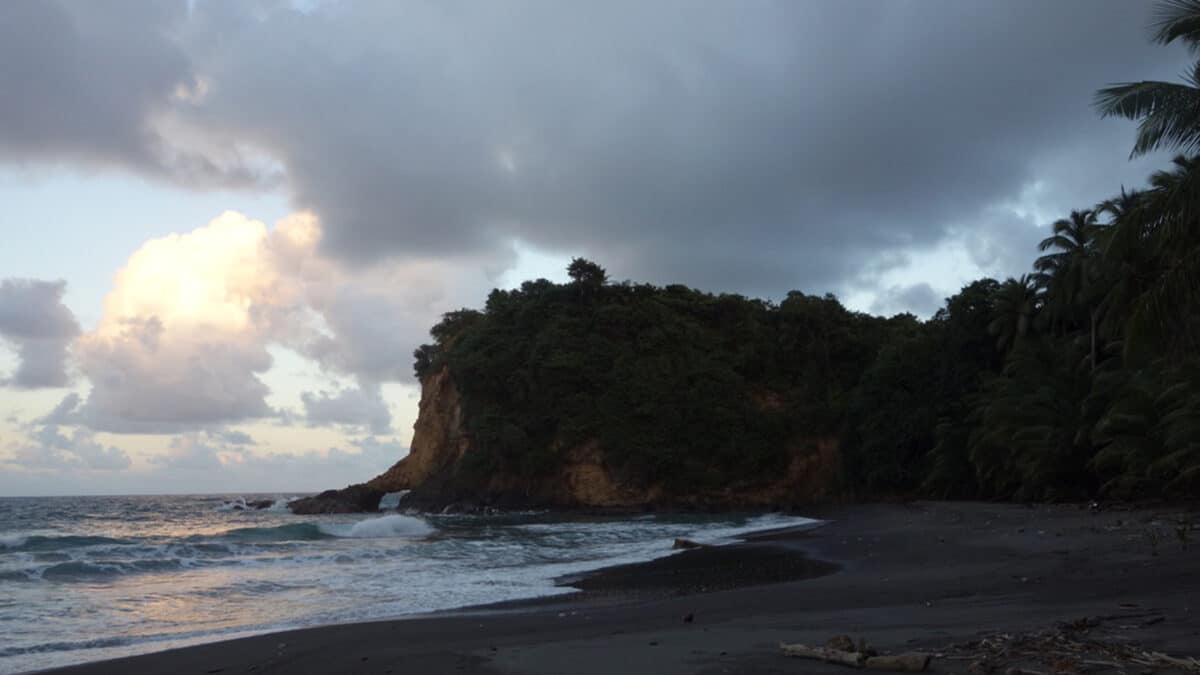
You make your way through dense vegetation before the trees finally open onto a broad sweep of dark sand backed by high, intensely green hills. The beach has appeared in the Pirates of the Caribbean films, and seeing it in person explains why filmmakers came here.
There are no rows of loungers or large resorts lining the sand. The scenery remains wonderfully raw.
Dominica produces a lot of moments like this. Volcanic peaks cover much of the island, rainforest runs down steep hillsides and rivers cut through narrow valleys on their way toward the sea. Black-sand beaches appear around several communities, especially along the island’s volcanic western and northern areas.
Number One Beach, Dominica
This one has a particularly cinematic quality, largely because of its isolation and the dense greenery surrounding it.
Black Point Beach, St Vincent
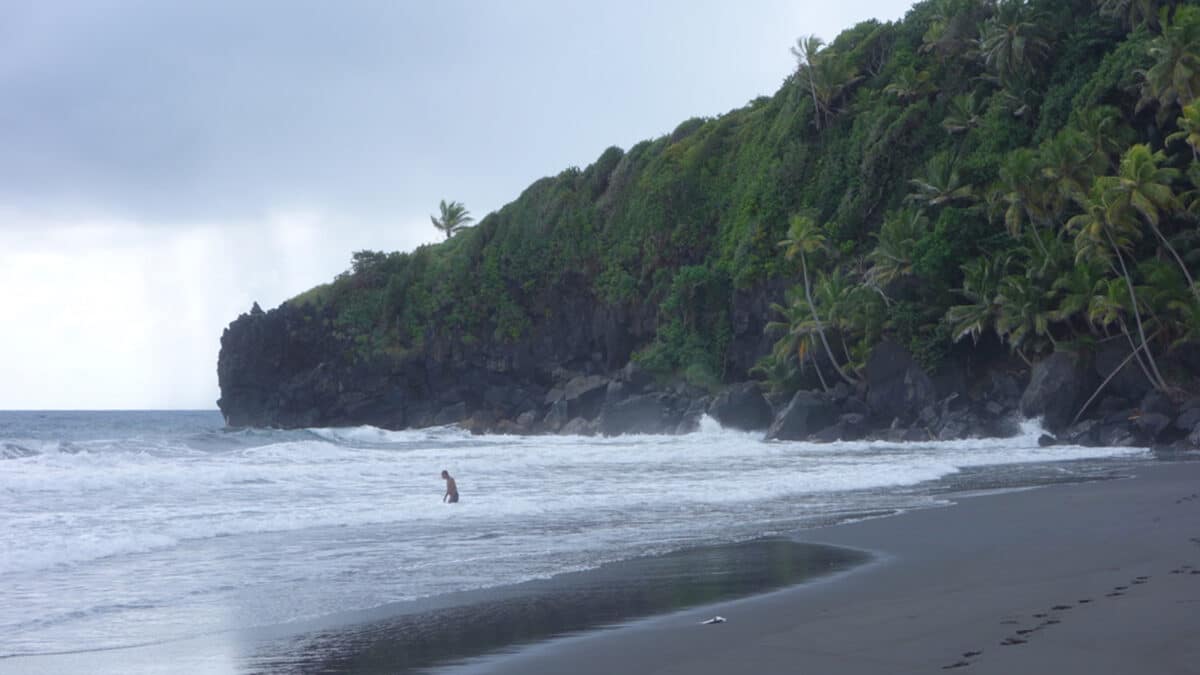
The beach lies along St. Vincent’s eastern side, where dark volcanic sand meets a much rougher stretch of sea than you’ll encounter on the island’s western beaches. Coconut palms and heavy vegetation fill the land behind it, while the beach itself has a broad, open character.
Nearby is the Black Point Tunnel, one of St. Vincent’s most interesting historical sites. Enslaved laborers excavated the tunnel through rock during the early 19th century to help transport sugar from estates toward the coast.
The beach and tunnel make an excellent pairing if you’re driving around the island.
St. Vincent’s volcanic terrain dominates much of the trip, especially as you travel toward the northern reaches of the island and La Soufrière volcano.

Le Diamant, Martinique: A Long Beach Facing One of the Caribbean’s Great Landmarks
Few Caribbean beaches come with a view quite like the one at Le Diamant.
Out in the sea rises Diamond Rock, the enormous volcanic formation that became an unlikely chapter in British naval history during the Napoleonic Wars. The British Royal Navy formally commissioned the rock as HMS Diamond Rock in the early 19th century, turning an offshore volcanic formation into a fortified naval position.
Today, it forms the extraordinary backdrop to one of southern Martinique’s signature beach towns.
The beach at Le Diamant runs for a considerable distance, with dark volcanic sand, coconut palms and frequent views of the rock offshore. The town occupies the land just behind the beach, giving you restaurants, bakeries, cafés and small shops within an easy walk.

Anse Noire, Martinique: Down the Stairs to a Tiny Volcanic Cove
You arrive at Anse Noire from above.
A long staircase drops between steep green hills toward a small, sharply defined cove. At the bottom, black sand fills the beach between rocky headlands, with palms and tropical vegetation packed into the surrounding slopes.
The descent takes only about 10 minutes, although the climb back up will remind you how far you came.
Anse Noire ranks among Martinique’s most unusual beaches partly because its geography feels so intimate. The cove is small. The hills rise close behind it. Boats often appear just offshore, and snorkeling is one of the primary reasons to spend several hours here.
Nearby Anse Dufour provides another beach stop, giving you two dramatically different strands within a short distance of each other.
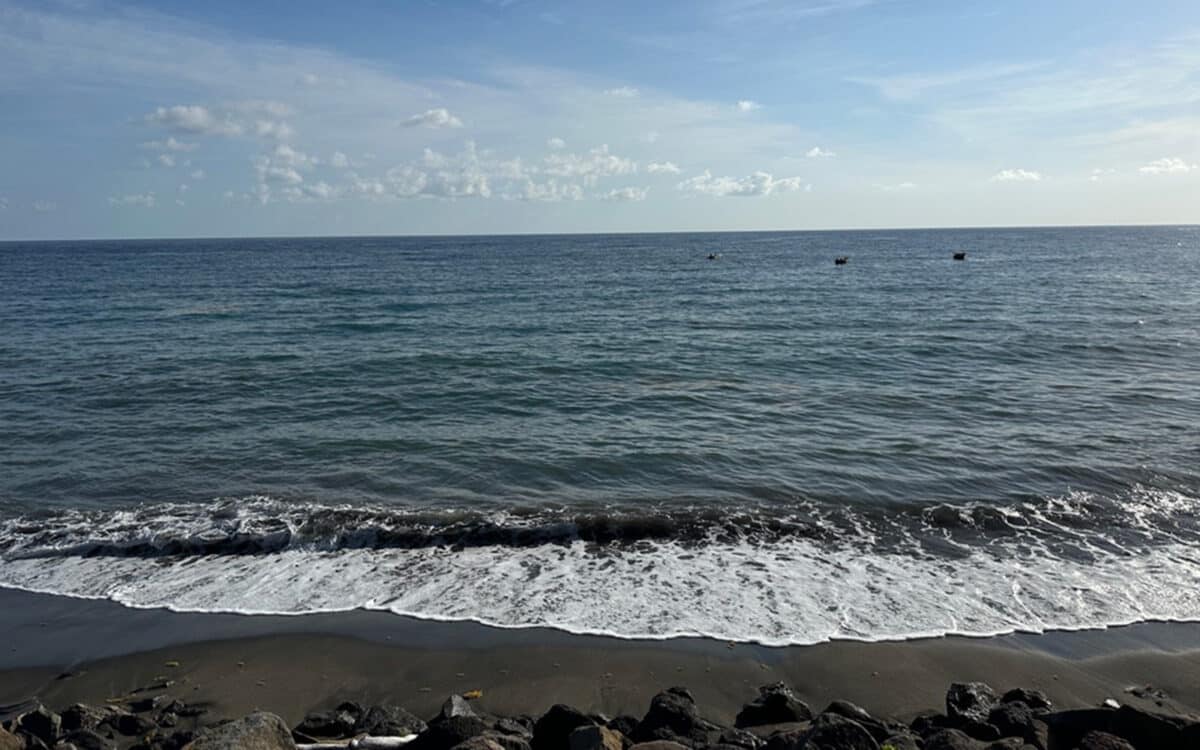
Pump Bay, St. Kitts: A Quiet Black-Sand Beach Near Brimstone Hill
Most first-time trips to St. Kitts gravitate toward the beaches of the southeast peninsula or the resort area around Frigate Bay.
Drive toward the island’s northwestern side and the scenery changes quickly.
Pump Bay offers a long run of dark volcanic sand close to one of the Caribbean’s most important historic landmarks, Brimstone Hill Fortress National Park.
You could easily pair the two in a single day: tour the immense hilltop fortress, take in the views across St. Kitts and neighboring islands, then head down toward the beach for a very different perspective on this volcanic island.
Pump Bay generally receives fewer visitors than St. Kitts’ best-known resort beaches.
The reward is room to spread out on a dark strand with the island’s green hills rising inland.
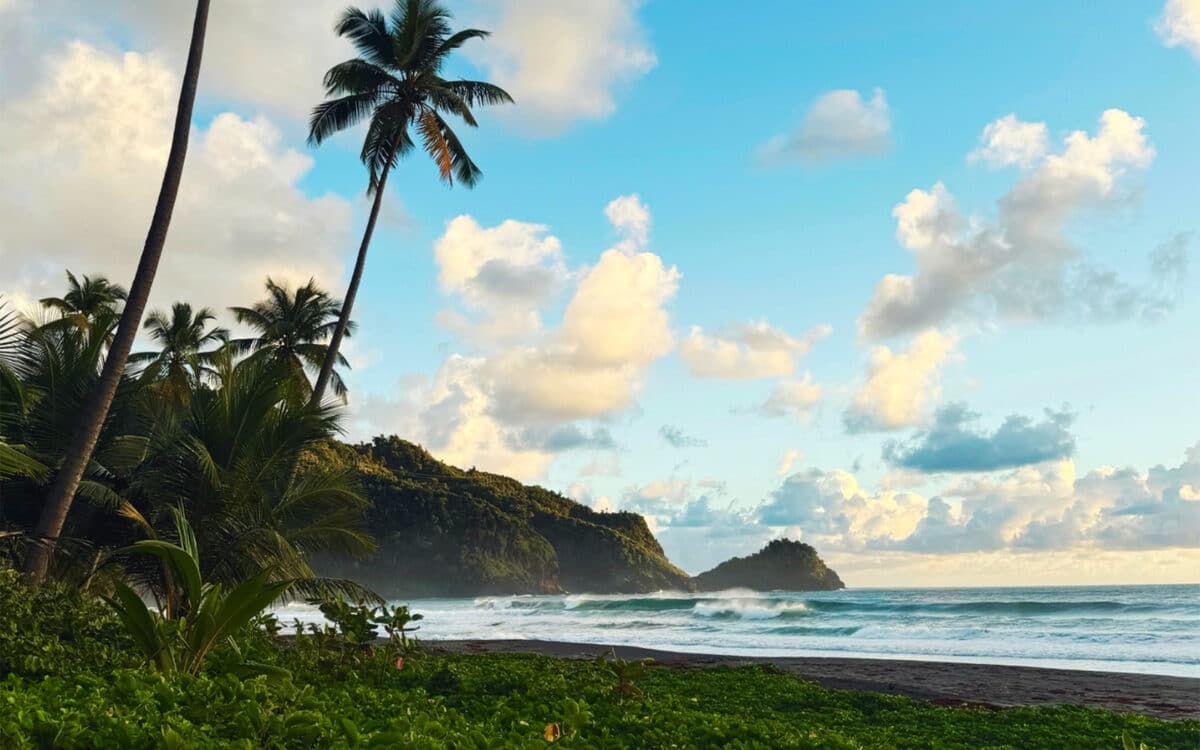
Rosalie Bay Beach, Dominica: Volcanic Sand at the Edge of the Rainforest
Few beaches show off Dominica’s volcanic personality quite like Rosalie Bay.
Dark sand runs along the island’s Atlantic side near the Rosalie River, with dense tropical vegetation covering the surrounding hills. Waves roll toward the beach with real force, and rainforest occupies much of the view inland.
The Rosalie Bay Eco Resort & Spa gives you the rare opportunity to stay directly beside this kind of beach.
The resort has long been one of Caribbean Journal’s favorite eco-focused properties in the region, with cottages spread through tropical grounds between the river and sea. Dominica’s wildlife is part of the experience here, too; sea turtles nest along the beach during nesting season, and the resort has supported conservation efforts connected to the turtles.
Rosalie Bay also puts you close to the kind of inland adventures that define a trip to Dominica.

Anse Latouche, Martinique: Black Sand Beneath Mount Pelée Country
Anse Latouche gives you another side of northern Martinique, with a dark volcanic beach tucked below steep green hills near Le Carbet and Saint-Pierre.
The beach is compact, quiet and intensely tropical, with black sand underfoot and heavy vegetation climbing the land behind it. You’re deep in the part of Martinique shaped by Mount Pelée, where volcanic rock, rainforest and small coastal communities stay close together. It’s right across from one of the best-value stays in Martinique, Madicreoles.
Anse Latouche is also easy to pair with some of northern Martinique’s best stops. Le Carbet is just down the coast, with Le Petibonum for ti’ punch and lunch by the beach, while Saint-Pierre adds one of the Caribbean’s most compelling historic towns a short drive farther north.
The post 8 Black-Sand Beaches in the Caribbean With Volcano Views, Hidden Coves, and Beach Bars appeared first on Caribbean Journal.