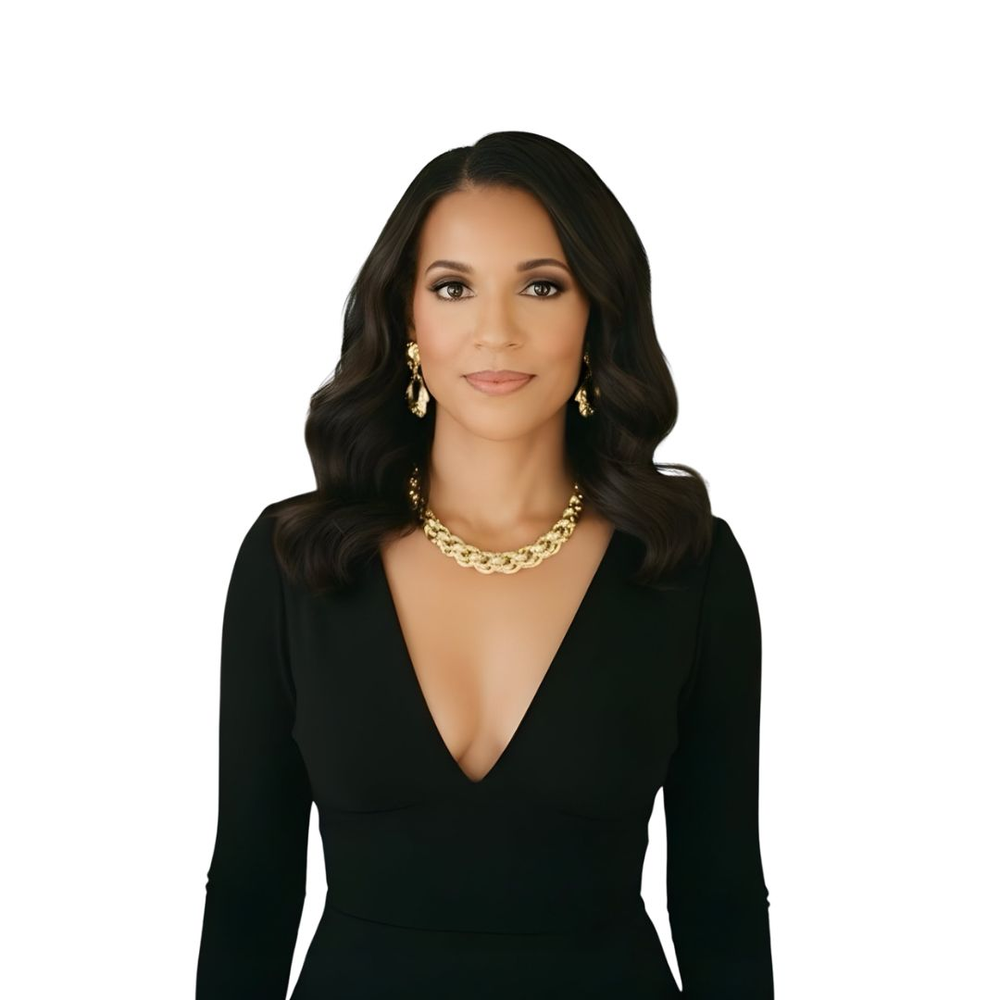
Deric Muhammad: Activist, ‘Truth Trafficker,’ and more
Houston leader Deric Muhammad reflects on decades of serving Black communities with unwavering purpose.
 Black News


Calling Deric Muhammad an activist barely scratches the surface.
His LinkedIn profile describes him as a “Truth Trafficker, Keynote Speaker, Violence Interventionist, Black Male Development Specialist, Inspiration Engineer, ‘Hood Strategist, Grassroots Organizer, Peace Maker, Social Entrepreneur, Servant of the Most High.” He’s also the owner of Urban Bridge Consulting, whose motto is simple: “We Build People.”
Those titles fit. So do mentor, author, community violence intervention specialist, Nation of Islam member, Gulf War veteran, and founder of the nationally recognized Smart’N Up Black Male Summit.
Yet Muhammad believes the best explanation for why he has devoted his life to serving Black people reaches much further back than his own lifetime.
“I never liked seeing people bullied. If the big guy was picking on the little guy, it made me want to defend the little guy.”
Deric Muhammad
“I just assume that at some point before I was born, I had an ancestor who suffered racism, maybe even lynching,” Muhammad said. “That ancestor may have died praying that a generation would come to pick up the baton of the struggle. Maybe I’m just a manifestation of that prayer.”
That sense of divine assignment has guided nearly every chapter of his life—from serving three-and-a-half years in the U.S. Marine Corps, including deployment during the Gulf War, to becoming one of Houston’s most recognizable voices for justice and Black empowerment.
Away from the public spotlight, Muhammad enjoys quieter moments. A child of the 1970s, he still spins vinyl records featuring Earth, Wind & Fire, the Isley Brothers, and Curtis Mayfield, while high-energy rap fuels his workouts.
His daily outlook remains grounded in gratitude.
“I woke up this morning looking down at the dirt and not up at it,” he said. “The rest is negotiable, God willing.”


Called to defend his people
For Muhammad, activism wasn’t a career choice. It was a calling.
“Before I was created, God put something in me that made me love my people and love my community,” he said. “He also made me the type of person who didn’t like to see people suffer.”
Even as a child, he said, witnessing pain affected him deeply.
“I never thought I could be a doctor or dentist because I couldn’t stand watching people bleed. I always felt the pain of other human beings.”
That empathy translated into an instinct to protect others.
“I never liked seeing people bullied,” Muhammad said. “If the big guy was picking on the little guy, it made me want to defend the little guy.”
He also credits two powerful influences with shaping the direction of his life.
The first was his late grandmother, Myrtle Ross, a Northside political activist who regularly brought him to union meetings, political rallies, and marches.
“Watching her activism definitely inspired me,” he said.
The second came in 1992, when he first heard Louis Farrakhan’s voice.
“God had already put a battery in my back,” Muhammad said. “Hearing Minister Farrakhan charged that battery. Watching his fearless commitment to Black people helped lead me down the path I’m on today.”
Faith that demands action
Muhammad rejects the idea that faith exists apart from service.
“You’re not really practicing what you believe if it doesn’t ultimately lead you down a path where you’re serving others.”
He often illustrates that belief with a vivid example.
Imagine, he says, a Muslim preaching from the Quran and a Christian preaching from the Bible while, between them, a wounded man bleeds in the street.
“If they don’t put their books down long enough to help the man who’s dying,” Muhammad said, “then neither of them is worthy to call themselves Muslim or Christian.”
For Muhammad, genuine spirituality is measured not by words, but by service.
Nation of Islam journey
Muhammad says joining the Nation of Islam fundamentally reshaped how he viewed himself and his people. He credits the teachings of Elijah Muhammad with giving him “a holistic roadmap” that united religion, spirituality, and community service.
“The Nation taught me first and foremost the knowledge of myself,” he said. “Other than the knowledge of God, that’s the most important knowledge a person can obtain.”
His outlook was transformed when he learned that Black people were more than the degrading labels imposed by American society.
“It gave me a different perception of myself,” he said. “It also gave me a different perception of my brothers and sisters. Then the question became: What am I going to do with it?”
Muhammad says those teachings also reframed his understanding of Jesus—not as a passive figure, but as a revolutionary Black man who combined compassion with courage.
Muhammad also credits Houston’s vibrant Black consciousness community of the 1990s and early 2000s with helping him grow into the “Truth Trafficker” he has become.
“My upbringing in Houston’s conscious community was very powerful,” he said. “There was so much in place to help me develop as a Black man coming into consciousness.”
The hidden cost of activism
Muhammad says people often admire activists without understanding the sacrifices that accompany the work.
“There are no degrees in activism,” he said. “Until you actually live this life, you don’t really know what you’re stepping into.”
He believes truth-telling carries consequences.
“When you live in a society built on falsehood, anyone bringing truth will be persecuted. You’ll be attacked, undermined, and have your character assassinated.”
His work has also required practical adjustments. Because of his public advocacy around police accountability and justice, Muhammad says he has had to become increasingly security-conscious. Professionally, activism has also narrowed traditional career paths, making entrepreneurship through Urban Bridge LLC both a necessity and an opportunity.
Perhaps the greatest burden, however, has been emotional. Working on the front lines of violence means repeatedly witnessing unimaginable grief.
“You hear the cry of a mother who just lost her teenage son to senseless violence,” Muhammad said. “You know she’ll never be the same. Brother, it hurts.”
That compassion, which first emerged in childhood, remains intact today.
“I always felt other people’s pain,” he said. “As a grown man, that hasn’t changed.”
Recognizing that constant exposure to trauma can take its own toll, Muhammad has learned the importance of stepping away periodically to preserve his own peace.
Even so, he has no regrets.
“If I had the chance to do it all over again,” he said, “I wouldn’t change a thing. I’m glad I listened to the voice God put in me.”