Listen to yourself: a child’s toolbox
Author Jahaira Telles discusses “Listen to Yourself: Honor Your Inner Voice,” a children’s affirmation book rooted in dignity, instinct and inner authority. She argues that children need honest language alongside adults’ material commitment to safety, resources and justice. The post Listen to yourself: a child’s toolbox appeared first on San Francisco Bay View.
 Black News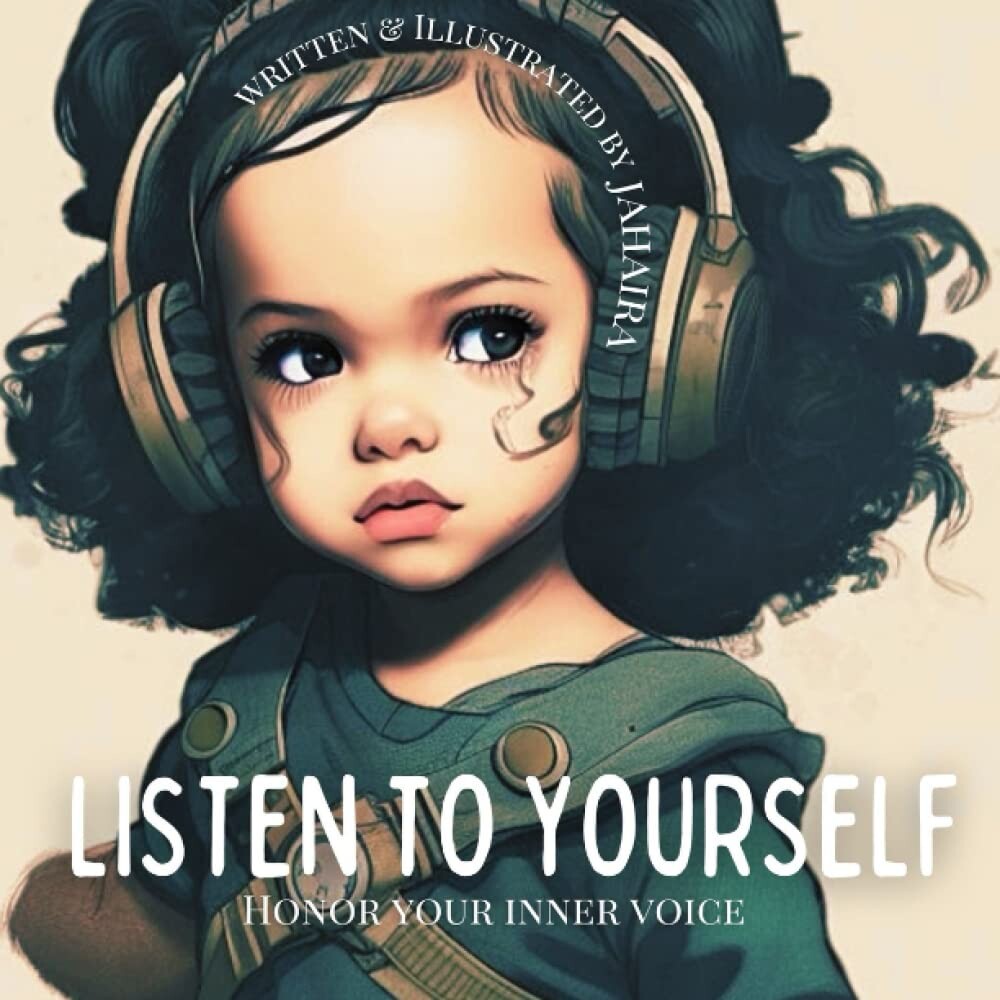
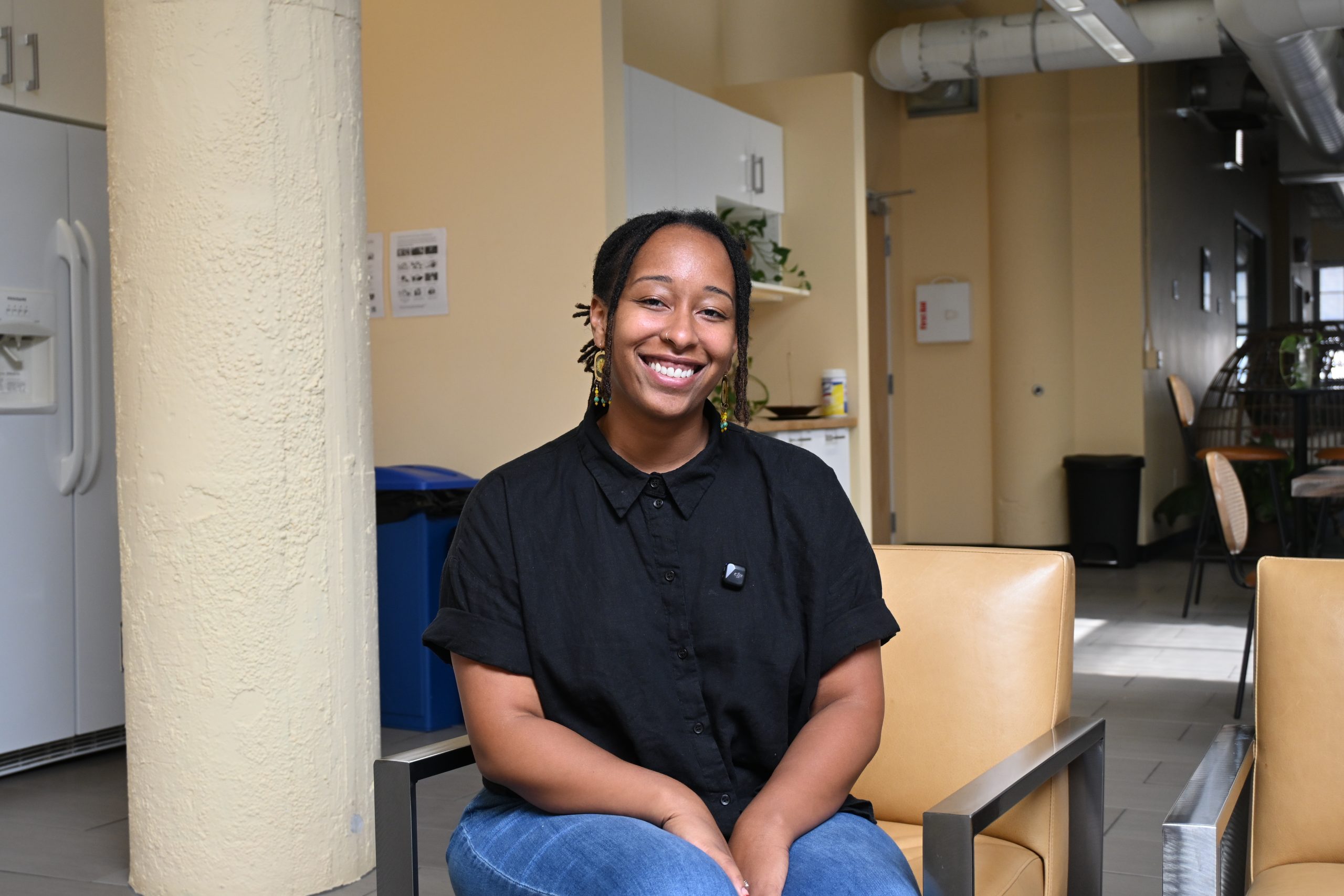
A conversation with children’s book author Jahaira Telles
by Leah Harmony
The issue when sending one’s own child out into the big, wide world, whether it’s just to grandma’s house, a summer camp, school or a friend’s house, is that with every step they take away from home, they’re being influenced, formed and molded. Our children are ill-prepared for all they will encounter navigating the layers of the world. They pass through the frequencies of family expectations, social racism, poverty and the mindless noise of the internet, with its tricky web as the top disruptor. I’d even argue that chaos is a feature, not a flaw. One only has to look at how the world deems the term “self-conscious” as a negative.
The last voice children are taught to hear is their own.
That is what author Jahaira Telles aims to change with “Listen to Yourself: Honor Your Inner Voice,” her affirmation book for children. You won’t find sweet little sayings pretending a few positive words can make danger or injustice disappear. It is a toolbox: language children can use to recognize worth, honor instinct and build inner authority the outside world cannot take.
You do not have to be raising a child to understand the need. Us grown folks all carry some memory of the first voice that made us feel seen — or the opinions that taught us to shrink. We know how a sentence spoken at the right moment can provide reassurance of safety and how the wrong words, repeated by people with power, become a piece of a forming person. A children’s book about listening inward is therefore also an invitation to examine what we say around children, what our institutions say about them and whether the world we have built supports or contradicts the truths we encourage them to speak.
Telles is a writer, researcher, educator and self-described world-builder. Her work sits at the intersection of language, psychology, imagination, environment and underserved communities. But the idea at the heart of this book is beautifully simple.
“Before the world tells you who you are,” she says, “you should have already met yourself.”
For Telles, affirmation first gives a child language — words for dignity, possibility, boundaries, identity and hope. Those words do not remove hardship. They can, however, get ahead of the lie that hardship is the whole of who that child is.
That distinction matters, especially for children growing up under pressure no child created and no child should be expected to solve. Telles refuses to sell affirmation as a substitute for food, safety, resources or justice.
“You cannot affirm your way out of systemic neglect,” she says. “You cannot hand a child an ‘I am powerful’ card and then send them back into an environment where every adult and institution repeatedly demonstrates that they are powerless. Affirmation without material support can become almost insulting. The language has to eventually meet the conditions.”
This is what makes “Listen to Yourself” useful beyond the social media fluff that solves every problem with a positivity meme. Telles believes words can help alter material reality, but not because speaking a sentence magically makes struggle vanish. The power is quieter and more practical.
“Language affects attention. Attention affects choices. Choices affect behavior. Repeated behavior becomes pattern, and patterns absolutely alter material reality,” she explains. “What you repeatedly tell yourself influences what you notice, tolerate, pursue, reject and ultimately believe is available to you. The magic, perhaps, is how quietly language becomes reality.”
She learned the staying power of a sentence early. Telles grew up in crack-era Los Angeles in the 1990s, in the projects, with a mother battling addiction and circumstances that made it impossible to pretend the world was always safe or fair. While on the set of Mario Van Peebles’ Panther in 1995, she became upset when they wanted to cut her hair for a scene. One of the actresses told her, “Just tell yourself it all leads to something new.”

Telles carried that sentence through the rest of her childhood, whispering it to herself. Novelty remains a major theme in her life.
“One sentence can change a child’s entire reality,” she says.
But she is not arguing that adults should paint every painful reality in bright colors and call it fixed. “I don’t believe in teaching children that everything is beautiful. I believe in teaching them that they are still capable of creating beauty inside things that aren’t.”
There is a difference, she says, between optimism and delusion. Children can understand that the world is unfair. What they should not inherit is the belief that an unfair world means there is something wrong with them.
For children experiencing racism and erasure, self-esteem alone is not enough. They need what Telles calls historical, cultural and intellectual location: the knowledge that they did not suddenly appear in somebody else’s story.
The affirmations she offers are declarations of presence and belonging: “This world is not whole without my input and without my impact.” “My version of the story belongs in the collective.” “My existence and my history matter.” “I come from people worth knowing.”
These are not empty pats on the head. They tell a child that their people, their memory and their way of seeing are part of the human record. In a society willing to erase whole communities from classrooms and bookshelves, teaching a child to locate themselves in history is its own form of protection.
Protection means adults have to be careful with the words we ask children to repeat. Take the familiar affirmation “I am safe.” What does that sentence do to a child who knows they are not safe?
“I would never ask a child to override their own nervous system with language,” Telles says. “If their body is saying, ‘Something is wrong,’ teaching them to repeat ‘I am safe’ can actually teach them to distrust themselves.”
Honest affirmations make room for a child’s reality: “I deserve to be safe.” “I can tell someone when I don’t feel safe.” “My body is allowed to warn me.”
An affirmation can describe identity — “I am creative” — without denying what is happening. It can establish a right: “I deserve kindness.” It can point toward growth: “I am learning how to trust myself.” As Telles puts it, “Children don’t need language pretending they’ve already arrived. They need language that helps them recognize where they’re going.”
And adults cannot hand children brave words, walk away and expect them to manifest a better world alone. Affirmation must be followed by advocacy.
“Tell the child they matter and then construct a life that demonstrates it,” she says. “Feed them. Protect them. Fund their schools. Defend their curiosity. Give teachers resources. Build safe parks. Keep libraries open. Create beautiful spaces in poor neighborhoods. Listen when children say something hurts. Don’t make children do all the manifesting. Adults have assignments too.”
The same principle applies to technology because though children today were born digital, they have no understanding of who designed it or what it wants from them. Telles does not reject technology, but she insists it remain in its place.
“Technology should be a tool in the room, not the architect of the room,” she says. It should extend human imagination, not replace teachers, physical exploration, conversation, boredom, nature, books or community. “Technology should open a door and then have the good sense to get out of the doorway. If the machine becomes more interesting than the world, we’ve designed the wrong world.”
The children Telles imagines for the future are “curious as hell,” hard to manipulate, emotionally literate, historically aware and comfortable with complexity. They are creative enough to imagine alternatives and educated enough to build them.
That is what makes “Listen to Yourself” a book for adults too — because responsibility and reality go hand in hand. The child learns to ask: What does my body know? What story have I been handed? What do I deserve? What might I create? The grown-up must answer with more than applause.
“I don’t want children trained merely to become excellent employees inside whatever world we leave behind,” Telles says. “I want them asking, ‘Who said the world had to work like this?’ And then having enough imagination, knowledge, community and audacity to redesign it.”
Listening to yourself is more than a slogan. It is a practice. For a child, it teaches boundaries, curiosity and freedom. For us, it is a demand to build a world where a child’s inner voice is as respected, if not more, than what their ears digest.
There’s not a single most important affirmation in the book; the entire work takes us all to task: A child’s voice is not preparation for some future life. It matters now. Our job is more than teaching children to believe that. Our job is to move and build as if we believe it too.
Leah Harmony is Manager of Production at the San Francisco Bay View and can be reached at leah@sfbayview.com.
The post Listen to yourself: a child’s toolbox appeared first on San Francisco Bay View.


![[WATCH] First Clips Debut for ‘Is God Is’ Starring Kara Young and Mallori Johnson](https://thesource.com/wp-content/uploads/2026/05/KBU_6895-scaled.jpg)