Powerful 7.4 Earthquake Strikes Colombia, Collapsing Buildings Across Western Cities
A powerful magnitude 7.4 earthquake struck western Colombia on Monday morning, killing at least two people and causing significant damage across the country, with buildings collapsing in several cities and a tower of the historic cathedral in Manizales partially collapsing. The earthquake struck at 7:34 a.m. local time, with its epicenter near San José del […]
 Black News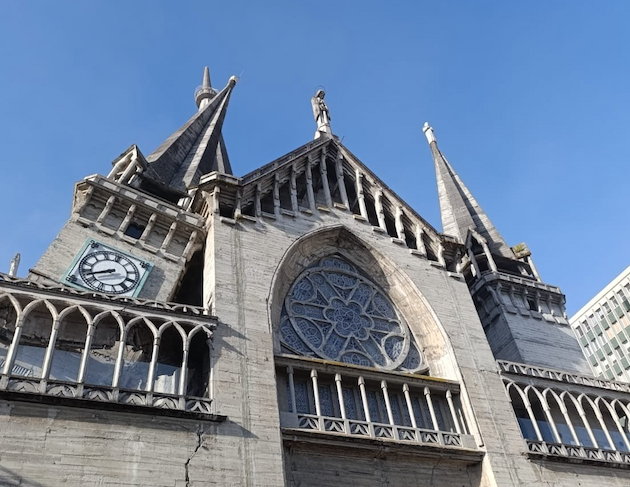

A powerful magnitude 7.4 earthquake struck western Colombia on Monday morning, killing at least two people and causing significant damage across the country, with buildings collapsing in several cities and a tower of the historic cathedral in Manizales partially collapsing.
The earthquake struck at 7:34 a.m. local time, with its epicenter near San José del Palmar in the department of Chocó, according to the Colombia Geological Service (SGC). The quake was initially registered at a lower magnitude before being revised upward to 7.4. Its depth was reported at roughly 100 kilometers.
The tremor was felt strongly across much of Colombia, including the coffee-growing cities of Pereira, Manizales and Armenia, as well as Medellín, Colombia’s second-largest city. In Cali, dust clouds were reported rising over the departmental capital of Valle del Cauca, as multiple buildings collapsed. The shaking was also felt in high-altitude Bogotá, and as far away as neighboring Panama, Ecuador and Venezuela.
In Manizales, part of the tower of the city’s historic cathedral collapsed during the earthquake. The city was among the areas reporting serious structural damage, with two deaths reported there. Footage circulating after the quake showed residents fleeing buildings as structures shook and debris fell.
Pereira, in Risaralda, also reported substantial structural damage and was among the cities hardest hit. Authorities temporarily suspended operations at several airports in affected cities, including Pereira, Manizales and Armenia, while infrastructure was inspected.
In Cali, at least 19 buildings were reported damaged, with people trapped in some structures and rescue teams mobilized. Authorities requested additional emergency support as crews searched damaged buildings for survivors.
In Quibdó, the capital of Chocó and the city closest to the earthquake’s epicentral region, officials reported injuries and significant damage to buildings. Chocó Governor Nubia Carolina Córdoba warned residents about the possibility of aftershocks as emergency crews assessed the situation.
The earthquake is the strongest recorded in Colombia in a decade, according to the SGC. The agency’s earthquake record identifies San José del Palmar as the epicentral location.
The scale of the shaking revived memories of Colombia’s devastating 1999 Eje Cafetero earthquake, which struck the coffee-growing region on January 25 of that year. The magnitude 6.2 earthquake devastated Armenia and surrounding areas, killing approximately 1,185 people, injuring thousands and leaving hundreds of thousands affected.
Monday’s earthquake, however, struck at a considerably greater depth than the 1999 disaster, potentially limiting some of the damage that might otherwise have resulted from a shallow earthquake of similar magnitude.
Recently inaugurated President Abelardo de la Espriella said he was overseeing the national emergency response and was expected to travel to Pereira as authorities coordinated rescue and recovery operations. Emergency agencies continued to assess damage across the affected departments as reports of collapsed structures and trapped residents emerged.
Authorities urged residents to remain alert for aftershocks and avoid entering damaged buildings until they have been inspected by emergency and structural-assessment teams.
The death toll and extent of the damage are expected to rise as rescue crews reach affected areas and communications were restored. As of midday on Monday, 74 persons have been confirmed dead across the region, including 19 in the southern city of Cali.