What The Philadelphia Inquirer’s Story On Black Star’s Par Funding Reporting Left Out
Black Star News Editorial Photos: Wikimedia Commons|Others There are several major developments notably missing from an Aug. 7, 2026 Philadelphia Inquirer article about Par Funding, the merchant cash advance company placed under receivership six years ago—an article that also prominently mentions Black Star News and its publisher and investigative reporter, Milton Allimadi. The omissions are significant because they provide important context for understanding why Allimadi has continued reporting on Par Funding and why Black Star News has published a series of articles examining the case. The bulk of the Inquirer article, under the headline “Par Funding’s fraudster founder website lobbies for Trump Pardon,” focuses on Joseph LaForte, (above) the former CEO of Par Funding and its parent company, Complete Business Solutions Group (CBSG), and a website, “www.freejoelaforte.com” created to lobby President Trump for a pardon. The article begins by informing readers that the “Philadelphia-based lending firm” had “collapsed in spectacular fashion as prosecutors said” LaForte “misled investors to the tune of $400 million and resorted to brutish loan shark tactics to collect on unpaid debts.” But several critical points that Allimadi raised in his email responses to reporter Chris Palmer did not make it into the article. Those points deserve to be highlighted so readers of both the Inquirer and Black Star News can have a fuller perspective. Some of the major points are: First, more than $200 million has reportedly been repaid to investors by the Par Funding estate. Second, the court-appointed receivership has billed approximately $30 million—roughly 15 percent of the more than $200 million repaid to investors. Supporters of LaForte have complained that the receivership costs are excessive and that some billings are duplicative. Third, the Securities and Exchange Commission (SEC) has backed away from the characterization of Par Funding as a “Ponzi” scheme. That development is particularly important because the Ponzi characterization has been central to the public understanding of the case. There are other critical areas involving Par Funding that have received little attention elsewhere. For example, Black Star News reported that Par Funding contended it suffered a critical setback when the SEC obtained an emergency TRO in July 2020 after alleging that Par Funding had misrepresented its underwriting practices by claiming it conducted rigorous due diligence and personal on-site inspections before approving advances to small businesses when it allegedly did not. LaForte and his lawyers claimed several merchants represented by attorney Shane Heskin submitted false “perjurious” declarations stating that CBSG had not conducted on-site inspections before approving their advances when, in fact, it had. Some images they say show on-site visits are posted on www.freejoelaforte.com More critically, LaForte’s supporters said, the SEC should have conducted its own investigation instead of relying on Heskin, a lawyer involved in litigation with Par Funding, thereby making him a de facto SEC prosecutor. Par Funding: Did Merchant Declarations Help Trigger SEC Raid—And Why Has The Ponzi Narrative Collapsed? The former Par Funding’s supporters claim he was, in effect, fighting the SEC, the Department of Justice, and the receiver. Fourth, and separately, the $12 million judgment against Allimadi in the Michigan defamation case involving Dr. Greg St. Claire (shown below) was not the result of a jury trial determining whether the allegedly defamatory statements were true or false. Liability was entered by default, and the jury was subsequently presented with damages. Those distinctions matter. Allimadi also told Palmer that one of the things he found interesting about LaForte’s case was the claim of selective prosecution, particularly given the large number of merchant cash advance (MCA) companies operating in the marketplace. As Allimadi wrote to Palmer: “What I found interesting in LaForte’s case is his claim of selective prosecution (given the number of MCAs that are out there), which ironically, is something we hear often from our largely African American readership.” That does not amount to an endorsement of LaForte. It is a journalistic question. And given the number of merchant cash advance companies operating in the United States, it is a question that deserves examination independently of whether LaForte is personally sympathetic. Allimadi also specifically pointed Palmer toward what he considered some of the most important unanswered questions surrounding the Par Funding receivership, including the GAAP-compliant Glick Report that concluded that Par Funding was a profitable company versus the non-GAAP-compliant DSI report favored by the receiver, the amount of receivership billings, the receiver’s failure to respond to certain questions posed by Black Star
 Black News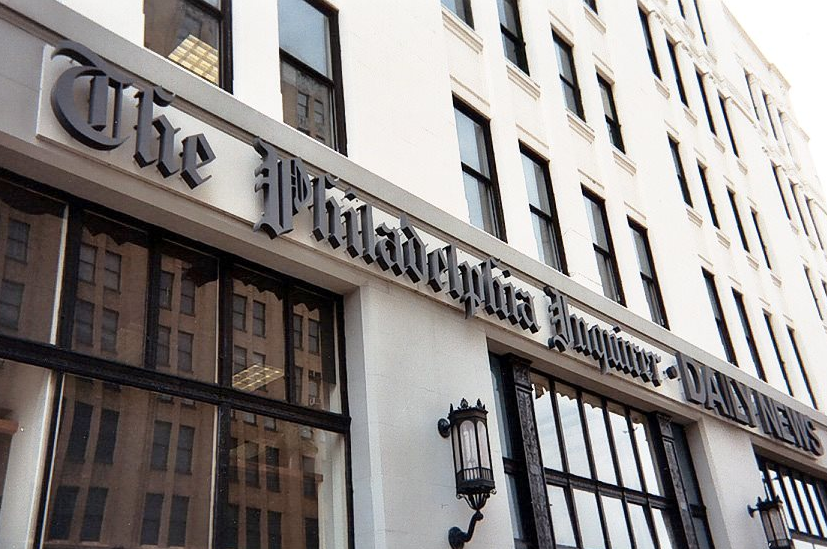

Black Star News Editorial
Photos: Wikimedia Commons|Others
There are several major developments notably missing from an Aug. 7, 2026 Philadelphia Inquirer article about Par Funding, the merchant cash advance company placed under receivership six years ago—an article that also prominently mentions Black Star News and its publisher and investigative reporter, Milton Allimadi.

The omissions are significant because they provide important context for understanding why Allimadi has continued reporting on Par Funding and why Black Star News has published a series of articles examining the case.
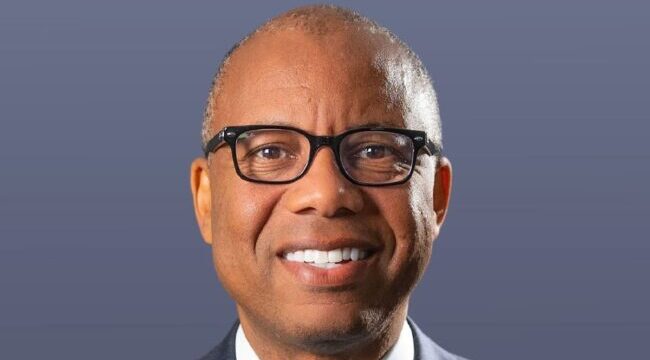
The bulk of the Inquirer article, under the headline “Par Funding’s fraudster founder website lobbies for Trump Pardon,” focuses on Joseph LaForte, (above) the former CEO of Par Funding and its parent company, Complete Business Solutions Group (CBSG), and a website, “www.freejoelaforte.com” created to lobby President Trump for a pardon.
The article begins by informing readers that the “Philadelphia-based lending firm” had “collapsed in spectacular fashion as prosecutors said” LaForte “misled investors to the tune of $400 million and resorted to brutish loan shark tactics to collect on unpaid debts.”
But several critical points that Allimadi raised in his email responses to reporter Chris Palmer did not make it into the article. Those points deserve to be highlighted so readers of both the Inquirer and Black Star News can have a fuller perspective.
Some of the major points are:
First, more than $200 million has reportedly been repaid to investors by the Par Funding estate.
Second, the court-appointed receivership has billed approximately $30 million—roughly 15 percent of the more than $200 million repaid to investors. Supporters of LaForte have complained that the receivership costs are excessive and that some billings are duplicative.
Third, the Securities and Exchange Commission (SEC) has backed away from the characterization of Par Funding as a “Ponzi” scheme. That development is particularly important because the Ponzi characterization has been central to the public understanding of the case.
There are other critical areas involving Par Funding that have received little attention elsewhere. For example, Black Star News reported that Par Funding contended it suffered a critical setback when the SEC obtained an emergency TRO in July 2020 after alleging that Par Funding had misrepresented its underwriting practices by claiming it conducted rigorous due diligence and personal on-site inspections before approving advances to small businesses when it allegedly did not.
LaForte and his lawyers claimed several merchants represented by attorney Shane Heskin submitted false “perjurious” declarations stating that CBSG had not conducted on-site inspections before approving their advances when, in fact, it had. Some images they say show on-site visits are posted on www.freejoelaforte.com
More critically, LaForte’s supporters said, the SEC should have conducted its own investigation instead of relying on Heskin, a lawyer involved in litigation with Par Funding, thereby making him a de facto SEC prosecutor.

The former Par Funding’s supporters claim he was, in effect, fighting the SEC, the Department of Justice, and the receiver.
Fourth, and separately, the $12 million judgment against Allimadi in the Michigan defamation case involving Dr. Greg St. Claire (shown below) was not the result of a jury trial determining whether the allegedly defamatory statements were true or false. Liability was entered by default, and the jury was subsequently presented with damages.
Those distinctions matter.
Allimadi also told Palmer that one of the things he found interesting about LaForte’s case was the claim of selective prosecution, particularly given the large number of merchant cash advance (MCA) companies operating in the marketplace. As Allimadi wrote to Palmer:
“What I found interesting in LaForte’s case is his claim of selective prosecution (given the number of MCAs that are out there), which ironically, is something we hear often from our largely African American readership.”
That does not amount to an endorsement of LaForte. It is a journalistic question. And given the number of merchant cash advance companies operating in the United States, it is a question that deserves examination independently of whether LaForte is personally sympathetic.
Allimadi also specifically pointed Palmer toward what he considered some of the most important unanswered questions surrounding the Par Funding receivership, including the GAAP-compliant Glick Report that concluded that Par Funding was a profitable company versus the non-GAAP-compliant DSI report favored by the receiver, the amount of receivership billings, the receiver’s failure to respond to certain questions posed by Black Star News, and the SEC’s position concerning the “Ponzi” characterization.
The Inquirer reports that Allimadi said he wrote about LaForte for Black Star News because the Par Funding founder’s story had “many interesting angles.”
That is true. But the article does not explain what those angles were, even though Allimadi provided them to Palmer.
He specifically wrote: “I don’t think there are any other articles from other outlets that actually asked the SEC whether they still believe PAR was a Ponzi scheme or not and the SEC saying they would ‘take exception’ if we said that in our articles, or articles that also asked questions about the $30 million in receivership billings, which is 15% of the $200 repaid to investors.”
That is an important explanation for why Black Star News continued covering the case. It was also about following the money, examining the receivership, questioning the costs imposed on the estate, examining the treatment of investors and borrowers, and asking regulators whether important characterizations of the company had changed. Those are legitimate subjects for investigative journalism regardless of whether the subject of the investigation is a convicted person.
Allimadi also told Palmer that the Black Star News articles mentioned LaForte’s criminal history precisely because balanced reporting required that history to be included.
The Inquirer reports that one of the more prominent sections of the LaForte website consists of more than a dozen articles authored by Allimadi. The articles are described on the website as being part of a series “dedicated to exposing the truth and corruption involved in the wrongful persecution of Joseph LaForte.” What the Inquirer does not make clear is that Black Star News and Allimadi had nothing to do with that description or labeling.
That distinction is important. The most reasonable assumption is that the omission was inadvertent.
Interestingly, the issue has echoes of an accusation previously made against Black Star News by one of LaForte’s prominent adversaries, Heskin. When Black Star News sent Heskin written questions concerning an approximately $500,000 payment to him and other lawyers from the receivership, Heskin did not answer the questions but accused the publication of being propagandists for LaForte.
The Inquirer article also refers to the $12 million judgment against Allimadi in connection with Black Star News articles concerning allegations against a Michigan doctor, Dr. Greg St. Claire. The basic fact is correct: a $12 million judgment was entered.

But an important distinction is that there was no trial on whether the underlying statements were true or false before the judgment was entered. The court entered a default against Allimadi and Black Star News, reportedly based on the court’s finding that interrogatory responses were submitted approximately 48 hours late. The jury was then presented with damages rather than the underlying defamation claims.
Allimadi has challenged the result and is seeking to have the default set aside so that the underlying claims can be tried. He has a court date in October 2026 to hear his motion to set aside.
The distinction matters when reporting on a $12 million judgment against a newspaper and its publisher. The First Amendment is not reserved for large newspapers. It applies to Black Star News and to independent investigative journalists as well.
Allimadi also told Palmer that the judgment, rather than ending the story, could draw additional scrutiny to the underlying questions surrounding Dr. St. Claire and the institutions involved.
Those questions include:
- How does a major multibillion-dollar institution such as the University of Michigan warn a physician multiple times about alleged sexual harassment of patients and co-workers and not terminate him?
“https://tinyurl.com/36zfxnjk” (https://reference-url-citation.invalid/0)
- When the physician is ultimately terminated for allegedly altering his wife’s medical records, how does the university enter into a nondisclosure agreement with him that, according to the reporting, raises questions about whether evidence of possible wrongdoing was effectively shielded?
“https://tinyurl.com/2p8yy6ha” (https://reference-url-citation.invalid/1)
- How does the Michigan Department of Licensing and Regulatory Affairs tell Linda Wenzel, the social worker for Ms. Cassandra Fameux at Community Mental Health, that Dr. St. Claire altered his wife’s medical records and that such alteration was a crime, yet Dr. St. Claire continue to hold his medical license?
- How does the Meridian Township Police Department investigate Ms. Fameux’s allegations that Dr. St. Claire poisoned her over a period of years, conduct an investigation lasting approximately six months, recommend that he be arrested, and then have the prosecutor decline to bring charges without a further public explanation?
“https://tinyurl.com/4vfuvk7y” (https://reference-url-citation.invalid/2)
- How do Dr. St. Claire, his divorce attorney Jessica Larson and the divorce court apparently establish the existence of a Guardian Ad Litem in connection with an agreement transferring substantial marital assets to Dr. St. Claire, when questions have been raised about whether such a Guardian Ad Litem actually existed?
“https://tinyurl.com/34hdf3f3” (https://reference-url-citation.invalid/3)
Larson’s former law firm subsequently shut down.
“https://tinyurl.com/bp5e7sub” (https://reference-url-citation.invalid/4)
- And how does the University of Michigan escape liability from allegations that the alleged poisoning occurred at a university hospital and that medical records were altered to show that, from 2017 through 2021, Ms. Cassandra Fameux was receiving injections of Invega Sustenna from Dr. Dominic Barberio when, according to Barberio, Dr. St. Claire administered approximately 90 percent of the injections and nurses administered the remainder?

Domenico Grasso president of the University of Michigan.
These are not insignificant questions. They are precisely the type of questions investigative journalism is supposed to ask.
Allimadi also provided Palmer with a link to a Black Star News commentary explaining the publication’s position concerning the St. Claire litigation. The commentary explained that the delay in responding to interrogatories arose amid the disappearance of critical email messages that Allimadi had exchanged with attorneys representing Dr. St. Claire. Allimadi reported the disappearance of those emails to federal authorities and the New York Police Department. Those facts provide additional context for anyone attempting to understand the $12 million judgment.
Allimadi has seen firsthand how an apparently narrow story can eventually open into a much larger one. Years ago, he was one of the only journalists reporting on a scandal involving Morgan Stanley after the firm paid an informant $10,000 to entrap a fired employee before the employee could file a discrimination lawsuit.
Eventually, The Wall Street Journal credited Allimadi and Black Star News with the scoop, and the story received considerably broader attention.
“https://www.wsj.com/articles/SB929484104612809731” (https://reference-url-citation.invalid/5)
That experience informs Allimadi’s view of the St. Claire matter. He believes the $12 million headline may ultimately become the doorway through which journalists and the public examine the larger questions surrounding the allegations and the institutions involved.
The same principle applies to Par Funding.
A story about a website seeking a presidential pardon may be interesting. But there is a larger story surrounding the company, its receivership, the money recovered for investors, the extraordinary cost of administering the receivership, the allegations concerning selective prosecution, and the SEC’s evolving position concerning the “Ponzi” characterization.
Those issues should not be lost. A fuller picture benefits everyone.
LaForte’s criminal conviction does not relieve journalists of the obligation to examine how the government prosecuted a case, how a receivership operates, how much it costs, how much money has been recovered for investors, what regulators currently say about the case and whether the treatment of one company differs from the treatment of others in the same industry.
Indeed, given the number of merchant cash advance companies operating in the United States, LaForte’s claim of selective prosecution is itself a legitimate subject for journalistic inquiry.
There is, fortunately, a positive consequence from the Inquirer article. By mentioning Allimadi and Black Star News, the article has introduced the publication—and its reporting on Par Funding and Dr. St. Claire—to readers who may never previously have encountered it.
Black Star News has already seen increased traffic following publication of the Inquirer article. Hopefully, more readers will now examine the underlying Black Star News reporting for themselves and reach their own conclusions.