Two Namibias
The secondary census reports released by the Namibia Statistics Agency highlight the vast quality of life differences across the country as they examine emigration, fertility and mortality. According to the 2023 census, women in the Kavango West region can expect to have 5.5 children over their lifetimes, double that of the 2.7 women in the […] The post Two Namibias appeared first on The Namibian.
 Black News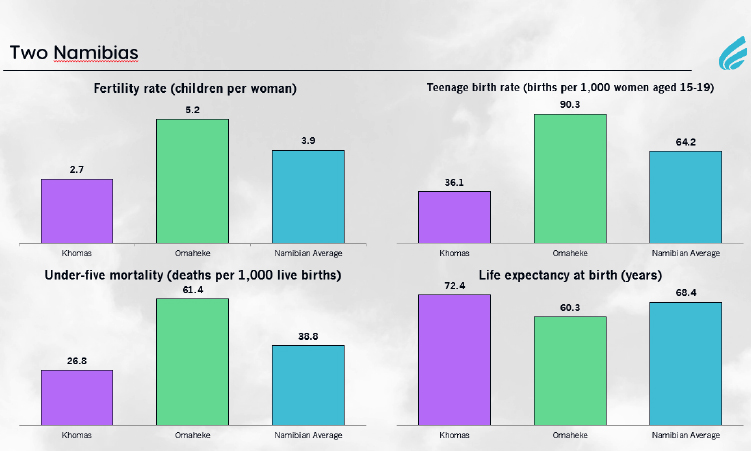
The secondary census reports released by the Namibia Statistics Agency highlight the vast quality of life differences across the country as they examine emigration, fertility and mortality.
According to the 2023 census, women in the Kavango West region can expect to have 5.5 children over their lifetimes, double that of the 2.7 women in the Khomas region can expect.
While rural women average five children and urban women 3.2, education also plays a role in predicting the number of children a woman will have.
Women who completed secondary school average 2.9 children against 5.7 for those who have never attended formal schooling.
The gap in fertility begins early, the Kavango East region records 108 births per 1 000 girls aged 15 to 19 and the Zambezi region records 104, roughly three times the rate in Khomas of 36.
Survival rates also differ vastly across the country. The Omaheke region records 61.4 deaths of children under five years old per 1 000 live births, more than double the 26.8 in Khomas, while Hardap has the highest infant mortality in the country at a concerning 42.6.
Nationally, rural children face an under five mortality rate of 44.5 per 1 000 against 32.8 faced by children in towns.
Past the infant stage life expectancy outcomes are also skewed, life expectancy at birth is 72.4 years in Khomas but only 60.3 in Omaheke.
A gap of 12 years within the same country is extremely concerning and highlights the disparity of health outcomes in lower income areas of the country.
Due to the massive discrepancy in quality of life, many Namibians are moving to other regions in search of a better life. About a quarter of those born in the Ohangwena region and a fifth of those from Omusati and Kavango West now live in a different region, mostly to pursue work (28%) or an education (22%). Meanwhile, a third of Khomas residents and 41% of those in Erongo were born elsewhere in the country.
The major gaps in quality of life across the country highlight the centralised nature of the country. The poor quality of services and opportunities in other regions drive individuals to move in search of a better life, an issue exasperated by decades of developmental neglect.
While some services in Khomas and Erongo are not of the best quality, the outcomes are worsened the more congested these services become.
The post Two Namibias appeared first on The Namibian.