Beyond the Supermarket: The Fresh Options Reshaping How We Eat
For many Black families nationwide, the nearest grocery store might be miles away — or may not carry a single fresh tomato grown within one hundred miles of home. Between rising grocery costs, food deserts where mainline grocery stores are scarce, and what seems like an ever-increasing number of food recalls, many households in underserved […] The post Beyond the Supermarket: The Fresh Options Reshaping How We Eat appeared first on Word In Black.
 Black News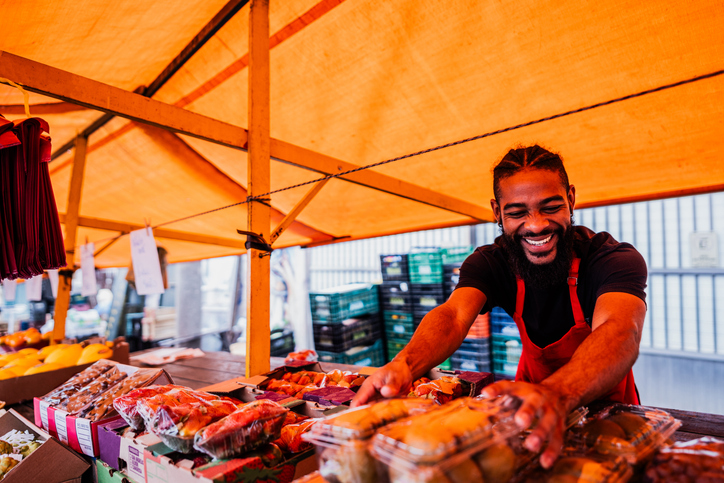


For many Black families nationwide, the nearest grocery store might be miles away — or may not carry a single fresh tomato grown within one hundred miles of home. Between rising grocery costs, food deserts where mainline grocery stores are scarce, and what seems like an ever-increasing number of food recalls, many households in underserved communities are looking for alternative sources for fresh produce and other goods.
What they seek, however, could be happening every weekend.
A growing network of grocery alternatives — from farmers markets to community gardens to programs that redirect surplus crops — is becoming available to more Black households. The alternatives dramatically expand the options for purchasing fresh, locally grown, in-season fruits and vegetables as well as eggs, chicken, and beef typically raised on nearby farms.
And the benefits go beyond convenience. Decades of disinvestment, grocery chain closures, and neighborhoods still struggling from redlining have left many Black families with fewer fresh food options, and higher rates of diet-related illness like diabetes and hypertension to show for it.
The federal government has also stepped up efforts to close the food access gap and resulting health problems in Black communities. Through the U.S. Department of Agriculture’s Gus Schumacher Nutrition Incentive Program, healthcare providers are now able to connect patients directly to fresh produce — sometimes literally prescribing it like medicine— while helping SNAP dollars stretch further at farmers markets and co-ops.
The result is that access to fresh produce is becoming more decentralized and convenient, giving low-income Black consumers dramatically wider options than the produce section of an average neighborhood supermarket or corner bodega.
Buying locally grown food — the so-called “farm to table” movement — has been in vogue for a few years, typically among upper-income households. For many, no weekend is complete without a quick jaunt to a farmers’ market. It’s easy to see the appeal: most markets boast a literal cornucopia of food that’s fresh, in season, and likely just picked. Shoppers can even talk to the farmer who grew the food.
While it’s a common assumption that farmers markets are more expensive than the supermarket, research suggests the opposite is often true; several studies find market produce priced on par with or below grocery store prices.
The bigger obstacle for low-income Black households is access, not cost: many markets keep limited hours, operate seasonally, or sit in locations that are hard to reach without a car, and not all of them accept SNAP or EBT benefits.
That gap between what’s technically available and what’s realistically reachable is exactly the kind of barrier the alternatives below are designed to close
The Most Visible Option: Farmers Markets
The U.S. Department of Agriculture’s Agricultural Marketing Service maintains a national directory that currently lists more than 7,000 farmers markets nationwide. Each market listed must feature at least two farm vendors selling directly to customers at a shared, recurring location.
The directory also tracks roadside stands and individual farms where shoppers can shop. The directory is searchable by ZIP code at the USDA Local Food Portal.
Supporting Farmers through CSAs
According to USDA’s National Agricultural Library, a community supported agriculture organization is a “community of individuals who pledge support to a farm operation so that the farmland becomes, either legally or spiritually, the community’s farm.”
“Community Supported Agriculture means both the eater and the grower share the risks and rewards from what comes out of the ground,” Atlanta-based market manager Katie Kriner, said in an interview with Delish.com.
CSA members buy a share of a farm’s harvest in advance, and can pick up a box of seasonal produce weekly during the growing season. Many CSA organizations deliver the produce directly to shoppers’ neighborhoods — and, in some cases, to their homes.
USDA’s most recent Census of Agriculture data show more than 7,000 farms sold directly to consumers through CSA arrangements. More information and a searchable directory are available through the USDA National Agricultural Library.
The organization Local Harvest also operates a grassroots directory of CSAs and farmers markets.
Community-Owned Grocery Stores
Food cooperatives — grocery stores or buying groups owned and run by members — typically focus on providing high-quality, locally grown food, and have been expanding into areas that have limited access to larger grocery stores. That includes food deserts in Black communities.
Because they are independently owned, the co-op’s members decide what’s on the shelves, not corporations. Members often receive dividends that usually show up as lower prices on food items.
The Cooperative Development Institute has helped communities launch and sustain co-ops nationwide in cities like Pittsburgh, Oakland, California, Philadelphia and Hendersonville, North Carolina. Most bring full-service grocery access into underserved neighborhoods.
Community Gardens and Food Gleaning Orgs
In cities where grocery stores are scarce, local governments, schools, and nonprofits have set up shared plots of land where people can grow and harvest their own produce close to home. These plots are frequently paired with education programs on gardening and nutrition.
Food rescue and gleaning organizations recover produce that would otherwise go to waste. Food Forward, a Southern California nonprofit, says it collects some 500,000 pounds of surplus fruits and vegetables each week from backyard and commercial fruit trees, farmers markets, and the Los Angeles Wholesale Produce Market. That harvest goes directly to more than 1,800 food pantries and hunger-relief partners.
The National Gleaning Project website lists gleaning groups, organized by state, and is available at tFederal nutrition programs are increasingly subsidizing produce purchases at these alternative outlets. The USDA’s GusNIP funds projects that match or supplement SNAP dollars spent on fruits and vegetables, including “produce prescription” projects, in which healthcare providers “prescribe” healthy food for their patients.
The USDA’s National Institute of Food and Agriculture reports that GusNIP participants have redeemed more than $20 million in nutrition incentives and produce prescriptions, generating an estimated $41 million in broader economic impact. Program details are published by USDA NIFA.
Mobile Markets
Neighborhoods where transportation is limited may be able to receive produce directly from worker-owned cooperatives, such as North Carolina’s Ujamaa Freedom Market. Based in Asheville, the Freedom Market is located in the Ujamaa Marketplace, which is described as “a vibrant and culturally rich market boasting the creativity of black, indigenous, and other people of the diaspora.” Many mobile markets have weekly delivery times and routes and deliver fresh fruits, vegetables, and other staples to underserved communities.
There’s no single centralized USDA directory for mobile markets, but consumers in several large cities and metropolitan regions can find websites for local markets.
National Directories–Government and Non-Government
- Black Farmers Index
Free, comprehensive directory of Black farmers, ranchers, growers, beekeepers, fisherfolk, vintners, and foragers across the U.S. and African Diaspora. - Harvestly Markets
A non-governmental directory that is a re-aggregated list of farmers markets, farm stands, and other self-pick locations in the U.S. and its territories. - National Farmers Market Directory
The National Farmers Market Directory connects growers, vendors & small businesses with consumers in their own local community. - LocalHarvest
Largest grassroots directory of CSAs and farmers markets (4,000+ CSA listings). - Pick Your Own
The website provides local listings of pick-your-own farms (U-pick or PYO) in the United States, Canada, and other countries. The site includes a calendar of what is in season and ready to pick, as well as a schedule of classes to learn canning and freezing produce for long-term storage.
- USDA National Farmers Market Directory
Search by zip code, product, or payment type (SNAP/EBT accepted). - USDA National CSA Directory
- USDA On-Farm Market Directory
Food Banks/Food Pantries: Websites, apps and social media
- Feeding America: A searchable database of food banks, pantries, soup kitchens, meal programs and other resources.
- Foodfinder: A free app to help food-insecure people find local free food resources. Once it pinpoints your location, it automatically gives a list of nearby options, including addresses and directions. Apple | Google
- Freedge: A network of public refrigerators in the U.S. and worldwide that allow communities to share food. These tend to be volunteer-reported, so some locations may not be on the list.
- Nextdoor: A social media app that lets people in the same neighborhood interact. It allows neighbors to discuss what is happening directly around their homes and is often used by people seeking specific services, items, or resources. Apple | Google
- Plentiful: A free app that provides local resources for people experiencing food insecurity. The app lists resources, agencies and food banks in the user’s area. Apple | Google or text “FOOD” to PANTRY (726-879).
Mobile Market Programs by City
- Austin — Farmshare Austin Mobile Markets. Weekly stops in Austin and Travis County; curbside option added.
- Boston — Fresh Truck: Weekly stops at 23+ locations; produce priced ~30% below grocery stores.
- Chicago — Fresh Moves Mobile Market (Urban Growers Collective)
- Baltimore — Real Food Farm Mobile Farmers Market
- Buffalo — Massachusetts Avenue Project (MAP) Mobile Market
- Chattanooga — Chattanooga Mobile Market Facebook — Chattanooga Mobile Market
- Columbia River Gorge, Oregon/Washington state — Gorge Grown Food Network. Mobile market truck supporting a network of small-town farmers markets. gorgegrown.com/farmersmarketnetwork
- Hartford, Connecticut — Hartford Mobile Market (Hartford Food System) hartfordfood.org/programs/hartford-mobile-market
- Lenawee County, Michigan — Veggie Mobile (ProMedica Bixby Hospital / Lenawee Health Network) lenaweeveggiemobile.com
- Milwaukee — Market Boxx Community Stores. Black-owned mobile grocery store venture, launched by local entrepreneurs in partnership with community organizations. Facebook — Market Boxx Community Stores
- Santa Fe / Northern New Mexico — MoGro Mobile Grocery. Temperature-controlled truck serving rural and tribal communities; accepts SNAP.
- Santa Fe Community Foundation — MoGro. Minneapolis/St. Paul, MN — Twin Cities Mobile Market (The Food Group) thefoodgroupmn.org/groceries/twin-cities-mobile-market
- San Francisco Bay Area— Fresh Approach Mobile Farmers’ Market freshapproach.org/mobile-farmers-market
- San Diego — People’s Produce Mobile Farmers Market (Project New Village) projectnewvillage.org/peoples-produce-mobile-farmers-market
- Washington, DC / Alexandria, VA — Arcadia Mobile Market; 28-foot mobile farmers’ market serving low-access communities. arcadiafood.org/programs/mobile-market
The post Beyond the Supermarket: The Fresh Options Reshaping How We Eat appeared first on Word In Black.


![Le[e]gal Brief: Rev. Jesse Jackson Showed Us We Were Somebody](https://newsone.com/wp-content/uploads/sites/22/2026/01/17682414196103.png?strip=all&quality=80&w=1024&crop=0,0,100,538px#)