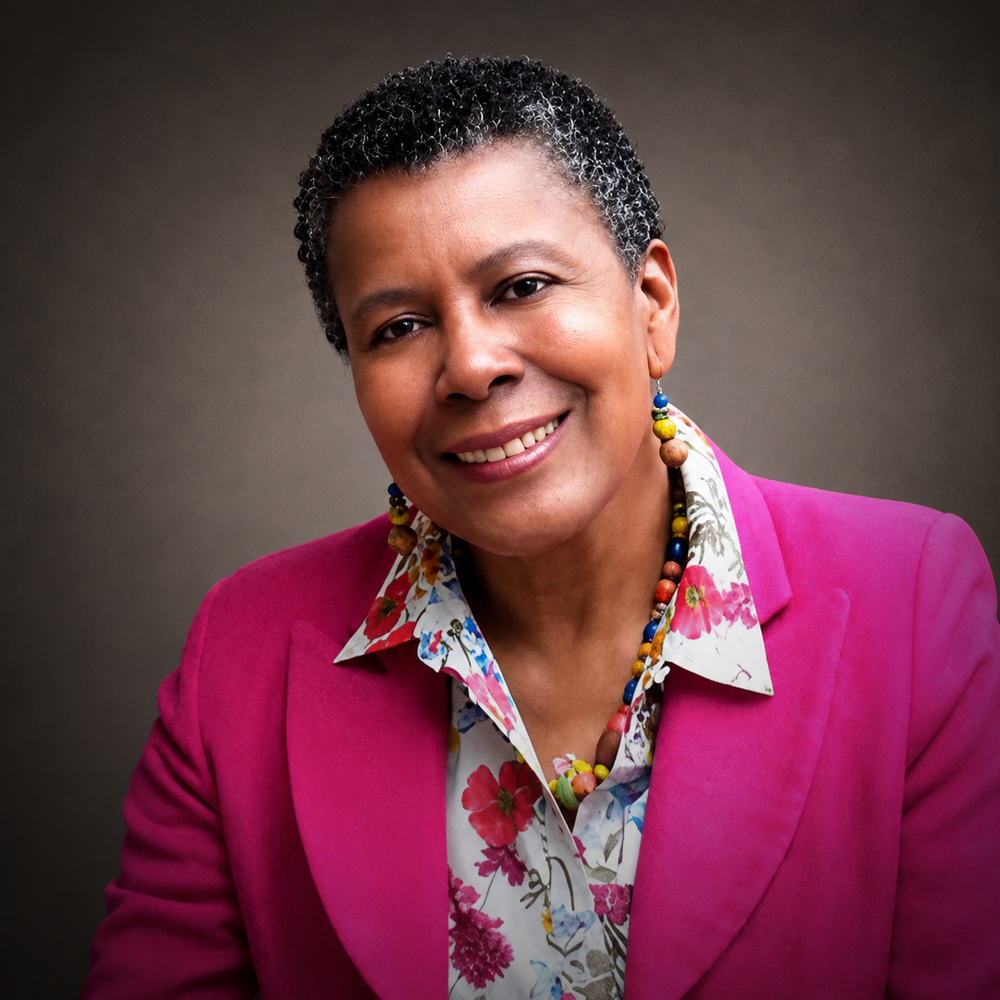
Leona, the executive brain whisperer
LEONA BUHENZIRE, 43, is a behavioral scientist, clinical psychologist, and founder of Mental Health Support Systems (MHSS), headquartered at Onomo in Nakasero, Kampala. Her pioneering work through The Green Brain Initiative, applies nervous system regulation directly to executive training. This authoritative expertise has earned her global recognition, including a nomination at the Humanitarian Awards Global […] The post Leona, the executive brain whisperer appeared first on The Observer Media Ltd.
 Black News


LEONA BUHENZIRE, 43, is a behavioral scientist, clinical psychologist, and founder of Mental Health Support Systems (MHSS), headquartered at Onomo in Nakasero, Kampala.
Her pioneering work through The Green Brain Initiative, applies nervous system regulation directly to executive training. This authoritative expertise has earned her global recognition, including a nomination at the Humanitarian Awards Global in Accra, Ghana, and participation as a delegate at the Forbes Africa Leading Women Summit in Johannesburg.
Quick Talk sat with her for a chat. Please tell Quick Talk more about you.
I’m Leona Buhenzire, 43 years old [whaaat! She looks like a 27-year-old]. I’ve been in practice for 19 years. I went to Taibah, Gayaza High School, then Makerere University, where I studies community psychology, and later a master’s degree in clinical psychology in mental health.
What exactly do you do?
A lot of people confuse roles in the mental health sector. I’m a mental health specialist. In the mental health world, people think you’re either a psychiatrist or a counsellor, but I’m neither.
A psychotherapist can be a psychiatrist, a clinical psychologist, a social worker, or a counsellor. A counsellor did an undergrad or a master’s of arts in counselling. I did a master’s of arts in clinical psychology. We can all be psychotherapists, which is why it’s confusing.
A psychiatrist is a medical doctor who specializes in psychiatry. Otherwise, at MHSS, we do one-on-one psychotherapy sessions with people struggling with depression, anxiety, overwhelm, divorce, and grief.
And then we also have trainings with different organisations like the U.S. Mission, Absa Bank, DFCU, and many others. For example, recently I was at [an organization], and I actually ended up talking to them about sleep; how to sleep, what’s the importance of sleep, what does sleep do for you, why you should prioritize sleep, right?
Sleep is one of the God-given things that can help your brains to recharge and help you have a much better night and day.
Your bio says you operate at the intersection of neuroscience and macroeconomic productivity. Can you explain that in simple English?
I’m a behavioural scientist. What I do for a living is study human behaviour, which is a science. There’s no nuance; I am depending on empirical data, not anecdotes. It has a lot to do with your nature (biology) and your conditioning (environment).
When I bring them together, I use them to discern the life thing an office is dealing with, like change, retention issues, or burnout. I come to a company to customize solutions from my understanding of how the human brain works.
Neuroscience just sounds like a big, heavy word, but it’s just the study of the brain and how it works.
You have written about youth stress. What happens to our nervous systems when someone “blue ticks” or ignores us?
As a community, we’ve become extremely sensitive. The more you progress, the more awareness there is, and issues we used to overlook are now apparent. Our parents were looking for food and shelter; they didn’t have time to think about who ignored them. In the grand scheme of things, it’s not a big deal to be blue-ticked.
How you react has a lot to say about you as an individual, rather than the person who blue-ticked you. They could just be busy. The person who experiences it as a big deal must explore why.
Are you feeling rejection, unimportant, or insignificant?
You’re going to be ignored so many times in life. If it’s romantic and the person doesn’t want to hear from you, why do you want to manipulate them into responding? There’s a self-worth problem there.
What was your experience like as a delegate at the Forbes Africa Leading Women Summit?
It was an incredible experience. I wanted to be in a room with influential women to know, how did they get this far? What’s their perspective on life? I feel that women have been reduced to a very small canvas within themselves.
Women need infrastructure, capital, and to be in the room having conversations that actually build companies. That is their quintessential need. That’s what helps to ground them psychologically and financially.
Would you say the right outfit boosts productivity or confidence?
100 per cent. In this new age, we like to believe that appearances don’t matter, but they do. Appearances put a foot in the door. You feel good when you dress well, but it also affects your reception.
If you go to the American embassy to get a visa in torn jeans and an unironed t-shirt, you probably won’t get it simply because of appearances. There is a point in life where you’ve earned wearing what you want, like [Jeff Bezos]; he can wear a t-shirt with jeans and sneakers and go for a head of department meeting, but I’m not there yet.
What’s the ultimate corporate mental health myth?
Mmmmmm….The corporate wellness day or retreat. When you’re stressed, people say just go to the spa and light some candles. Please tell me what lighting a candle or a one-hour massage does for anxiety or depression?
It does not take away the real cause of the issue. Having a corporate retreat to go to Entebbe with your very same stressors to listen to music, eat meatballs, and dance is not effective, apart from the fact that you’re not banging away at a computer.
Could you share one trick to regulate a spiked nervous system during a meeting?
Take a walk to the parking lot and back, go to the bathroom and wash your face, or take deep breaths. When your brain detects a threat, it goes into fight-or-flight. It picks resources from your higher brain centers, digestive system, and immune system, and puts them into your heart rate and muscles.
The brain does not know the difference between a lion charging and someone in a meeting saying something that triggered you. To tell the brain it’s not a threat, basic breath work acts like a circuit breaker. It grounds you and tells your brain there is no [danger].
What is the most common cognitive red flag you see in African organizations?
Burnout. These days we’ve normalized burnout because it shows you’re a hard worker. But burnout is very serious business that reduces your cognitive capacity. If your brain is constantly in burnout mode, it is constantly removing resources from your immune and digestive systems.
Your immunity becomes compromised, meaning any disease in your family line comes for you. You get constant headaches, abnormal bowel movements, and you go to the hospital but they check you and find nothing.
It is why most of our parents, after a certain age, get high blood pressure. It’s predictable. It’s normalized, but it is not normal.
Given the stigma around mental health in Uganda, how do you attract corporate clients?
They usually call you in because there is a problem and they need it on their record that they saw a mental health person. People think to talk to a mental health person you have to be in a crisis, but that’s not it.
For example, in Fortune 500 companies, every head of department must go into therapy at least once a week. Therapy, unbeknownst to many people who think it’s where you go when you’re in crisis, is actually just a sounding board with a fellow adult who is trained to read cognitive distortions and mind traps that are making you struggle.
You could be telling me a story about your job or your partner or your friends and a night out, but I am trained to pick out certain patterns that show something else that I as a trained personnel is able to recognize. Uganda is getting there; realizing the importance of mental wellness, because it guides physical wellness.
ashleymwesigye@gmail.com
The post Leona, the executive brain whisperer appeared first on The Observer Media Ltd.