Why Macky Sall should be the next UN Sec-General
The term of UN Secretary-General António Guterres ends on December 31. A new leader will replace him in January 2027. The race for the top spot has already begun, with candidates submitting their nominations. One of the African candidates is Macky Sall, the former President of Senegal. Can he bring about the change the body […] The post Why Macky Sall should be the next UN Sec-General appeared first on New African Magazine.
 Black News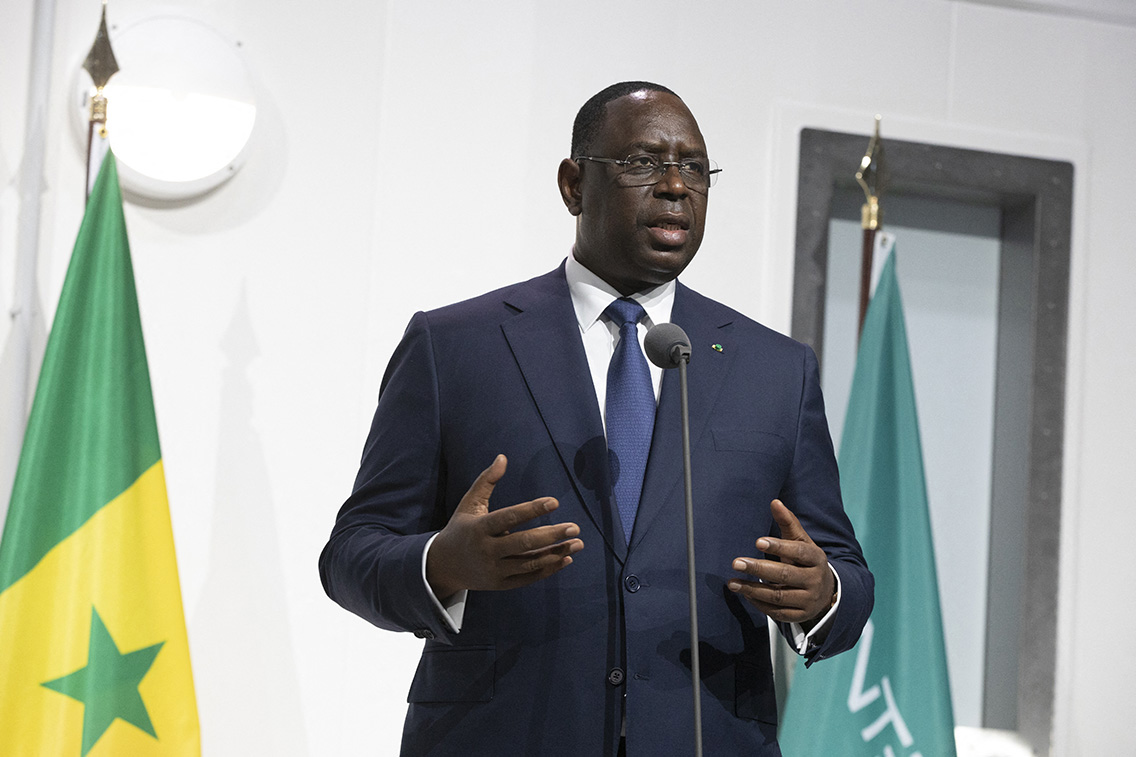

The term of UN Secretary-General António Guterres ends on December 31. A new leader will replace him in January 2027. The race for the top spot has already begun, with candidates submitting their nominations. One of the African candidates is Macky Sall, the former President of Senegal. Can he bring about the change the body needs to meet the demands of the 21st Century?
The election of the next Secretary-General of the United Nations will be one of the most consequential decisions that Member States will make in the coming months.
Beyond the selection of an individual, what is truly at stake is a vision for the future of multilateralism. Since its establishment, the UN has made an invaluable contribution to preserving international peace, strengthening collective security, promoting cooperation among nations, and advancing the universal protection of human rights. That mission remains as essential today as ever.
Yet the world has profoundly changed. The threats to peace no longer arise solely from military rivalries or territorial disputes.
They emerge long before armed conflicts begin. They originate in mass unemployment, persistent poverty, widening inequalities, weak productive systems, food insecurity, climate change, forced migration, territorial exclusion, and the inability of many economies to provide credible opportunities for an increasingly youthful population.
In other words, the root causes of instability are becoming increasingly economic, productive, and structural.This evolution raises a fundamental question.
Can an institution primarily designed to preserve peace continue to fulfil its mission effectively if it does not contribute more actively to addressing the structural causes of instability?
The answer is not to reinvent the United Nations but to enable it to evolve. In engineering, when an infrastructure remains fundamentally sound but is no longer fully suited to its environment, it undergoes a retrofit. Its foundations are preserved while its capabilities are modernised to meet the demands of a new era.
Today, the United Nations faces a similar challenge. Its founding mission should not be replaced, it should be expanded.
Alongside peace, collective security, and the protection of human rights, a fourth strategic pillar should now be added: The equitable distribution of development opportunities among nations of equal dignity.
This is not merely an economic objective. It is arguably the most ambitious conflict-prevention strategy the international community can pursue.
A society that creates productive employment, develops competitive value chains, attracts investment, industrialises its economy, modernises its infrastructure, and offers meaningful opportunities to its youth naturally reduces the structural conditions that fuel social unrest, forced migration, violence, and extremism.
Development thus becomes a policy for peace; a policy for security and a policy for the protection of human rights.
Fundamental transformation
However, such modernisation also requires a fundamental transformation in the way member states perceive their relationship with the organisation.
Since its creation, assessed contributions have generally been viewed as statutory obligations—budgetary expenditures that governments understandably seek to minimise.
If, however, the United Nations evolves into an institution that actively creates development opportunities, an entirely different paradigm becomes possible.
Member States’ contributions could gradually be regarded not merely as statutory dues, but as multilateral value-creating investments.
The difference in perspective is profound. A cost is something one naturally seeks to reduce. An investment is an expenditure willingly made because it generates future returns.
Under this new paradigm, member states’ contributions would no longer serve only to finance the organisation’s administrative operations. They would contribute directly to generating tangible returns through productive investment opportunities, stronger value chains, industrial development, innovation, employment creation, enhanced economic resilience, greater stability, and shared prosperity.
This transformation would significantly enhance the strategic relevance of the organisation by aligning the success of the UN with the long-term interests of its Member States.
Evolution of profile
This new ambition also calls for an evolution in the profile of the next Secretary-General. The world will always need an outstanding diplomat.
But it will now require a leader capable of connecting diplomacy with productive transformation, development finance, infrastructure, regional integration, climate resilience, innovation, and the creation of shared economic opportunities.
Tomorrow’s Secretary-General must become not only the guardian of peace, but also one of the architects of the economic conditions that make peace sustainable.
It is precisely from this perspective that the experience of former President Macky Sall deserves the careful attention of member states.
His career extends well beyond the exercise of the highest national office. It encompasses public governance, infrastructure development, regional integration, development finance, energy transition, international cooperation, and strategic reflection on Africa’s economic transformation.
During his Presidency of Semegal, he made infrastructure modernisation, improved connectivity, expanded energy access, economic competitiveness, and regional cooperation central pillars of public policy.
On the international stage, he became a prominent advocate for reforming the global financial architecture, strengthening development finance, improving food security, promoting productive investment, and fostering stronger international partnerships.
This experience provides him with a practical understanding of the close relationship between governance, development, stability, and international cooperation.
These are precisely the competencies that twenty-first-century multilateralism increasingly requires. Like any former Head of State, his national record may naturally be subject to differing assessments.
Such debate is both legitimate and healthy. Yet the question facing Member States is fundamentally different. Does the candidate possess the international experience, strategic vision, capacity for dialogue, and understanding of today’s profound economic transformations required to guide the UN through its next major evolution?
On this question, Macky Sall’s experience offers compelling elements worthy of serious consideration. His experience is not merely that of a former President. It is that of a leader who has confronted, at the highest level, the interconnected challenges of governance, development, regional integration, international cooperation, and the search for solutions to the major economic transformations of our time.
Ultimately, the issue extends far beyond any individual candidacy. It concerns the ability of the UN to adapt its leadership, its strategic vision, and even its economic model to the realities of the 21St century.
If the international community recognises that lasting peace now also depends upon the equitable distribution of development opportunities among nations of equal dignity, then Macky Sall’s experience unquestionably deserves to be among the references carefully considered by member states when selecting the next Secretary-General.
Great institutions do not remain strong because they remain unchanged. They remain strong because they know how to adapt their missions, their instruments, and their financing models to new realities without ever abandoning the principles upon which they were founded.
This is undoubtedly the historic challenge now facing the UN, and it is precisely this challenge that its next Secretary-General will be called upon to address.
Dr. Papa Demba Thiam is a value-chains-based industrialisation expert and financial infrastructure development specialist.
The post Why Macky Sall should be the next UN Sec-General appeared first on New African Magazine.