‘A lot of this stuff brings up emotions inside of me’
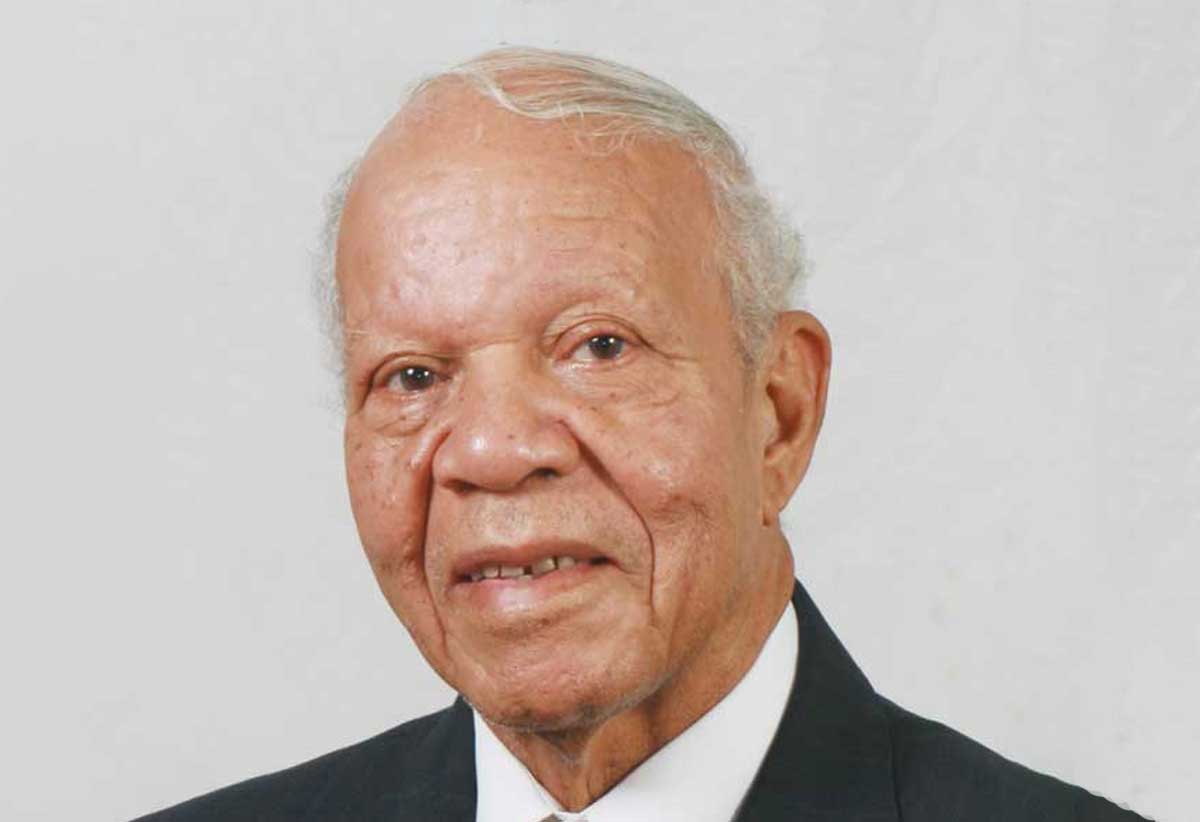
Willie Sundiata Tate reflects on the racism, incarceration and political education that shaped his path from the California Youth Authority to the San Quentin Six era. In an unfinished phone conversation, he recalls George Jackson, Black August and the lasting emotional weight of prison movement history. The post ‘A lot of this stuff brings up emotions inside of me’ appeared first on San Francisco Bay View.
 Black News

A Conversation with Willie Sundiata Tate
by Leah Harmony
Author’s note: This is drawn from an impromptu telephone conversation. Tate was not able to complete the full history he wanted to tell, and the conversation ended without notice. His unfinished account can be read as an opening, not as a comprehensive oral history of the San Quentin Six or the California prison movement. Black August commands the interested reader to look further into the sacrifice these men made, because what was experienced may never be articulated. We must listen anyway and give honor to the fire that burns even in rain.
“When the prison doors are opened, the real dragons will fly out.” – Ho Chi Minh
Before Willie Sundiata Tate became one of the San Quentin Six, before his name was bound to one of the most consequential prison trials of the 1970s, he was a 14-year-old child riding a freight train out of California.
He had run away from home after returning late and fearing punishment from his father. Somewhere between Fresno and Bakersfield, he met a twenty-one-year-old Black hobo named Henry. Henry taught him how to survive the train: where it was safer to sleep, how to use cardboard against the cold, and why a Black traveler should avoid being trapped inside a closed boxcar. White people. Because white people, Henry warned him, sometimes killed Black people on the trains.
It is a small but significant memory inside the public history that would later surround Tate. But it seems to speak to movement and confinement, danger, and riding inside the symbology of freedom, but not truly being free. It was, perhaps, his first lesson in camaraderie, and that there are things to be learned away from the confines of traditional education.
The train carried Tate to Arizona. There, a Black contractor and his wife, Will and Mary Brown, took him in and treated him well. He remained with them for roughly six months, until he was recognized as a missing child. Police eventually seized him and returned him by Greyhound bus to Fresno, where his mother and twin sister met him at the station.
What a different trajectory his life would have been on had his return restored an ordinary childhood. It did not. Contrary even to his mother’s understanding, juvenile authorities came for him. Tate described a succession of arrests and institutions, some arising from what he called “teenage type stuff,” others from confrontations in a world where just having brown skin could result in a deep-seated humiliation without warning, and lodge itself within, becoming part of a forming man.
In Arizona, Tate recalled entering a small café with two other Black boys and being told that the establishment did not serve “niggers”. When Tate answered back, the grown white man followed him outside and punched him in the face. Tate fought back with finality. With a chain around his fist, he punched back much harder. The boys escaped on their bicycles and got away.
“I took a lot of shit as a kid,” Tate said. “I wasn’t taking no more. From anybody.”
That sentence could be chopped up to youthful toughness, but it is more. Tate was describing a child developing calluses. Armor. Against both racism and control. At 15, after an arrest at 14, he entered the California Youth Authority. He spent 21 months there, returned home for only 88 days, and was then sent back. From the youth system, he was transferred to Deuel Vocational Institution at Tracy, an adult prison.
“That became my history in the California prison system,” he said.
Political education through the bars
In Tracy, in 1962, Tate met George Jackson in a segregation unit. He also remembered Jimmy Carr and W. L. Nolen. To much of the world, Jackson would later become an author, revolutionary theorist, Soledad Brother, and the most recognizable symbol of the Black prison movement. Tate encountered him earlier, as a man speaking from a cell to the people confined around him.
“George was the brother that was so political in terms of educating us younger prisoners,” Tate recalled. Of all the people he met during those early years, he said, “George Jackson was the person that had the most powerful influence.”
The political education Tate described did not take place in a classroom or through a formal organization. They were locked down. The whole of his learning happened through hearing George Jackson’s voice.
Jackson spoke about struggles elsewhere in the world, including the Cuban Revolution. He and Jimmy Carr held dialogues across the cells, and younger prisoners listened. “Being up there and listening,” Tate said, “you picked up on a lot of information.”
This matters. Political consciousness was not a sign up sheet to join a fully formed movement on the streets. In Tate’s account, incarcerated people were interpreting the world together years before the Black Panther Party was founded. Knowledge moved through concrete and steel by conversation. Men whom the prison treated as bodies to isolate became teachers, students, organizers, and historical actors.
Jackson’s leadership was based on organization early on. He made sense and had an impact. It was practical as well as intellectual. Tate remembered him persuading prisoners to throw their Thanksgiving food onto the tier. Prisoners making an immediate demand was less important in Tate’s telling than the collective act itself: it was resistance, an exercise in bringing people together.
He has pride in his voice when he says, “The action crossed racial lines”.
That detail is easy to glorify from a distance, but Tate placed it in a precise setting: a small segregation section, perhaps 10 cells to a side, at Tracy in 1962. It did not end every racial conflict in California’s prisons. It demonstrated that people could recognize a common condition and act together regardless of the divisions prison authorities cultivated and exploited.
Solidarity, in this memory, was not an obscurity. It was the decision to give up one of the few things a prisoner could own in the moment, nourishment, a “special meal,” and to do it alongside others.
The climate before Black August
Tate next encountered George Jackson at San Quentin in 1966. By then, he recalled, racial antagonism inside the prison was intense. The history that followed cannot be compressed into a single telephone call, and Tate resisted attempts to hurry it.
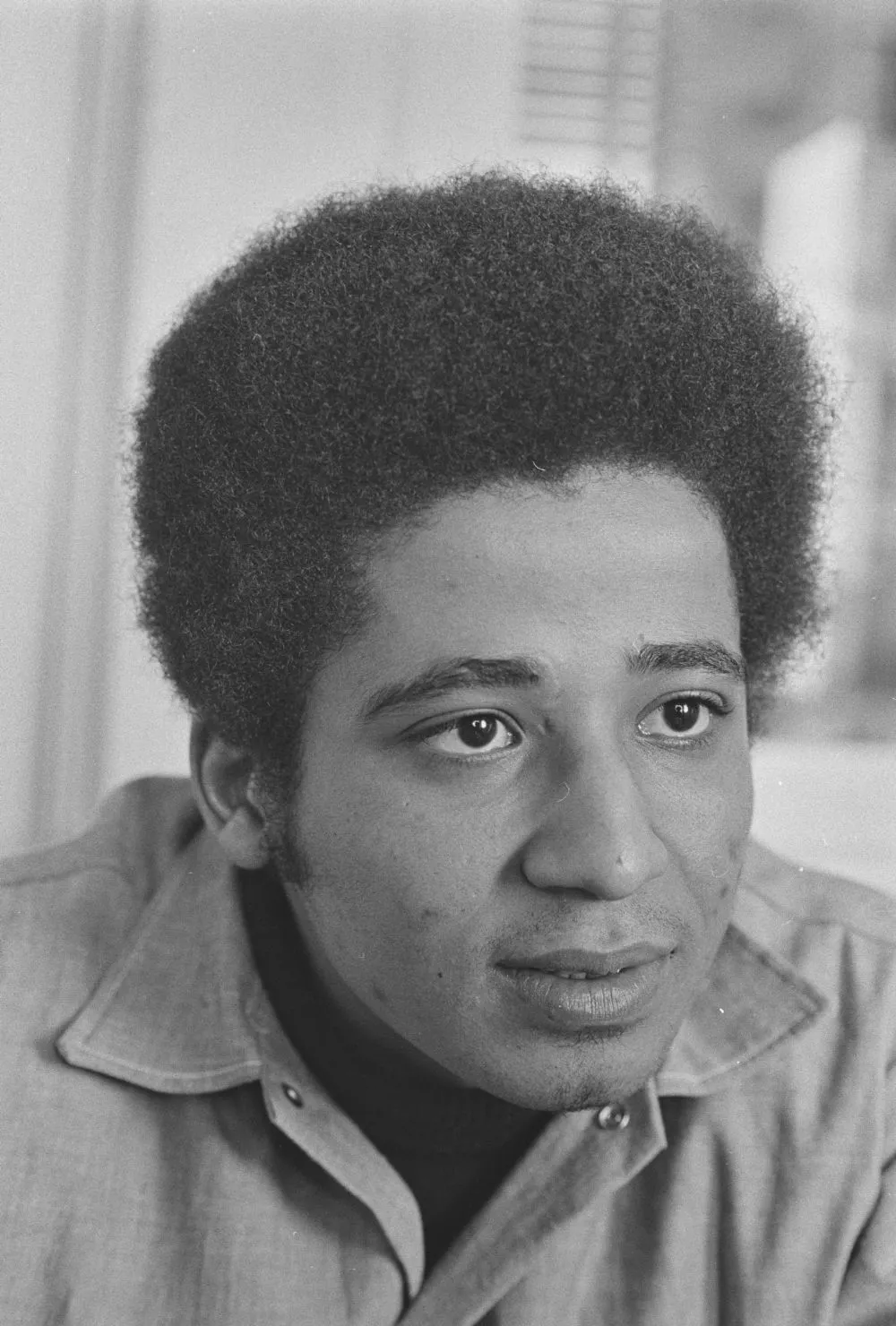
“It’s history, man,” he said. “It’s not going to be totally laid in a conversation here.”
That warning is real. Public memory can condense the radical prison movement into a sequence of famous names and violent dates, connecting strings to crazy cool images. But all of those things emerged from years of organizing, retaliation, racial conflict, political study, grief, resistance, and loss. Lots of loss. The men inside experienced that history not as a timeline but as relationships, and as repeated empty spaces that can’t be filled, ever again.
On Jan. 13, 1970, a guard at Soledad Prison shot and killed W.L. Nolen, Cleveland Edwards, and Alvin Miller after a yard scuffle.
W.L. Nolen was loved and respected as a teacher and a leader. When he was gunned down with Edwards and Miller, there was nothing the other prisoners could do but stand in wait for the bullets to stop and their comrades to fall. Three days later the local district attorney described the deaths as “justifiable homicide” on a TV newscast. An angry and powerful and emotional response followed, and fast. In half an hour, a white guard was dead.
Three militant black prisoners were charged with the guard’s death. The
Soledad Brothers – George Jackson, Fleeta Drumgo and John Clutchette.On Aug. 7 of that year, George Jackson’s 17-year-old brother, Jonathan, entered a Marin County courtroom during the trial of prisoner James McClain.He felt justice wasn’t just slow; it felt like it wasn’t present at all. Though he was just a young kid, he’d organized to free George and was already willing to sacrifice everything to do so.
Jonathan Jackson, McClain, William Christmas, and Judge Harold Haley were killed; Ruchell Magee survived despite being shot.
Tate’s memories of this period do not fall into an orderly chronology. He remembers being in the hole. He remembers men dying. He remembers the names. He remembers the judgments that prisoners made about one another in the aftermath. He specifically defended Willie Reddix, whom he called “one of the best brothers that you could have” — a “stand-up brother” whom some reactionary voices unfairly maligned because he did not lose his life that day.
“A lot of shit happened,” Tate said. “A lot of shit gets twisted.”
Black August was born from a culture of commemoration developed by incarcerated Black organizers in California: a discipline of fasting, study, exercise, sacrifice, and remembrance honoring fallen freedom fighters and renewing commitment to collective struggle. Its meaning cannot be confined to nostalgia for heroic individuals. Tate’s testimony points toward something harder: Remembrance requires contending with confusion, friction, imperfect memory, and the pain owned by survivors.
To remember responsibly is to not hold the brothers so high, we can’t learn from their mistakes. It is to recover who they were to one another.
From then to now
The institutions and technologies of incarceration have changed since Tate entered the youth system in the late 1950s. The vocabulary has changed. California has renamed agencies and facilities, revised its official mission, and presented new models of rehabilitation. Prison activism now moves through legal campaigns, abolitionist organizations, family networks, publications, recorded calls, social media, and coordinated actions inside and outside.
But Tate’s account raises a harder measure of change.
Children are still introduced to confinement through juvenile systems too young, in places too cold. Racism is still the foundation of the criminal justice system. This is because the system was never destroyed and rebuilt on different grounds. It still determines where the Flock cameras are placed, where the prisons are built, who’s punished, believed, and who gets the simple gift of childhood. Isolation is still devastating to the mind and body. Prison authorities still have too much power and interest in communication, movement, food, safety, and of course, the historical narrative. And incarcerated organizers still transform the very conditions intended to silence them into grounds for political education and solidarity.
The differences matter, but so does stability and longevity in the spirit of the movement. Tate’s story, when placed in parallel with the systems today, answers whether reform has altered the relationship between captivity and power. I’d say no. But I’d also say power has to work a whole lot harder, watch their back much more closely, and build laws that don’t catch them slipping.
This is why new students of the prison reform movement will do well adopting the disciplines that gave those names meaning: study, organization, solidarity, care for political prisoners and elders, resistance to the divide and conquer games, and a willingness to preserve histories that institutions would prefer to erase.
Speaking with Tate is speaking with a living archive of the abolition movement. But an archive is not an object from which information can simply be extracted. It is a person. The history lives in a body that has carried it for more than half a century.
After his last recollection, Tate stopped.
“I’m done talking today,” he said. “Y’all got to understand something. A lot of this stuff brings up emotions inside of me. Sometimes I talk about stuff and I lose it, because I still suffer from what I went through — not just me, what other people went through. Some of the brothers that you love … just for standing up.”
Leah Harmony is Manager of Production for the BayView, a journalist, filmmaker and music video producer who has produced award-winning videos for artists such as Tyler, the Creator; Rihanna; Shakira; J.Lo; Drake; and many more. She can be reached at leah@sfbayview.com.
The post ‘A lot of this stuff brings up emotions inside of me’ appeared first on San Francisco Bay View.