Opinion | Germany Through My Eyes: From Power to Reflection
I returned from Munich a few days ago after participating, at UNESCO’s invitation, in a programme held in Salzburg, Austria, and Munich, Germany. Later this month, I will return to Germany for two weeks in Berlin, including a cultural diplomacy programme at the invitation of the German Federal Foreign Office. Between visits, I find myself […] The post Opinion | Germany Through My Eyes: From Power to Reflection first appeared on Dailynewsegypt.
 Black News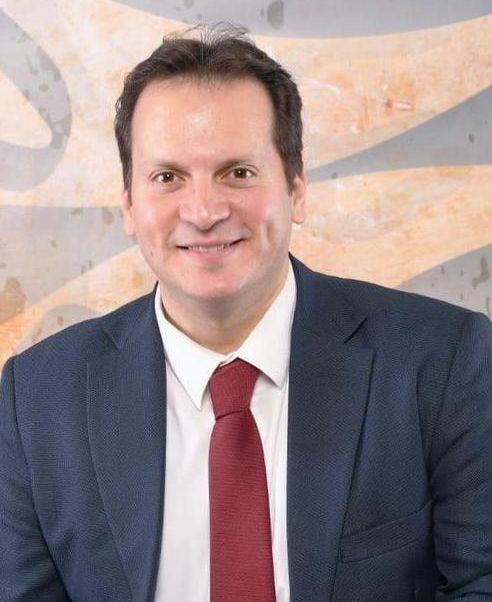
I returned from Munich a few days ago after participating, at UNESCO’s invitation, in a programme held in Salzburg, Austria, and Munich, Germany. Later this month, I will return to Germany for two weeks in Berlin, including a cultural diplomacy programme at the invitation of the German Federal Foreign Office. Between visits, I find myself reflecting on why this country remains close to my heart, and what I am still searching for there.
My relationship with Germany began long before I first visited. In a way, it was one of my childhood heroes. The Second World War dominated my reading, and German power, organisation and military advances fascinated me. With the naïveté of a child who read about battles before understanding politics, I assumed that strength made a country deserving of victory. I had yet to understand that military superiority does not make a cause just, and that admiration for capability can obscure the purposes it serves.
As my reading broadened, that fascination gave way to the realisation that Germany’s achievements in philosophy, music and science had neither prevented Nazism’s rise nor stopped sections of society from supporting it and serving its institutions. Knowledge and organisational capacity had themselves been put to work in war and genocide. I began to understand that culture and education offer no automatic immunity, and that progress requires institutions that protect people, allow dissent and hold power accountable.
I then became interested in how Germany was rebuilt. Reconstructing factories and cities was part of the answer, but what concerns me more is the rebuilding of trust, rules and institutions, and the creation of a system that limits power after history had demonstrated the consequences of leaving it unchecked.
My next visit comes as Germany approaches the thirty-sixth anniversary of reunification on 3 October. The occasion brings another aspect of its experience into focus: building a shared life among citizens who spent decades under different systems. Rebuilding nations also means repairing the bonds between their people, a task that does not end with the declaration of unity.
Over the years, my relationship with Germany extended beyond reading. I came to know it as a writer, then through my political work, and later as a researcher and academic concerned with culture and governance, collaborating with universities there. I met Germans both in Egypt and in their own country. Some relationships faded; others became close friendships. The country I had known through maps and battles acquired faces, voices and an everyday life. Each visit became an opportunity to reconsider what I thought I understood.
In Munich, the Documentation Center for the History of National Socialism offers a concrete example of what captures my attention. It stands on the site of the “Brown House”, the former Nazi Party headquarters. A place that once served the party’s rise is now dedicated to examining its history and responsibility. The significance extends beyond establishing a museum: a city can turn a site associated with Nazism’s ascent into a public space for understanding it and critically examining its legacy.
I see a direct connection here between memory and governance. Making documents accessible, explaining institutions’ roles and revealing victims’ fates open the past to scrutiny. Learning deepens when we understand how officials, professionals and institutions helped bring about catastrophe, and how obedience expanded as room for dissent narrowed.
Through this relationship, my interest in the Holocaust, historical memory, coexistence and Muslim-Jewish dialogue grew. I also came to see cultural diplomacy as a society’s capacity to present itself in its complexity, including the chapters it finds difficult to display. When a country invites visitors to reflect on its failures, it offers an understanding that goes beyond a polished official image.
Some time ago, I considered writing a book about Germany, then discovered around twenty articles in my archive about its democracy, culture, education, memory and cities. I laughed: perhaps I had already begun the book without realising it.
This relationship does not lead me to regard Germany as a perfect model or endorse all its policies. For me, as an Egyptian, its value lies in studying and learning from its experience. Egypt has its own history and questions. What interests me is what we can learn about building institutions, teaching history and making room for self-examination.
Perhaps this is why I love Germany: it has accompanied the evolution of my questions. As a child, I marvelled at its power. Today, I am concerned with how it builds institutions that constrain that power and prevent its abuse from recurring. Between those perspectives, I have learned something about the meaning of progress, and about myself.
Dr Ramy Galal is a governance and institutional reform specialist focusing on state capacity, accountability, and the design of effective public institutions, with an interest in the governance of meaning.
He is an Assistant Professor and a former Senator, and previously served as an advisor and official spokesperson for Egypt’s Ministry of Planning and Economic Development, with direct involvement in policy design and implementation.
He holds a PhD from Alexandria University, a master’s degree from the University of East London, and a diploma in public administration from the University of Chile.
The post Opinion | Germany Through My Eyes: From Power to Reflection first appeared on Dailynewsegypt.