10 Nigerian Women on What Financial Independence Changed About Their Lives
Written by Winifred Andem
 Black News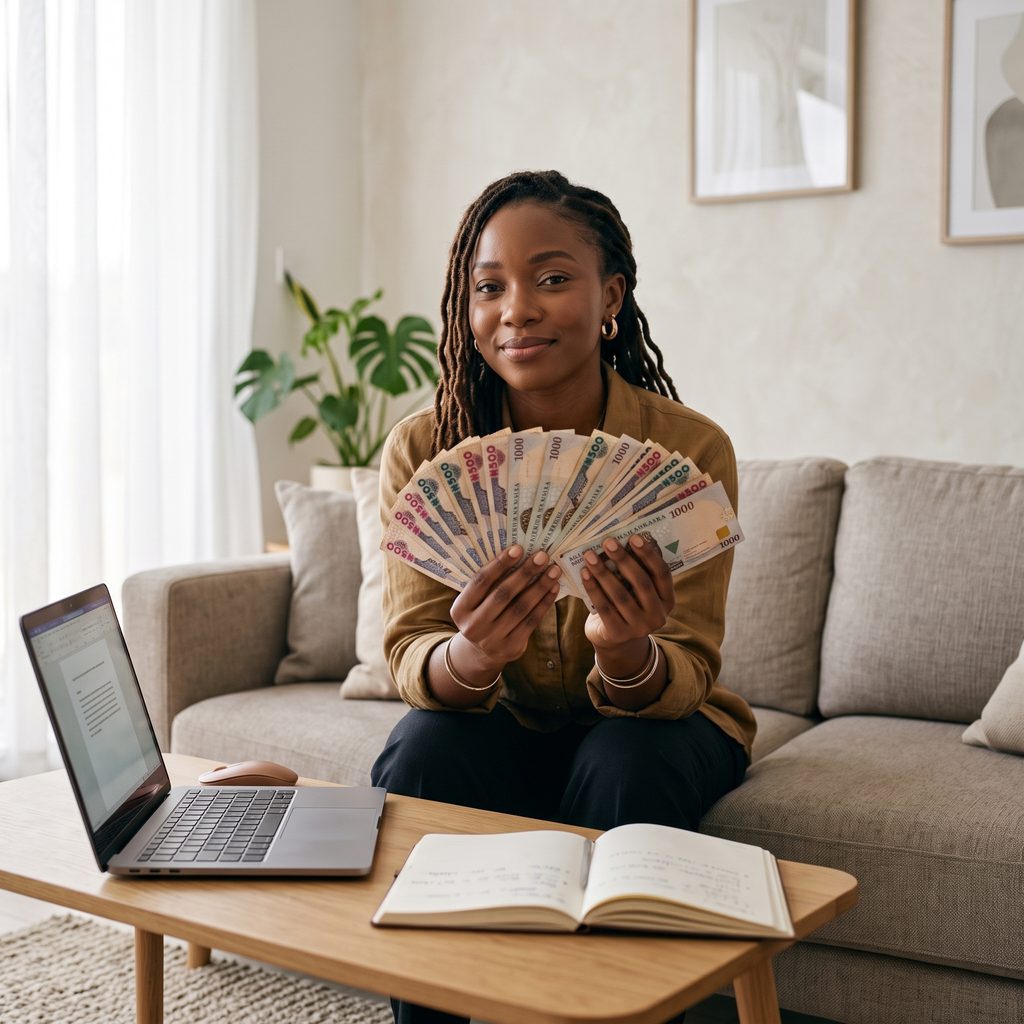
It’s hard to tell someone “no” when you might need to ask them for transport money tomorrow. When someone else is financially responsible for you, falling out with them can cost more than the relationship. Whether it’s a parent, partner or friend, you might find yourself agreeing to things you don’t want, keeping quiet when you’re upset or trying to remain in their good graces, because you still need their help.
Nigerian women are getting their money up and questioning the idea that dependence should be their default. When a woman starts earning her own money, the change isn’t only in what she can buy. It can affect her relationship with her family, the work she chooses, what she’s willing to put up with and the everyday decisions she can finally make without permission.
We spoke to Nigerian women about what financial independence actually changed about their lives, and their answers went well beyond being able to pay their own bills.
1. “It Has Given Me The Freedom of Choice” — Hope*, 32, Editor
I work as an editor, and I earn $3,800 a month. Financial independence has changed a lot of things for me. When I was younger, I needed to ask my parents for money to do the things I wanted. Having my own money has made it possible for me to handle those things myself. It has also given me the freedom of choice. I can wake up and decide to travel to a certain place, pierce my ears or get a tattoo without asking anyone for permission. I can also afford to pay for help with things I’d rather not do myself.
2. “I Went From 10k to 600 – 1.8M” — Chi*, 29, Media and Communications
I went from earning 10k a month to somewhere between 600 and 1.8m. I’ve always strived towards financial independence because I realised from an early age that it is important for women to have their own money. This was evident in the films that I watched growing up and within my socioeconomic group. I also like the good things in life, and whenever I saw music videos where women danced, and men sprayed money on them, I wanted to be the one throwing money around.
Financial independence has ensured my agency. I do not have to depend on people or wait for their permission to do certain things. When I wanted to move cities, informing my parents was more like a formality because I didn’t expect anything from them. Having my own money made the move possible. It also gave me more self-trust and made it easier to cut people out of my life when they become a nuisance.
3. “I Averaged $4k Monthly From My Job And Business” — Chinasa*, 31, Enugu, Narrative and Communications Strategist
Previously, I earned an average of $4,000 a month from my full-time job and my business combined. I now run my consultancy full-time, and my earnings are project-based, so there isn’t a fixed monthly figure.
For me, financial independence means being able to care for myself and the people I love. I used to depend on my parents financially. Having my own money has made it easier to make decisions without relying on someone else’s support or approval.
Getting my first apartment was a big part of that. I did it against my parents’ wishes, and being able to sustain that independence over the years has meant a lot to me. I’ve also been able to move cities on my own terms.
A new pressure I’m trying to navigate is asking for help when I actually need it. It’s hard for me because I’m used to handling things myself. Also, people overlook that I do need help sometimes. Still, having my own money meant I could finally have my own room.
4. “I Can Meet My Needs And Do Impactful Work” — Ediomo*, 25, Freelancer
I’m a freelancer earning between ₦500,000 and ₦750,000. I’ve worked across non-profit projects, graphic design and real estate. Having my own money means I can afford everything I need and choose work I care about, rather than making career decisions out of survival. It’s also changed my relationship with my dad.
I grew up in a middle-class family where my dad was the primary breadwinner. We were comfortable, but he was financially abusive. We had to ask for basics like food and toiletries, and he’d make us write lists to defend what we needed. He scrutinised everything, gave us about a third of the money and constantly reminded us how much we depended on him.
When I moved out and started supporting myself, I stopped calling. I no longer needed his money, so I didn’t have to put up with him. He eventually started making an effort to be in my life. I was distant at first, but over time, I noticed he was trying and acknowledging his mistakes.
Having my own money also helped me understand his fear that we wouldn’t have enough, though his approach made us feel that way anyway. Our relationship is still strained, and there’s hurt I haven’t let go of, but I love and respect him now. Financial independence gave me the freedom to step away, and eventually, the choice to let him back into my life.
5. “It Has Made Me More Confident In Myself” — Joy*, F, 30, Operations
I work in operations and earn ₦300,000 monthly. For me, financial independence means paying all my bills and making decisions without asking anyone for money.
Having my own money has made me less anxious. I used to depend on my dad financially, but not anymore. I’m more confident in myself, and that scares him because he’s no longer in control of my decisions.
The biggest change was being able to quit a job I’d been at for three months without a backup plan, and I didn’t care what my parents would say. I also have my own apartment, so I can come and go as I please without answering to anyone, like I’m a child.
Financial independence has brought some new pressures, though. There’s a black tax, though I’ve managed to reduce it significantly in the past year. I also have to manage unexpected expenses in this economy, and I feel like I always have to have everything figured out. Still, I’m glad I no longer have to depend on other people or please them at my expense.
Next Read: I Slept on My Couch for Eight Years Because My Aunt Took Over My Room
6. “It Gave Me The Confidence To Start My Business” — Amara*, 30, Social Media Associate
I earn ₦385,000 a month as a social media associate. For me, financial independence means having my own money and being able to call the shots on how I use it.
I have never really depended on anyone financially because I’ve always had myself. The biggest change having my own money has brought is the confidence it has given me to start my own business. I have a lot of trust in my own decisions now.
7. “I No Longer Rely On My Parents For Things I Want” — Dara*, 22, Journalist & Writer
I work as a journalist and writer, earning between ₦150,000 and ₦200,000 a month. For me, financial independence means being able to make decisions about my life without another person’s permission.
I used to rely on my parents. Sometimes, the things I wanted could be used to punish me. Other times, I’d have to give them up because my younger siblings wanted something. Now I can buy things I like without having to explain why I need them. I’m also firmer with my boundaries.
I was able to fix my phone without asking them for help. If I waited for them, I might have gone a week or more without a phone. I’m not making a lot, but knowing I can take care of myself has given me a sense of freedom.
Having my own money has also brought some black tax. My siblings expect me to help them, especially when they can’t ask my parents. When I’m at home, certain responsibilities also automatically fall to me, and I hate that.
Still, I can finally do things on my own without waiting for permission.
8. “I Can Live A Truly Unconventional Life” — Lade*, 34, Aesthetician and Operations
I earn $40k CAD annually. Personally, financial independence means I have enough to cover unforeseen expenses after paying my bills, without worrying.
I used to rely on my dad financially. Our relationship has always been distant, and that hasn’t really changed. What’s different now is that I control when I talk to him. I don’t feel obligated to call because I need something from him or worry that he might weaponise my silence or distance against me.
Having my own money has given me the freedom to live the truly unconventional life I know I’m meant to have. It means my life doesn’t stop because I’m not dependent on someone else in big, impactful ways. I have the final say on my decisions, and I can make choices that honour who I am without relying on anyone else to make them possible.
I’m also moving apartments, which is a big deal for me. The last time I moved, my dad handled the expenses. Two years later, I’m doing it myself, and I feel very proud.
There’s still some pressure to make more money and take better charge of my life, but having my own money has made it possible to live on my own terms.
9. “I No Longer Make Decisions Out Of Desperation” — Oyin* 32, Lagos, Artist and Media practitioner
I am an artist and media practitioner, and I earn around 2m monthly. For me, financial independence means being able to afford my needs and my wants without relying on anyone. The biggest change is that I can make decisions without desperation. I noticed this when I left a job that almost took my life. I knew my savings could tide me over until I got back on my feet.
Before now, I used to rely on my parents. They always came through for me, even when they were struggling themselves. Now, I take care of them. It has also made travelling possible for me, and my living conditions have improved significantly.
Having my own money isn’t without its own pressure, though. I have to deal with the black tax. I love taking care of my parents, but I know how to enforce boundaries when I need to. There’s also the pressure I put on myself to keep making more money. That said, having my own money means I can finally breathe well.
10. “I Earn ₦900,000/ Month. I Can Buy Whatever I Want” — Tee*, 27, Banker
I earn about ₦900,000 a month. For me, financial independence means being able to buy what I want without consulting anyone or waiting for someone to give me the money.
My parents supported me through university, but that stopped after I graduated. Some friends helped, and I picked up a side hustle while waiting for NYSC. I got my current job after service, and I’ve been taking care of myself since.
The biggest change is being able to say no to people I don’t want in my life because I know I can take care of myself. While I was house-hunting, I met an “abroad” uncle who got involved in the search, and I expected him to contribute to my rent. A few weeks later, he reacted irrationally to a photo I shared because I’d blurred out my b**bs. I couldn’t understand why he felt entitled to my body, so I blocked him without worrying about the money he hadn’t sent.
It has also made things I once struggled with easier. I can afford data subscriptions, which were a problem when I was unemployed. I can also travel by air, and that has been a highlight of my financial independence.
A new pressure I’m navigating is black tax from extended family. My immediate family doesn’t pressure me for money, but the requests from extended family stress me out. I’ve learnt to ignore some messages because sometimes I’m already having a bad day, then I come online to meet billing.
Still, I’m grateful. Having my own money has made it possible to be my true self without having to kiss anyone’s ass.
You’ll Love: Why Can’t A Woman Just Be Good At What She Does?
We surveyed 5,000 workers across Nigeria’s formal and informal sectors to examine what Nigerians earn, where the money goes, and whether hard work actually translates to financial security. This is what we found. Download the Zikoko State of Income Report.





![I Placed My Black Son For Adoption After Rape — His Memoir, ‘Stranger In My Own Story,’ Helped Me Reclaim Mine [Op-Ed]](https://madamenoire.com/wp-content/uploads/sites/9/2026/09/17907998954811-rotated-e1790802025921.jpg?quality=80&strip=all&w=2448&crop=0,0,100,1322px#)