250 Years of Amnesia: The Debt America Owes Haiti
*America, as you approach your 250th year, you celebrate expansion, power, and global dominance. You reflect on the Founding Fathers, wars won, and economic triumphs. But there is a truth embedded in your rise that remains largely unspoken—an origin story that disrupts the mythology of American greatness. That truth is Haiti. At the very moment […] The post 250 Years of Amnesia: The Debt America Owes Haiti appeared first on EURweb | Black News, Culture, Entertainment & More.
 Black News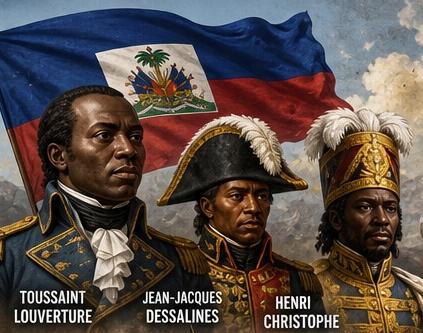
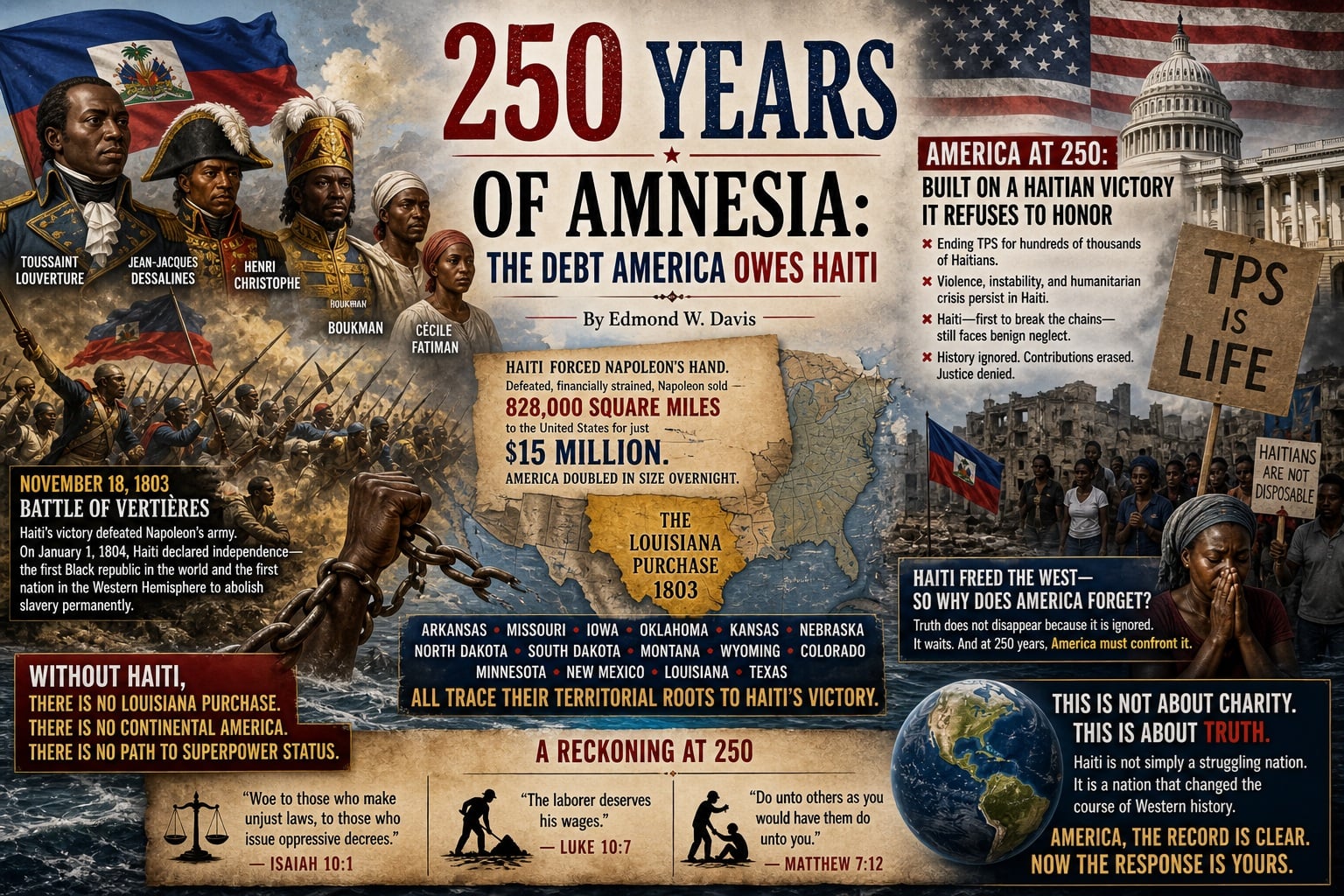
*America, as you approach your 250th year, you celebrate expansion, power, and global dominance. You reflect on the Founding Fathers, wars won, and economic triumphs. But there is a truth embedded in your rise that remains largely unspoken—an origin story that disrupts the mythology of American greatness.
That truth is Haiti.
At the very moment the United States was still a fragile, 27-year-old nation, a group of formerly enslaved Africans in the Caribbean did what no Western power believed possible—they defeated Napoleon Bonaparte’s army, the most powerful military force of its time.
The Haitian Revolution was not symbolic resistance. It was a total victory. Led by Toussaint Louverture, Jean-Jacques Dessalines, and other revolutionary leaders such as Henri Christophe, Boukman, and Cecile Fatiman, enslaved Africans dismantled French colonial power and reshaped the geopolitical future of the Western Hemisphere.
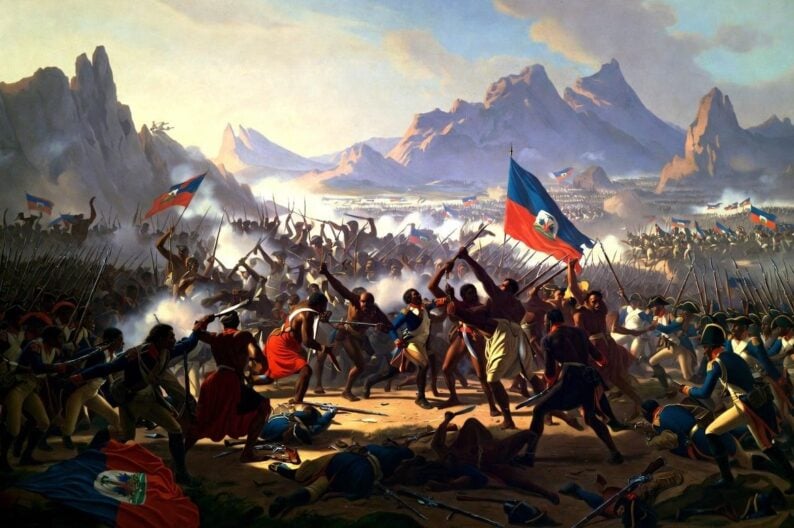
On November 18, 1803, at the Battle of Vertières, French forces were defeated. By January 1, 1804, Haiti declared independence—the first Black republic in the world and the first nation in the Western Hemisphere to abolish slavery permanently. But Haiti’s victory did not stop at its borders. It forced Napoleon’s hand. Defeated, financially strained, and unable to maintain control over his North American holdings, Napoleon sold 828,000 square miles of land to the United States in the Louisiana Purchase—for just $15 million.
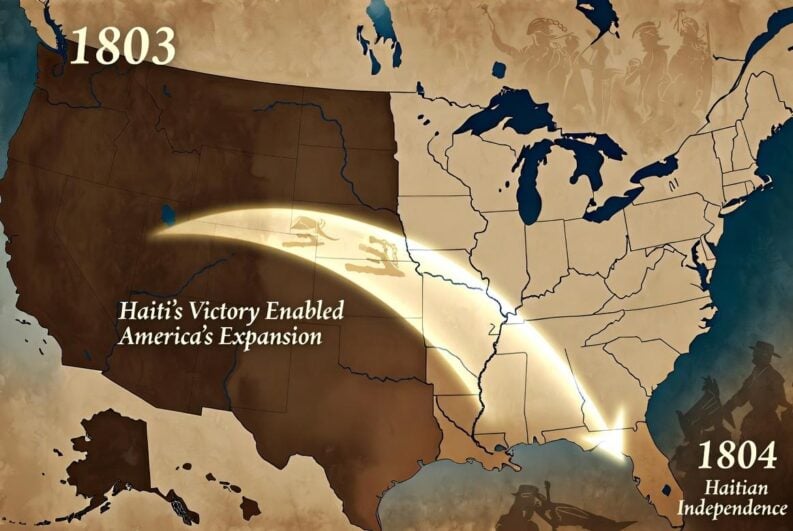
America doubled in size overnight. States such as Arkansas, Missouri, Iowa, Oklahoma, Kansas, Nebraska, the Dakotas, Montana, Wyoming, Colorado, Minnesota, New Mexico, Louisiana, and Texas all trace their territorial roots to that moment. Without Haiti, there is no Louisiana Purchase as we know it. If there were no Haiti, America would not have become a continental power. Without Haiti, the trajectory toward global superpower status is altered—if not entirely delayed. And yet, this truth remains largely absent from classrooms, textbooks, and national consciousness.
America at 250: Built on a Haitian Victory It Refuses to Honor
Fast forward to today.
According to Politico, the United States government moves to end Temporary Protected Status (TPS) for hundreds of thousands of Haitians, even as violence, instability, and humanitarian crisis persist in Haiti. The same nation whose revolution expanded America’s land, power, and opportunity now finds its people labeled as temporary, removable, and expendable.
That is not just policy. That is contradiction. Because if we are honest, Haiti has given more to the United States—indirectly but undeniably—than many nations that receive far greater recognition, protection, and support. And yet, Haiti continues to experience what can only be described as benign neglect from the world’s most powerful nation, according to the Seattle Medium.
Why?
We also have to ask why does the United States, a nation that claims democracy, freedom, and justice, fail to extend those same principles in meaningful ways to the very country that helped shape its expansion?
Also, why is Haiti consistently ranked at the bottom of economic indicators in the Western Hemisphere, while the nation that benefited from its revolution stands at the top?
This is not a coincidence. This is history unaddressed. From the moment Haiti declared independence, it was punished, isolated, and economically constrained. Forced into reparations payments to France for its own freedom, Haiti was structurally handicapped before it could even begin. Meanwhile, the United States expanded, industrialized, and prospered—on land made accessible through Haiti’s victory.
And still, the story is rarely told.
Haiti Freed the West—So Why Does America Forget?
Imagine the impact if this history were widely taught. Think of the confidence it would instill in descendants of enslaved people to know that Black resistance did not merely survive—it reshaped the world. Imagine classrooms where students learn that formerly enslaved Africans defeated a European empire and, in doing so, altered the course of American expansion.
That is not a footnote. That is foundational. Yet it remains buried beneath selective narratives. This omission is not accidental. It reflects a broader pattern in which Black contributions—whether in science, agriculture, engineering, or global geopolitics—are minimized or erased. But truth does not disappear because it is ignored. It waits. And at 250 years, America must confront it. Because this is not just about Haiti. It is about moral consistency. You cannot celebrate expansion without acknowledging its catalysts.
>You cannot claim justice while ignoring imbalance. You cannot lead the world while selectively remembering how you got there.
A Reckoning at 250 After the Birth of America
Scripture reminds us:
“Woe to those who make unjust laws, to those who issue oppressive decrees.” — Isaiah 10:1
Policies that ignore history and humanity are not neutral—they are consequential.
“The laborer deserves his wages.” — Luke 10:7
If nations benefit from the labor, sacrifice, and resistance of others, then acknowledgment—and where possible, restoration—is not radical. It is righteous.
“Do unto others as you would have them do unto you.” — Matthew 7:12
America, if your revolution had liberated another nation, expanded its borders, and contributed to its rise—what would you expect in return? Recognition? Partnership? Respect? Or silence? This is not about charity. This is about truth.
Haiti is not simply a struggling nation. It is a nation that changed the course of Western history and the globe’s geopolitical alignment. And as America stands at the threshold of 250 years, the question is no longer whether that truth exists. The question is whether you are willing to acknowledge it. Because greatness is not measured by power alone. It is measured by how honestly a nation confronts its past—and how justly it responds to it. America, the record is clear. Now, the response is yours. We are waiting, and so is Haiti.

ABOUT THE AUTHOR:
Edmond W. Davis is an American social historian, international speaker, and Amazon #1 bestselling author. He is a global authority on the Tuskegee Airmen and serves as the founder and executive director of the National HBCU Black Wall Street Career Fest. A native of Philadelphia, PA, and current resident of Little Rock, AR, Davis is committed to cultural empowerment and educational equity through storytelling and civic engagement. Davis is a grand marshal at the 38th Annual African American History Month Celebration Parade.
(If You Like/Appreciate This EURweb Story, Please SHARE it!)
MORE NEWS ON EURWEB.COM: Houston Police Officer Ashley Gonzalez Fired Over Racist Video | WATCH
We Publish Breaking News 24/7. Don’t Miss Out! Sign up for our Free daily newsletter HERE.
The post 250 Years of Amnesia: The Debt America Owes Haiti appeared first on EURweb | Black News, Culture, Entertainment & More.