Asia, Europe abandon Suez Canal route as Middle East tensions drive record traffic around Africa
A growing number of global shipping companies are diverting vessels away from the Suez Canal and the Red Sea, opting instead for the longer route around southern Africa, as escalating tensions in the Middle East continue to disrupt maritime trade.
 Black News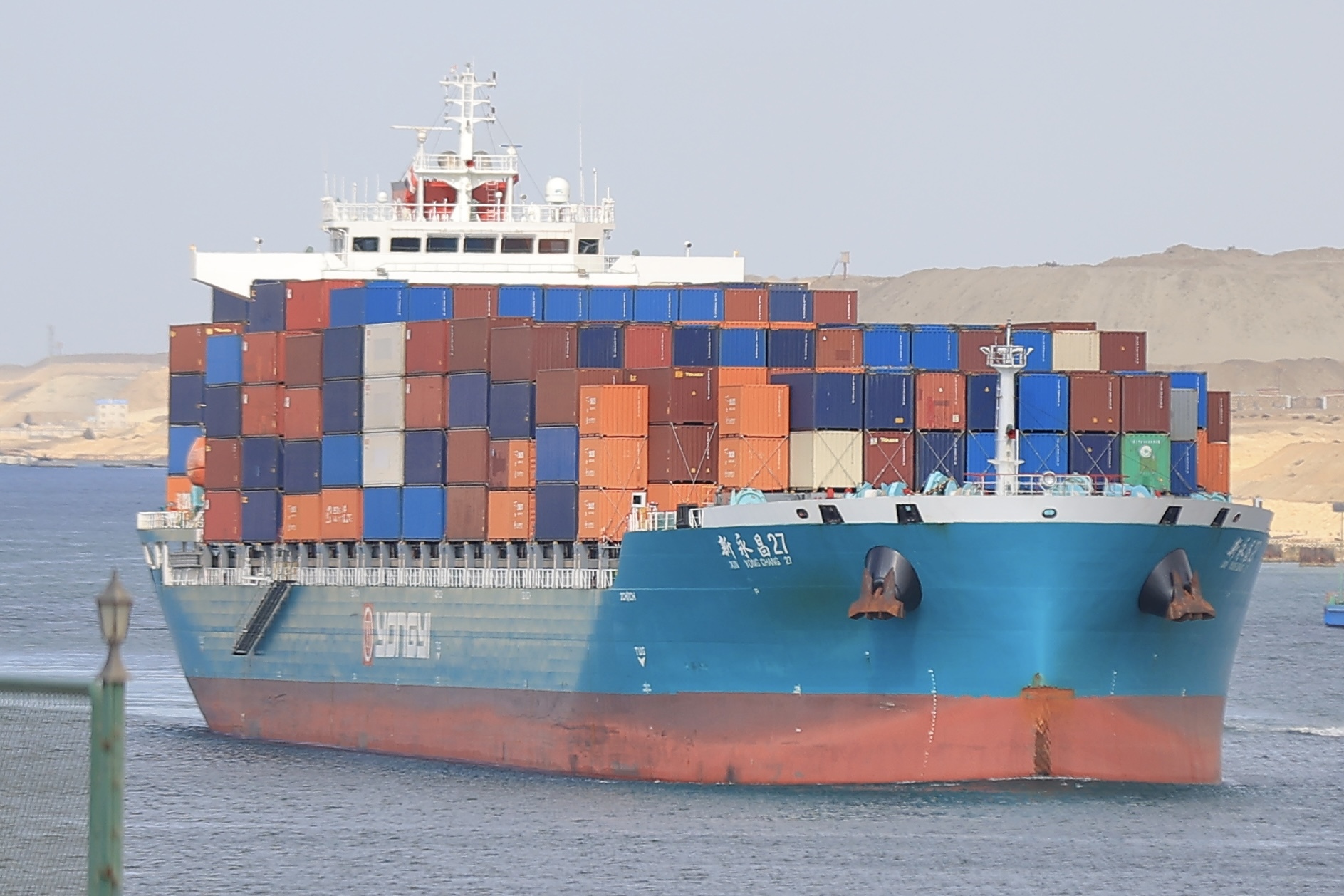
![Suez Canal sees heavy traffic as officials discuss large-scale transits. [Photo by Fareed Kotb/Anadolu via Getty Images]](https://ocdn.eu/pulscms/MDA_/957f2d33f592284d6dc310ea080541ca.jpg)
A growing number of global shipping companies are diverting vessels away from the Suez Canal and the Red Sea, opting instead for the longer route around southern Africa, as escalating tensions in the Middle East continue to disrupt maritime trade.
- Global shipping is increasingly bypassing the Suez Canal, with vessels rerouted around southern Africa amid rising geopolitical tensions in the Middle East.
- Tanker traffic near the Cape of Good Hope has reached record levels, signalling a longer-term shift in global trade routes.
- Higher freight costs and extended transit times are being offset by a growing preference for supply chain stability.
- Southern African ports are seeing a surge in activity, although infrastructure gaps limit broader regional gains.
According to the Financial Times, new data show that tanker traffic around the Cape of Good Hope reached a record 24 million deadweight tonnes in the week of 13 April, highlighting what industry analysts describe as a deepening structural shift in global shipping patterns. The detour, which adds at least two weeks to voyages between Asia and Europe, is being driven by heightened security concerns following recent military exchanges involving Iran, the United States, and Israel.
Shipping routes through the Suez Canal and the Red Sea had already been under pressure since 2023, when Yemen’s Houthi militants began targeting commercial vessels in response to the war in Gaza. Although a ceasefire last October briefly encouraged some operators to reconsider the shorter route, renewed hostilities in the Gulf have reversed that trend.
Major shipping firms are now signalling that a return to the Suez route is unlikely in the near term. Rolf Habben Jansen, chief executive of Hapag-Lloyd, said the company had made “first cautious attempts” to resume Red Sea transits but halted those plans due to worsening regional instability.
“If you look at everything that is happening in the region, that certainly will not accelerate the return to Suez,” he said.
The shift has had a measurable impact on freight costs. According to logistics platform Freightos, container rates along the longer Cape route rose from about $2,500 per forty-foot equivalent unit (FEU) to approximately $3,000 in mid-March, before easing slightly to around $2,700 per FEU in recent weeks.
Beyond pricing, the rerouting is reshaping port activity across southern Africa. A report by Project44 indicates that container arrivals at key regional ports, including the Port of Durban, the Port of Cape Town, and Walvis Bay, have risen by 21 per cent since late February. The week of 6 April recorded a 71 per cent spike above pre-conflict averages.
Walvis Bay, in particular, has emerged as a key beneficiary. Shipping executives cite its deep-water harbour and expanded fuel supply capacity as critical advantages. Ian Rosario, operations director for South Africa at Mediterranean Shipping Company, noted that the port is “thriving,” partly because it can supply multiple grades of marine fuel.
Other ports are also experiencing increased demand, though infrastructure constraints remain a challenge. South Africa’s Port Elizabeth has seen bunker fuel traffic nearly double compared with early 2024, while Port Louis Harbour reported a 42 per cent rise in refuelling activity in March, reaching 294 vessels.
Despite the higher fuel costs and longer transit times associated with the Cape route, shipping companies say customers are prioritising reliability over speed. Industry leaders suggest that unless security conditions in the Red Sea improve significantly, the diversion around Africa may become a lasting feature of global trade flows.