Between Easter and Pentecost, Survival — Not Faith — Came First
As Black Americans face eroding protections, Pentecost offers a lesson: faith demands courage, preparation, and community, even when the future feels unclear. The post Between Easter and Pentecost, Survival — Not Faith — Came First appeared first on Word In Black.
 Black News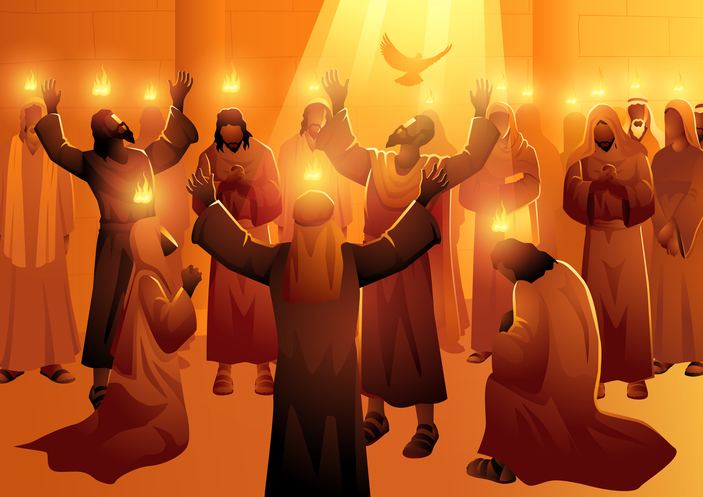

Fear settled in before faith ever did.
In the Bible, after Jesus’ crucifixion, the disciples weren’t preaching about his resurrection. They were hiding, whispering behind locked doors, trying to figure out how not to die next. For a people who had just watched hope nailed to a cross, survival — not salvation — was the first order of business.
That’s where the season really begins: the seven weeks between resurrection, also known as Easter Sunday, and Pentecost Sunday, May 26.
Not with lilies or packed pews, and not with the once-a-year return of the Christmas-Easter-Mother’s Day crowd, but in that uneasy space between grief and purpose. The resurrection, Christians believe, didn’t just raise Jesus; it also forced his followers to confront what came next, even if they weren’t ready.
And they weren’t.
Scripture is clear: they doubted, scattered, denied. They went back to what they knew, unsure how to carry forward a ministry that had just been publicly crushed. It took time — and repeated reminders — for them to understand that resurrection wasn’t an ending, but an assignment.
That’s the part that too many Easter sermons, and too many CEM worshippers, skip.
As scholar and Presbyterian theologian Dr. Delores S. Williams wrote in “Sisters in the Wilderness,” the resurrection is “not just about what happened to Jesus. It is about what can happen in communities that embrace life over death.”
In other words, the miracle isn’t only that Christ had risen; it’s that people who were afraid, disorganized and unsure found a way to stand up, too. That kind of faith doesn’t arrive overnight.
The season of Easter is a story of preparation. Jesus shows up behind locked doors, walks alongside them on the road to Emmaus, meets them in their confusion and keeps pointing them forward. Love each other. Stay together. Get ready.
Because what comes next will require more than belief.
We’re living through a season that feels unsettlingly familiar — a time when rights that Black people once fought for, bled for and was codified into law are being chipped away, sometimes quietly, sometimes in plain sight. From the steady erosion of voting protections to the rollback of affirmative action and other pillars of opportunity, the ground beneath many Black Americans feels less certain than it has in decades. It’s the kind of moment that tests not just politics, but faith: the ability to keep moving, organizing and believing when the outcome isn’t clear.
Like those disciples waiting between resurrection and Pentecost, we find ourselves in the in-between — holding on to what we know, even as we wonder what comes next.
By the time Pentecost arrives, the same people who were hiding are speaking boldly, organizing, building something new out of what looked like total loss. The arc, from fear to purpose, is the real Easter story, one that lands differently in communities that have long understood what it means to survive before they can thrive.
Which is why liberation theologian Dr. James H. Cone insisted the resurrection speaks directly to the oppressed. Not as abstract hope, but as proof that even in the face of state violence, abandonment and despair, the story isn’t over.
Easter, then, is less a celebration than a question. If resurrection is real, what are you prepared to do with it?
The post Between Easter and Pentecost, Survival — Not Faith — Came First appeared first on Word In Black.