Beyond the Medals: How Zone III determines Regional Champions
When swimmers arrive in Kampala for the 11th Africa Aquatics Zone III Swimming Championships scheduled for 21–25 October 2026, they will not only be competing for individual medals. They will also be racing for their countries. Every stroke, every turn, every relay takeover and every finishing position can contribute to the bigger battle for regional supremacy. That […] The post Beyond the Medals: How Zone III determines Regional Champions appeared first on Kawowo Sports.
 Black News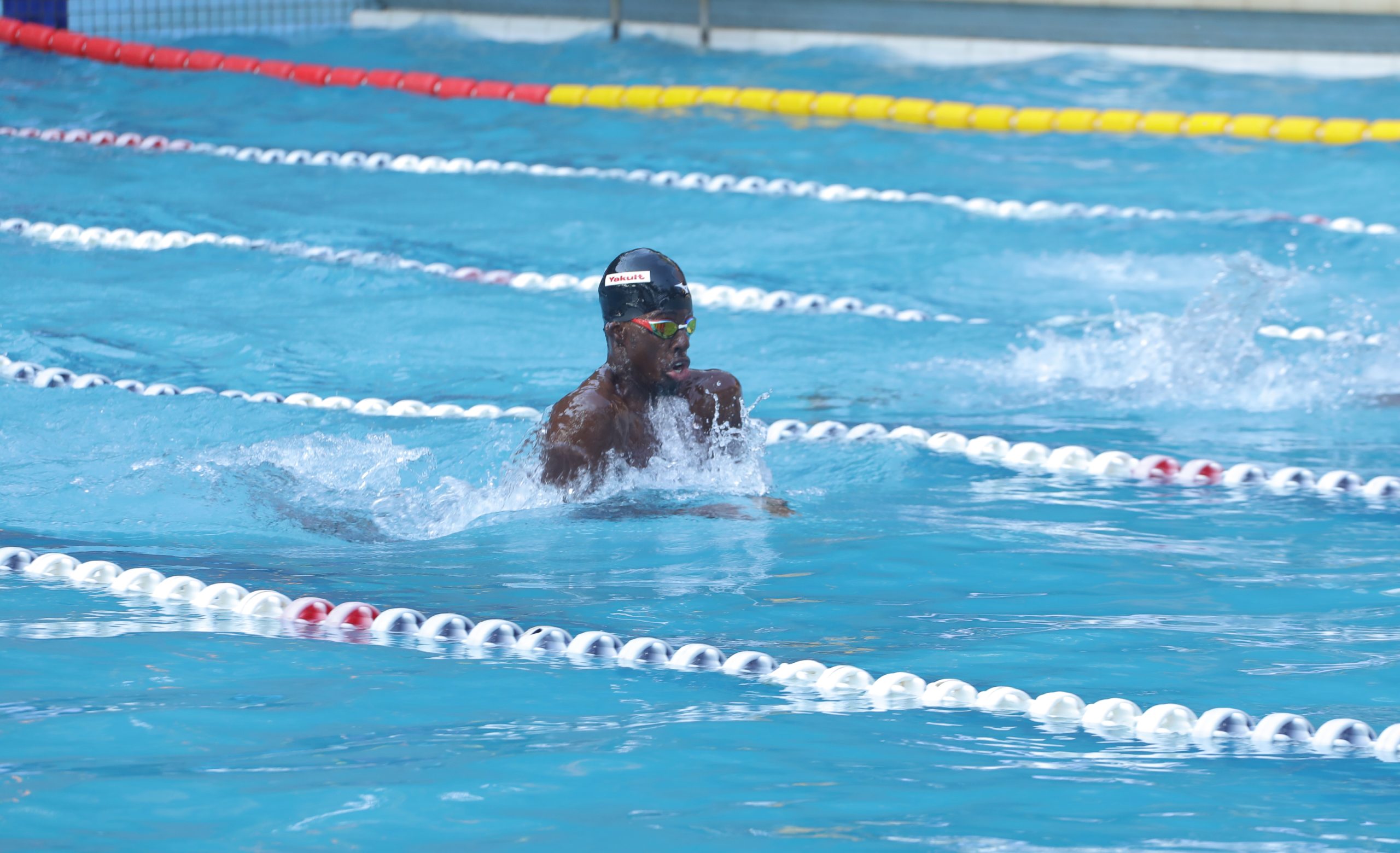

When swimmers arrive in Kampala for the 11th Africa Aquatics Zone III Swimming Championships scheduled for 21–25 October 2026, they will not only be competing for individual medals. They will also be racing for their countries.
Every stroke, every turn, every relay takeover and every finishing position can contribute to the bigger battle for regional supremacy. That is what makes Zone III different from an ordinary swimming gala.
The championship is both an individual and team competition, creating a contest within the contest.
There are two different types of ranking that are often confused: individual event ranking and team ranking.
Individual event ranking
Every swimmer receives a finishing position in each event: first, second, third and so on.
Those performances contribute to the championship’s medal and points structure.
The Africa Aquatics Zone III platform also maintains regional rankings and performance information, including rankings by stroke, distance, course and gender.
But winning individual races is only part of the story.
Team ranking
The championships also produce an overall country or team ranking based on points accumulated through individual and relay performances.
The 2025 championship provides a good illustration. Uganda finished first with 3,933 points, followed by Kenya with 3,572.5, Tanzania with 3,270.5, Rwanda with 1,454, Burundi with 989.5, Sudan with 328, Somalia with 133, Nigeria with 125.5 and Eritrea with 24.
So, when people say “Uganda won Zone III”, they are referring to the country’s overall team points, not simply the number of gold medals won.
Uganda’s 2025 victory was also its third consecutive Zone III team title.
The scoring system has evolved over time. One particularly important change allowed countries to enter more swimmers while limiting the number of swimmers whose results could score for a country in a particular race.
In 2025, reporting on the championship noted that only two swimmers from each country could score in a particular race, even though teams could field larger squads. A country cannot simply bring the biggest delegation and expect to dominate the standings.
The competition instead rewards depth, quality and strategic team selection. Relays add another layer to the battle.
A country that performs strongly across individual events but struggles in the relays can lose valuable points, while a balanced team capable of producing strong individual and relay performances can gain a significant advantage.
Zone III is primarily a regional championship and development competition. A strong performance can be extremely valuable to an athlete’s development and may contribute to selection consideration for future international teams, but winning a Zone III event does not automatically qualify a swimmer for the Olympic Games or World Championships. Swimmers still have to meet the applicable qualification and selection requirements for those competitions.
Zone III is therefore better understood as a stepping stone. It provides the experience, competition and benchmarking that can help swimmers prepare for higher-level opportunities.
The championships are built around the core competitive swimming programme.
Recent editions have featured:
- 50m Freestyle
- 100m Freestyle
- 200m Freestyle
- 400m Freestyle
- 800m Freestyle
- 50m Backstroke
- 100m Backstroke
- 200m Backstroke
- 50m Breaststroke
- 100m Breaststroke
- 200m Breaststroke
- 50m Butterfly
- 100m Butterfly
- 200m Butterfly
- 200m Individual Medley
- Relay events
For swimmers, that means the championship tests a wide range of skills, from raw speed in the 50m events to endurance in the longer freestyle races and versatility in the individual medley.
Zone III operates under the technical framework of Africa Aquatics, the continental governing body for aquatics. National federations then apply the relevant selection and team-entry requirements.
The championships follow standard competitive swimming principles covering everything from starts to turns, finishes and relay takeovers.
Starts
Swimmers must follow the prescribed starting procedure.
A false start can result in disqualification under the applicable rules.
Stroke regulations
Every stroke has its own technical requirements. A breaststroker, for example, must comply with the prescribed breaststroke movement as well as the required turn and finish.
Backstroke, butterfly and freestyle each have their own technical regulations.
Turns and finishes
Swimmers must touch the wall according to the requirements of the stroke being contested.
A technically strong swimmer can lose a race through an incorrect turn or finish.
Relay rules
Relay teams must follow the required order and takeover procedures.
An early takeover can result in disqualification.
Eligibility
Swimmers must be eligible to represent the country entering them and must comply with the championship’s age, registration and documentation requirements.
Age categories
Recent Zone III selection frameworks have used:
- 12 & Under
- 13–14
- 15–16
- 17 & Over
Age is determined according to the competition regulations, normally by the swimmer’s age on the first day of competition.
Team entries
Countries are subject to limits on the number of swimmers whose performances can score in individual events, while relay entries are also regulated.
Conduct
Athletes and officials are expected to comply with their federation’s codes of conduct and the applicable championship regulations.
Ultimately, the rules are governed by the official championship summons and technical regulations issued for each edition.
And for the next generation stepping onto the blocks in Kampala, Zone III may be much more than another championship.
It could be the beginning of an international journey.
The post Beyond the Medals: How Zone III determines Regional Champions appeared first on Kawowo Sports.