Foreign gold miners hold firm in Mali, some turn to self-funded security amid conflict
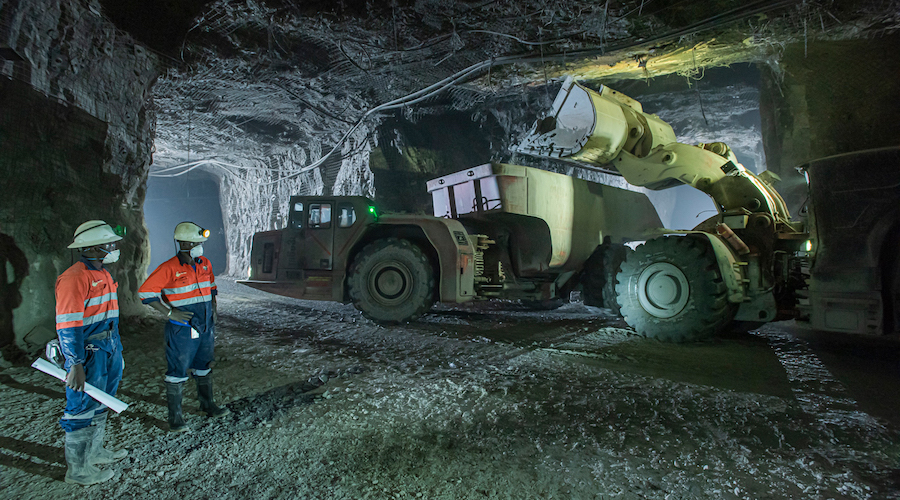
Gold mining operations in Mali are continuing despite escalating conflict, with several international operators maintaining production and, in some cases, increasing investment in self-funded security to safeguard personnel, assets, and supply chains.
 Black News

Gold mining operations in Mali are continuing despite escalating conflict, with several international operators maintaining production and, in some cases, increasing investment in self-funded security to safeguard personnel, assets, and supply chains.
- International mining companies continue to invest in Mali despite escalating violence and political instability.
- Recent attacks by jihadist groups and Tuareg separatists, including the assassination of the Defence Minister, have increased security concerns.
- The Malian government is tightening control over the industry by combating illegal mining and boosting local authorities’ resources, aiming to reassure investors amid complex risks.
- Mining operations persist as Mali remains a top gold producer, with ongoing investments from firms including Eagle Eye Asset Holdings, Toubani Resources, and Barrick Gold.
Renewed violence in Mali has raised concerns over investor confidence after coordinated attacks by jihadist groups and Tuareg separatists killed Defence Minister Sadio Camara.
The 47-year-old minister died in a car bomb attack at his residence in Kati, a military town near the capital Bamako.
The attacks also targeted the capital’s airport and forced foreign-backed troops to retreat from parts of the north, heightening concerns over supply routes, asset security, and mining operations, according to
The violence has drawn international attention, with several Western governments, including the United Kingdom, United States, France and Canada, advising their citizens to avoid travel to Mali or leave if it is safe to do so.
Miners weigh risks against strong commodity demand
Despite the instability, most mining companies have maintained operations, industry executives and analysts told Reuters.
Mali remains one of Africa’s top gold producers at a time when global prices are near record highs.
The country also holds significant deposits of lithium and uranium, reinforcing its strategic importance in global commodity markets.
The Malian government said operations to counter insurgents are ongoing and that the situation is under control, although concerns persist within the industry.
Policy shifts add pressure on investors
Alongside security risks, regulatory changes have added another layer of complexity for investors.
Mali’s military-led government introduced a new mining code in August 2023, increasing state and local ownership in projects to as much as 35%, up from about 20% previously.
The reforms also removed certain tax exemptions, imposed stricter local content requirements, and gave the government priority in allocating mining permits, particularly for strategic minerals such as lithium and uranium.
These changes have already affected output, with the West African country recording a 32% year-on-year decline in industrial gold production in 2025, equivalent to a loss of 26.2 tonnes by August.
Production also fell 22.5% below government projections during the same period.
Investment continues despite uncertainty
Even with rising risks, investment activity continues across Mali’s mining sector. Singapore-based Eagle Eye Asset Holdings recently signed a $120 million agreement with Cora Gold to support the Sanankoro project in southern Mali.
Australia-listed Toubani Resources has begun construction of its $216 million Kobada project, while Canada’s Barrick Gold expects to produce between 260,000 and 290,000 ounces in 2026 from its Loulo-Gounkoto mine.
Operators told Reuters that the impact of the unrest has so far been limited. Resolute Mining said its Syama gold mine remains fully operational and that the upsurge in violence has not affected staff safety, logistics, or output.
A source at Zijin said the company has professional armed security, while a senior official at Ganfeng Lithium, which owns 65% of Mali’s Goulamina lithium project, said the mine is located away from affected areas and that the company is prepared for potential disruptions.