Kenya makes medical history as a robot just helped perform a major surgery
The Aga Khan University Hospital, Nairobi (AKUH,N) has attained a significant milestone in East Africa's healthcare sector following the successful performance of what is reported to be the region's first robotic-assisted gallbladder removal procedure.
 Black News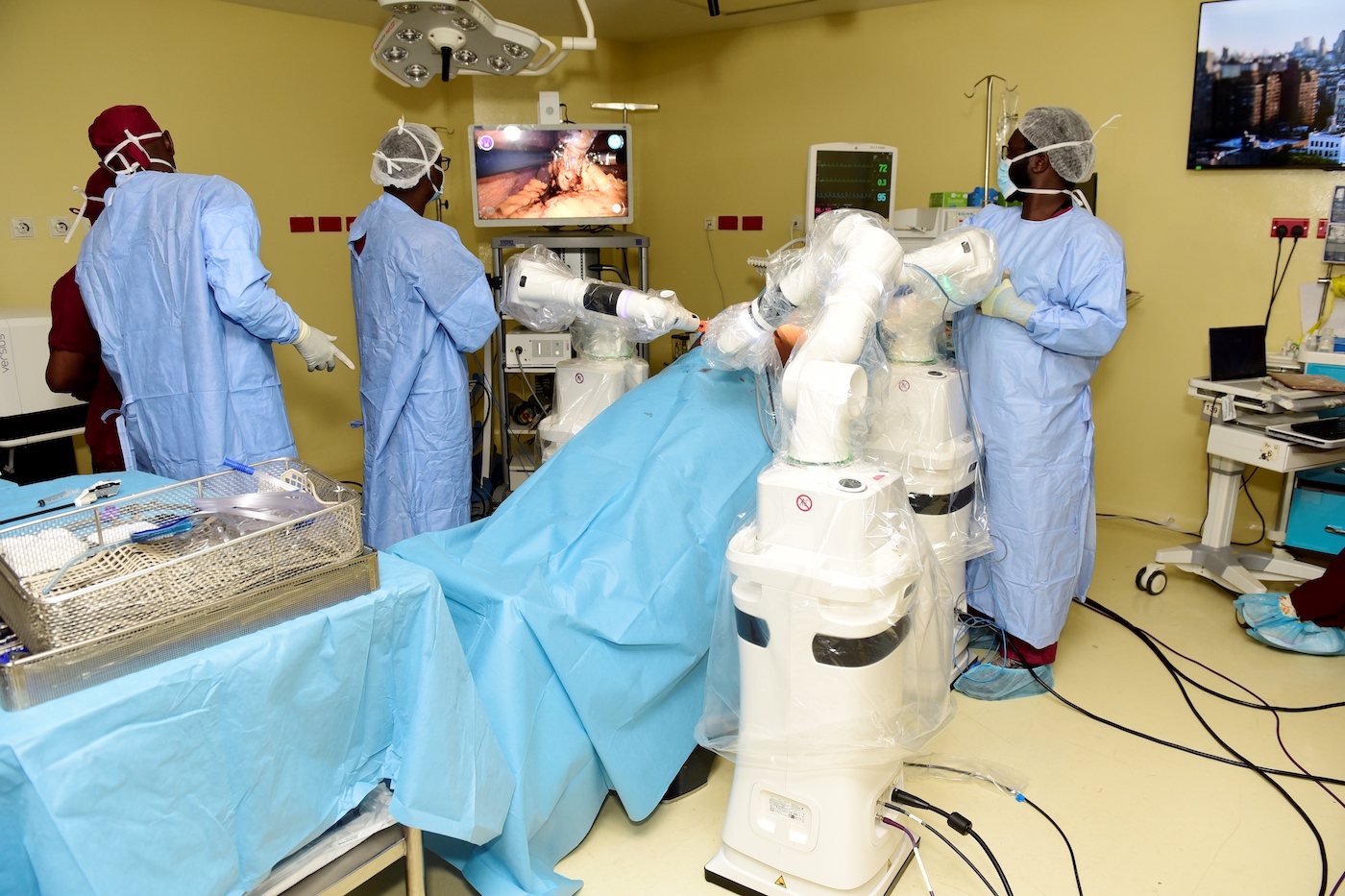
![Kenya makes medical history as a robot just helped perform a major surgery [image X:@NyakundiReport]](https://ocdn.eu/pulscms/MDA_/4b0848b03753cfbd12abd08dd18ea2ba.jpg)
The Aga Khan University Hospital, Nairobi (AKUH,N) has attained a significant milestone in East Africa's healthcare sector following the successful performance of what is reported to be the region's first robotic-assisted gallbladder removal procedure.
- Aga Khan University Hospital in Nairobi performed East Africa's first robotic-assisted gallbladder removal procedure.
- The surgery, called robotic-assisted laparoscopic cholecystectomy, uses advanced robotic technology to help surgeons conduct minimally invasive operations.
- Robotic-assisted surgery provides surgeons with better control, enhanced precision, and a clearer three-dimensional view, allowing for safer and more precise procedures.
- The approach results in fewer incisions, less pain, shorter hospital stays, and faster recovery for patients compared to traditional open surgery.
Formally designated as a robotic-assisted laparoscopic cholecystectomy, the procedure utilizes advanced robotic technology to assist surgeons in performing minimally invasive interventions.
DON’T MISS THIS: Kenya removes university degree barrier for presidential candidates ahead of 2027 polls
The procedure allows the medical team to perform delicate surgical procedures with more control, better sight, and more precision rather than taking the place of the physician.
“Robotic-assisted surgery builds on the benefits of conventional keyhole surgery by providing surgeons with a three-dimensional view of the surgical field, greater flexibility of movement, and improved access to areas that can be difficult to visualize using traditional techniques," said Dr Abdulkarim Abdalla, Chair of the Department of Surgery at the Hospital.
The method of robotic surgery
The surgeon maintains complete control over the surgery even with the assistance of a robotic device.
Throughout the surgery, the surgeon remains in the operating room and uses a specialized console to control the camera and surgical equipment.
The technology makes it possible for equipment to move more freely and offers an improved view of the operating site.
This can be especially helpful when surgeons need to do precise procedures, like suturing, in small spaces.
Surgeons may also benefit from being able to do extensive procedures while seated at the console, which might lessen physical tiredness and help them stay focused during difficult procedures.
“The robotic instruments have a greater range of movement and closely mimic the motions of the human hand, enabling greater precision and control during surgery. This allows us to perform procedures more safely," Dr Abdalla added.
The proven benefits of less invasive treatments are expanded upon by robotically assisted surgery.
Robotic-assisted procedures usually require fewer incisions rather than the bigger ones that come with open surgery.
For qualified individuals, this may lead to less discomfort following surgery, shorter hospital stays, and a speedier recovery.
Additionally, the technology increases the number of treatments that may be carried out with minimally invasive methods, especially in situations when increased instrument flexibility and precision are needed.
Commenting on the milestone, as seen on the official website of the hospital, CEO Rashid Khalani stated:
“Since our inception, Aga Khan University Hospital has built a tradition of introducing many healthcare firsts for Kenya and the region. This latest milestone continues that legacy. We invest in innovation because it enables safer, precise and evidence-based care for our patients."
The achievement highlights the rising use of technology-driven medical treatment methods throughout the continent and strengthens Nairobi's position as a hub for cutting-edge healthcare services in East Africa.