Libya seizes 100,000 ecstasy pills moulded into Muammar Gaddafi’s face after shipment arrives from Europe
Libyan security officers have seized approximately 100,000 pills moulded into the face of Muammar Gaddafi, turning the image of the country’s former ruler into the branding for an alleged European drug shipment.
 Black News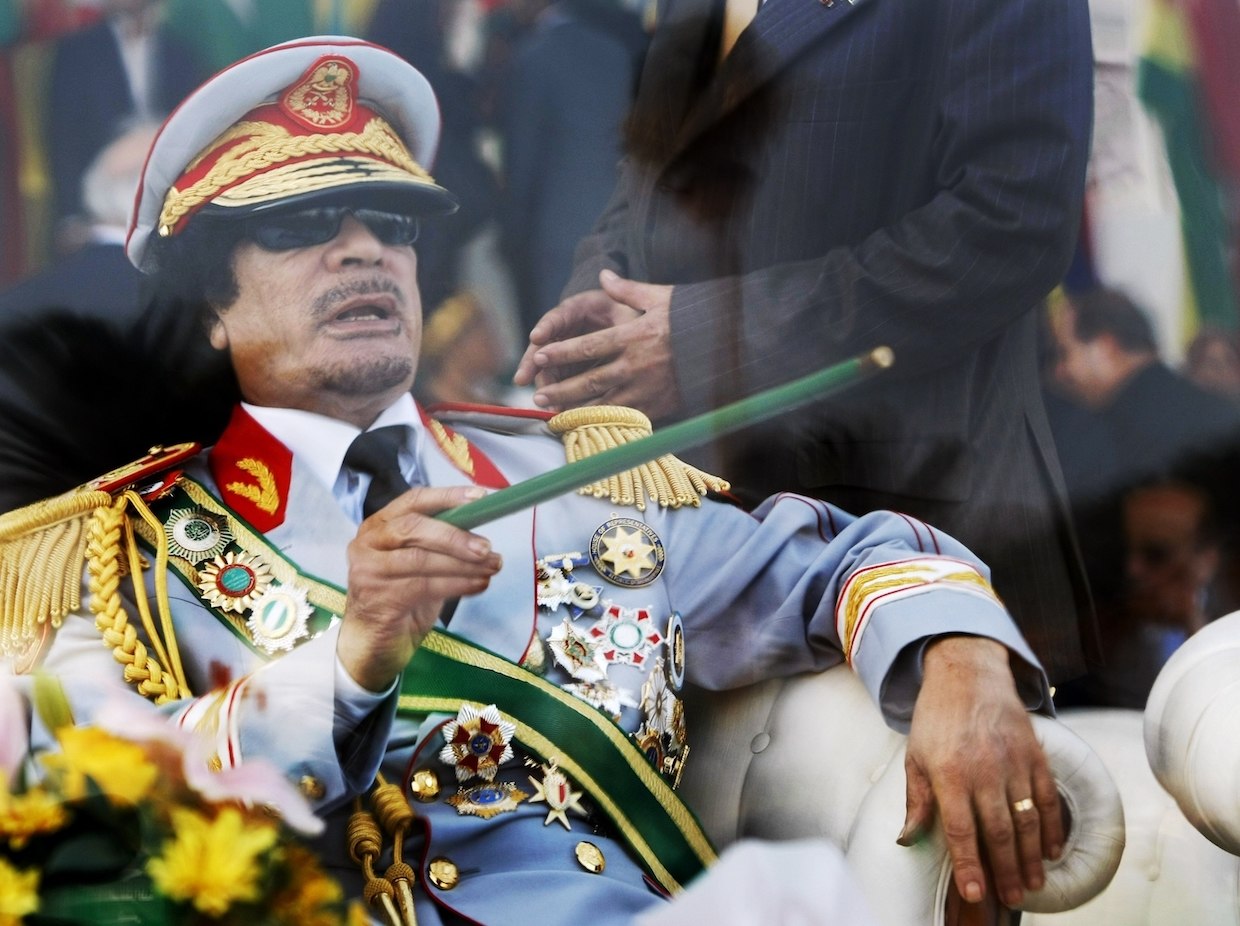
Libyan security officers have seized approximately 100,000 pills moulded into the face of Muammar Gaddafi, turning the image of the country’s former ruler into the branding for an alleged European drug shipment.
- Libyan security officers say they seized approximately 100,000 ecstasy pills moulded into the face and robes of Muammar Gaddafi.
- The shipment arrived by sea through an unnamed European country and was found hidden inside a cargo van at an undisclosed Libyan port.
- The unusual branding gives the seizure a powerful visual hook, but it also exposes Libya’s growing role as a transit and consumer market for synthetic drugs.
- Authorities have not identified the port, European transit country, suspects, laboratory results or estimated street value.
The brown tablets reproduced Gaddafi’s head, distinctive facial features and robes, according to images released by Al Rada for Combating Terrorism and Organised Crime, a security agency under Libya’s Tripoli-based Presidential Council.
The agency described the tablets as XTC, or ecstasy, in a statement issued late on Saturday, September 12. Reuters reported the seizure on Sunday.
Investigators received information that a criminal network was preparing to send the drugs to Libya by sea, the agency said. Officers monitored the consignment until it reached a Libyan port through an unnamed European country, then discovered the pills concealed inside a cargo van.
A number of suspects have been referred to prosecutors, but the agency did not disclose how many people were detained or identify them.
The seizure is visually extraordinary. Its significance, however, extends beyond the use of one of Africa’s most recognisable former leaders as a drug logo.
DON'T MISS THIS: 13 years after Gaddafi’s death, Libya may finally get a unified government
A former ruler turned into illicit branding
Gaddafi ruled Libya for 42 years before a NATO-backed uprising removed him in 2011.
Fifteen years later, his image remains politically potent in a country still divided between the United Nations-recognised administration in Tripoli and eastern authorities aligned with military commander Khalifa Haftar.
![Muammar Gaddafi ruled Libya for 42 years before he was removed and killed during the 2011 uprising. [MC2 Jesse Awalt/U.S. Department of Defense]](https://ocdn.eu/pulscms/MDA_/4b13d75ee1c3795888f37475a06c39df.jpg)
The tablets appear to exploit that instant recognition. Drug producers frequently stamp tablets with familiar symbols to distinguish batches in an illegal market, but the authorities have not established publicly why Gaddafi’s likeness was selected or where the pills were manufactured.
DON'T MISS THIS:Gaddafi made an extraordinary gesture and called the UN a “Terror Council”; 17 years later, Japan-backed Libya wants a seat at the table
They have also not published laboratory results confirming the tablets’ chemical composition.
The safe description is therefore that Libyan authorities identified them as ecstasy, rather than that independent testing has verified their contents.
Libya is becoming an important North African drug route
The shipment arrived amid growing international concern about Libya’s place in the regional narcotics trade.
In January, the United Nations Office on Drugs and Crime released its first detailed study of drug-trafficking dynamics in Libya and North Africa. It said organised groups were exploiting the instability and fragmented security environment created since 2011 to expand trafficking routes.
The report identified Libya as an increasingly important transit point for drugs moving towards regional markets.
It also found rising domestic use, particularly of synthetic substances, while cocaine passes through the country towards Europe and the Middle East and synthetic drugs move into North Africa and other parts of the continent.
Recorded cocaine seizures in Libya during 2024 alone had an estimated street value of between $3.7 million and $7.8 million, according to the UN report.
The figure covered only detected consignments and did not measure the full illicit market.
The Gaddafi-shaped tablets are not simply an oddity designed for social media. They offer evidence of a cross-Mediterranean supply chain delivering synthetic drugs into a fragile African state that can also connect traffickers with markets elsewhere on the continent.