Op-Ed: Sandy Brondello’s Apology Was A Liberal Racist Performance
Sandy Brondello’s apology to WNBA star Angel Reese was supposed to end the controversy. She said she was sorry multiple times, right?
 Black News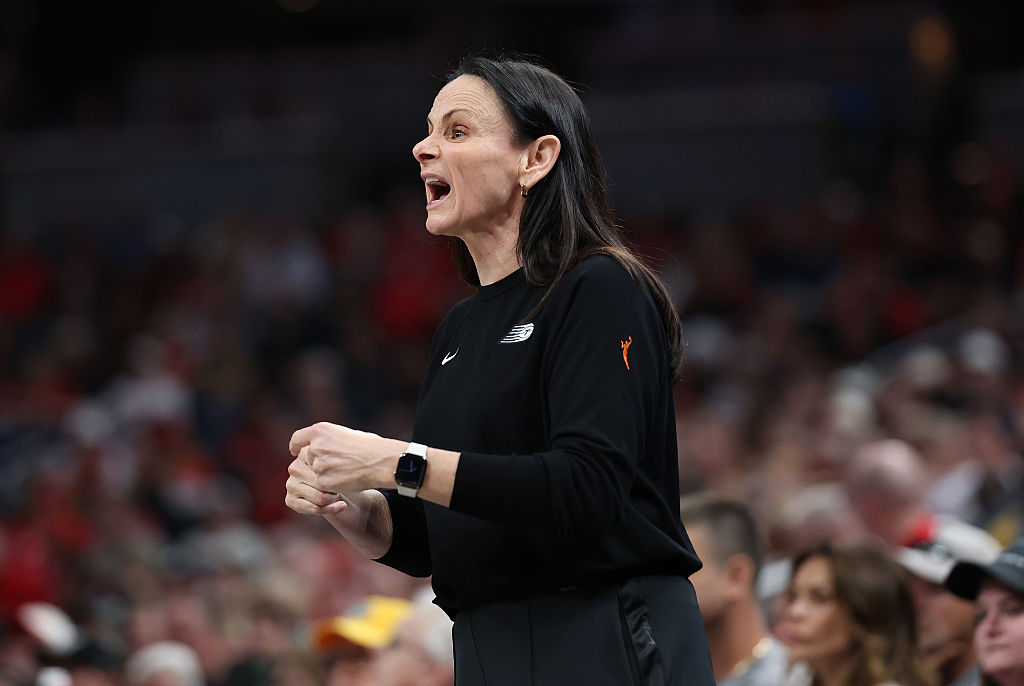
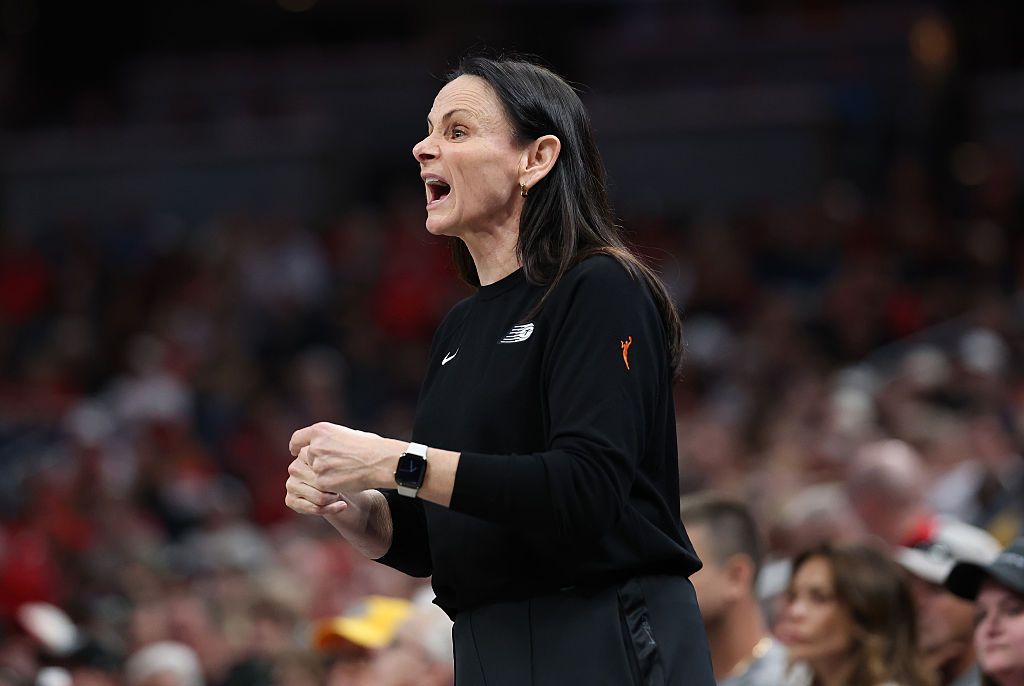
Sandy Brondello’s apology to WNBA star Angel Reese was supposed to end the controversy. She said she was sorry multiple times, right? She said she took “full responsibility,” right? And she also acknowledged that she understood that her “species” remark carried a harmful impact on Black women given this country’s racial history.
We should have been satisfied, forgiven, and just moved on. The problem is, Brondello kept talking. And the more she said, it became clear that her apology was following one of the oldest scripts in American racial politics.
When white liberals get called out for being racist, they rarely, if ever, wrestle with the assumptions that produced it. Instead, they have this irksome habit of centering their feelings, intentions, résumé, and their proximity to blackness. They’re not trying to take accountability. Their goal is to perform innocence and reassure everybody that they’re a good person and not a racist.
And that’s what Brondello did. She did not, in fact, take full responsibility. She performed reputation management.
“I’ve spent my career competing with, coaching and learning from incredible Black women,” Brondello said.
Ah, there it is.
That’s the professional version of “I have Black friends.” Brondello assumes that her career and relationships with Black women ought to serve as character witnesses and evidence that nothing racist could possibly come out of her mouth.
But that logic exposes the weakness of her alibi when you consider that slavemasters spent their whole lives around black folks and segregationists worked in close proximity to Black people and neither were immunized against racial animus. Now, I’m not comparing Brondello to a slaveholder or segregationist, but I am saying that proximity to blackness has long been one of the conditions of racism.
If you carefully listen to her apology again, you’ll notice that she doesn’t seriously confront the question that’s at the heart of the controversy: Why that word “species?” Why reach for that word during a moment of anger?
Anger doesn’t manufacture that kind of dehumanizing language from nothing. She already had a storehouse of vocabulary, associations, biases, and hierarchies that revealed what’s in her imagination. Brondello could have just said Reese is protected, or untouchable, or she could have accused the officials of giving her preferential treatment. She could have even called the officials a species, but she didn’t. She used a word that placed a Black woman outside the category of human.
I’m not going to pretend I know what’s in Brondello’s heart or mind. I don’t get into the habit of traveling through the racial consciousness of white people. But what I do know is that white liberal racism doesn’t always come wearing hoods, spitting tobacco, hurling racial slurs or dusty declarations of Black inferiority. It often works through split-second reflexes and cooked-up images, metaphors and assumptions that become available before an otherwise respectable mind has time to censor them. It also operates through presumption, entitlement and the absolute conviction that personal goodness cancels racial harm. It also repeatedly says that white people’s intentions trump Black people’s lived experiences.
Did Brondello intend to make a racist statement? That’s the wrong question folks keep debating. But instead, we should be asking why that dehumanizing phrase was so easily accessible during anger when her target was a Black woman. And her apology completely avoids that inquiry.
We heard what she meant. We heard about her frustration at that moment. We heard her talk about all the Black women she has known and how “species” was an unfortunate container for an otherwise innocent complaint.
We all know that Angel Reese is not just any athlete. She is constantly the target of racist and misogynistic attacks because folks don’t know what to do with Black women who are confident and not long-suffering. She has been described as aggressive, classless, threatening and insufficiently feminine, while behavior celebrated in white athletes is treated as “passion” and “class” and “adult.” Against that backdrop, “species” does not arrive as a neutral Australian idiom, as Brondello and many of her defenders have claimed. It lands inside a centuries-old tradition of making Black women seem excessive, dangerous, animalistic and somehow outside the boundaries of ordinary womanhood.
Ultimately, the big takeaway from Brondello’s apology wasn’t that she needed to spend some time unpacking why that language was available to her. No, it was, “Look at everything I’ve done with Black women my whole career. Surely, you can’t possibly think I’m that kind of white person.”
Then came the cultural excuse. Brondello is Australian, defenders said, and “protected species” doesn’t carry racial meaning and is commonly used in Australian sports to describe an athlete who gets favorable treatment from officials. Brondello adopted that explanation too, arguing that the phrase carried no racial meaning where she grew up.
Do people really think Australia is some white-supremacy free sanctuary? I’d like to remind folks that Australia, like the United States, is a settler-colonial nation with an ugly history of dehumanizing Indigenous people as primitive, biologically inferior, and closer to animals than land-stealing genocidal Europeans.
Ask yourself: What might Aboriginal women hear when Australians insist that referring to a human being as a species is culturally harmless? What might they know about the distance between a speaker’s innocent intentions and a nation’s racial vocabulary?
The cultural defense also fails because Brondello is not coaching in Australia. She has spent decades working in an American league built largely through the labor, talent and cultural power of Black women. She is not a tourist who accidentally wandered into the WNBA last week.
The Australian defense is not only historically unserious, but it is also part of the same old racial gaslighting Black people must deal with whenever we identify racism. We are constantly told that the thing we saw or heard does not mean what we know it means. Then we are accused of being too sensitive or “playing the victim” or being “divisive.” The burden is always shifting from the people being racist to Black folks having to prove that we understand racism correctly despite the fact that we’ve spent centuries studying its dialects and linguistic disguises.
By using the Australia defense, Brondello and her defenders want Black folks to neutralize the word “species” and distrust our own historical memory so a white woman can preserve her reputation and status.
Then enter Toronto player Temi Fagbenle. She decided the real absurdity was not Brondello’s language, but the league’s response to it.
Fagbenle called Brondello’s suspension “laughable,” insisting that “protected species” is merely a figure of speech. Even though she acknowledged that “species” is an “unfortunate and touchy word,” she still argued that nobody would have objected had Brondello said it about Caitlin Clark. “If she had said it about Caitlin Clark, nobody would care?”
Why would nobody care?!
Because Clark is not a Black woman. White women have not spent centuries in this country being subjected to animalization and dehumanizing violence justified by that logic. By using this hypothetical, Fagbenle engages in the same rhetorical trick white racists use whenever they want to shut down conversations about racism. They invent a white comparison, ask ‘what if,’ strip away the facts of history, and then pretend unequal reactions prove hypocrisy and a double standard.
Fagbenle and other defenders want us to believe that a white coach’s lost game and pay is an injustice and a Black woman player’s right to object is just a misunderstanding or an overreaction. That is how racial hierarchy reproduces itself even inside majority-Black spaces where Black people join the chorus with: “She apologized.” “She didn’t mean it.” “Let it go.”
Black people are not the cleanup crew for white liberal racism. We do not owe every offender immediate absolution because a communications department found the correct arrangement of “impact,” “intent,” “learning” and “deeply sorry.”
An apology may deserve acknowledgment, but it does not erase racism or place Black people under an obligation to forgive or restore the offender’s comfort because that often gives racists permission to continue their harm.
Angel Reese thanked the league for acting and said there was no place for discrimination or hate from fans, coaches or players. She also made clear that she was ready to move forward.
Moving forward does not require pretending nothing happened, gaslighting Black folks into believing that dehumanizing language is culturally misunderstood or evidence of our own hypersensitivity or manufactured victimhood. Accountability means telling the truth about what happened instead of reframing it until everyone is comfortable again.
SEE ALSO:
What Sandy Brondello’s Words Reveal About The WNBA’s Deeper Coaching Problem