Redefining What Therapy Looks Like
By Jazmyne Courtnii Byrd Some careers are planned for years. Others find you on a college campus when you least expect it. For Tampa, Florida therapist Ashley Holloway, it was the second kind. “I got into the mental health space by accident,” she says, “and it was a good accident.” Today, she’s a licensed therapist,…
 Black News

By Jazmyne Courtnii Byrd
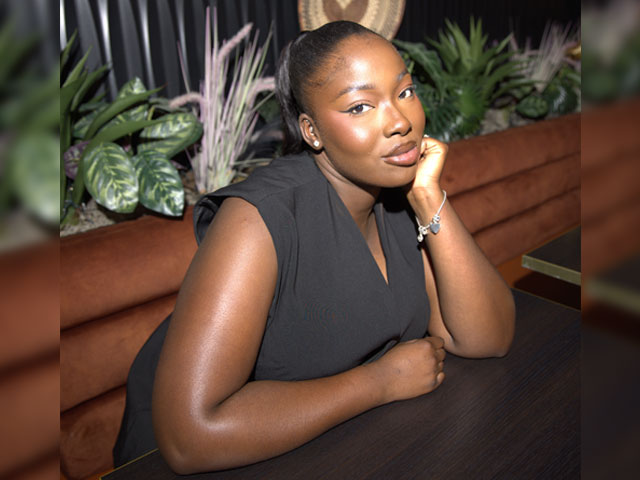
Some careers are planned for years. Others find you on a college campus when you least expect it. For Tampa, Florida therapist Ashley Holloway, it was the second kind.
“I got into the mental health space by accident,” she says, “and it was a good accident.”
Today, she’s a licensed therapist, a mother, a wife, and a business owner, the kind of woman who wears many hats and wears them with purpose. But long before any of that, she was a college student who didn’t think therapy was meant for her.

Growing up, the message she heard about hard times was simple: we just pray about it. It wasn’t that anyone was against help. It was just that therapy wasn’t part of the conversation. Sowhen she got to her undergraduate years and found herself talking with a therapist on campus, she wasn’t sure what to expect. What she found was a woman who loved helping people. Ashley, as it turned out, loved helping people too. “You should think about it,” the therapist told her.
She wasn’t sold right away. But as she sat in sessions and watched what real support looked like, something clicked. There was more to it than she’d ever been told. Working through her own experiences with a professional showed her what was possible, and it gave her a purpose. “That’s exactly what I wanted to do,” she says. “Help people work through that.”
That purpose is rooted in a childhood that was anything but easy. Before college, Ashley experienced homelessness and poverty. She also dealt with a great deal of racism where she lived. For her entire K through 12 education, she was the only Black student in the school, the only one. It was a lonely way to grow up, and it left a mark. But it also gave her something she brings into every session today.
“Everybody’s walk isn’t textbook,” she says.
It’s the principle that shapes how she practices. She’s trained in the textbooks, and she uses them for the purposes they’re meant for. But she knows from experience that no textbook can capture the full picture of a person’s life. So she doesn’t approach therapy as a checklist. She meets people where they are, because she knows what it’s like to be a person who doesn’t fit the mold.

When she finally sat in a therapist’s chair as a young adult, the work was eye opening. Her therapist helped prepare her for the real world and showed her that life has its ups and downs. Ashley realized how limited her view had been. When you’ve only been exposed to so much, you don’t know what else is out there. Her outlook, she says, was a bit of a fairy tale. Her therapist helped her see that she had more skills than she ever gave herself credit for, and she helped her build confidence.
Most of all, she taught Ashley to love herself. That was the foundation for everything else. “I couldn’t really work on myself until I learned to love myself,” she says.
For Ashley, loving herself began with a surprising lesson. She didn’t have to be busy 24 hours a day, seven days a week. Her self worth wasn’t tied to how productive she was. As the first in her family to do so many things, she had been pushing herself relentlessly. She was taking 19 credit hours, with a special approval to do it, and working two part-time jobs. She was burning herself out, and she didn’t even realize it. Her therapist helped her see that she was allowed to slow down.
That lesson, learning to separate her worth from her output, is one she now shares with clients. It’s especially relevant for people who, like her, grew up carrying the pressure of being the first, the only, or the one who had to prove something. For many, it’s the first time anyone has told them that rest isn’t a reward. It’s a right.
Now, as a woman who juggles being a mom, a wife, a business owner, and a therapist, Ashley knows how easy it is to fall back into old habits. Balance isn’t something that comes automatically, even for someone who guides others toward it. But her story is proof that it’s worth working toward. The girl who was the only Black student in her school and who once felt like therapy wasn’t for her is now helping others find the language, the tools, and the confidence to heal. It’s a path she never planned, and she wouldn’t change it for anything. It was an accident, and a very good one.