Robert Hodge champions Black art ownership
Robert Hodge is a contemporary artist creating avenues of ownership in the arts.
 Black News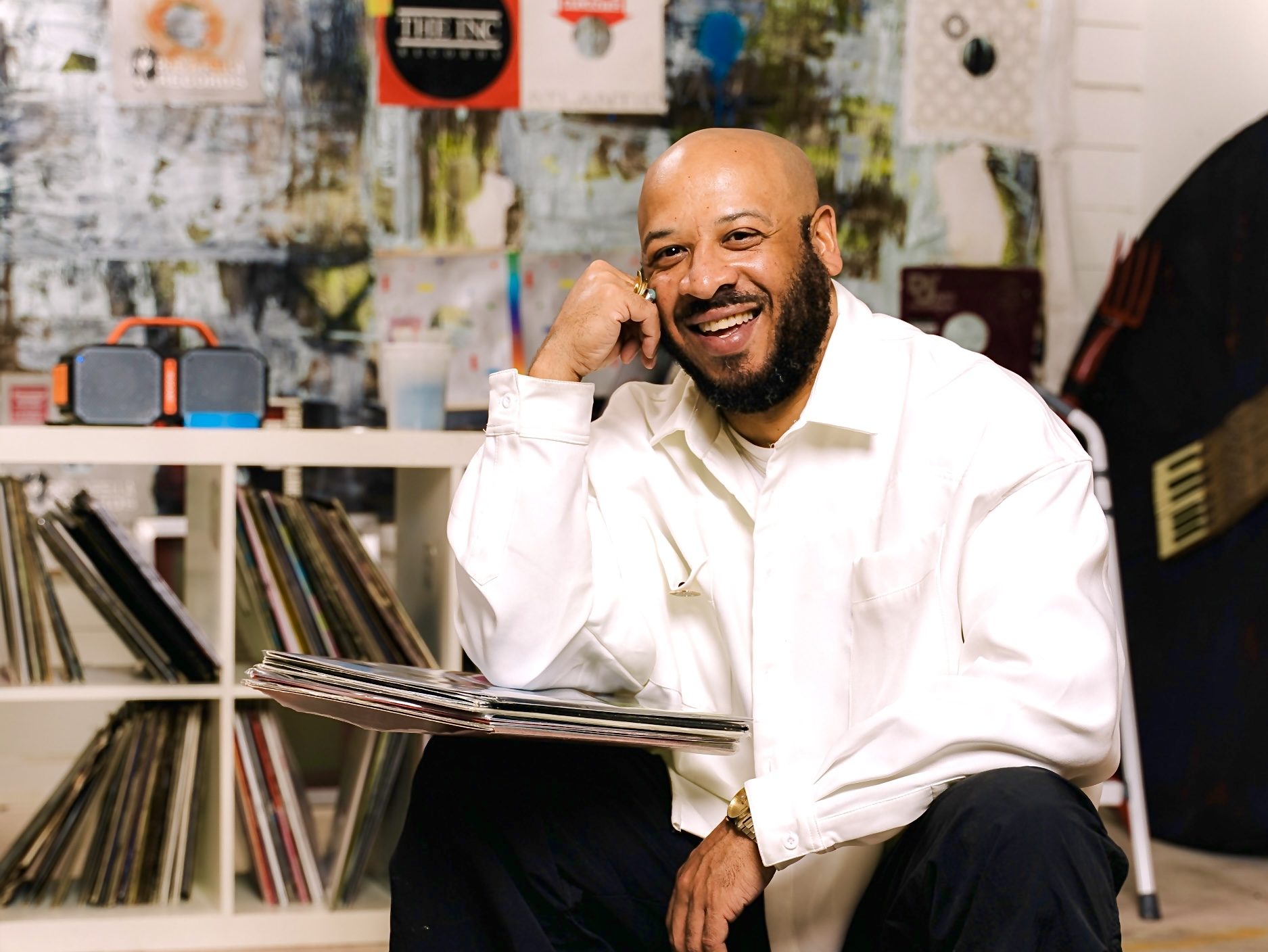

Robert Hodge wants Black Houstonians to stop just admiring Black art and start owning it.
The Third Ward native, multidisciplinary artist and curator, opened his latest solo exhibition, Frequency, on Sept. 12 at Redbud Arts Center’s West Gallery. The show features new paintings built largely from reclaimed vinyl records and sleeves, exploring music, memory, and what Hodge calls the frequency of Black cultural history.
“The show is always based around music, history, culture, and ancestry, so it’s very colorful,” Hodge said. “A lot of my work is built on record sleeves and record vinyls. To me, that’s a piece of American history that was dying, and now it’s making a resurgence.”
Hodge said he never chose art so much as art chose him. Growing up in Third Ward, he entered contests as a child before a middle school teacher, Miss Dickey, urged him to apply to the High School for the Performing and Visual Arts (HSPVA). He later studied at the Pratt Institute in New York and the Atlanta College of Art.
The pull toward history came from what he didn’t see growing up.
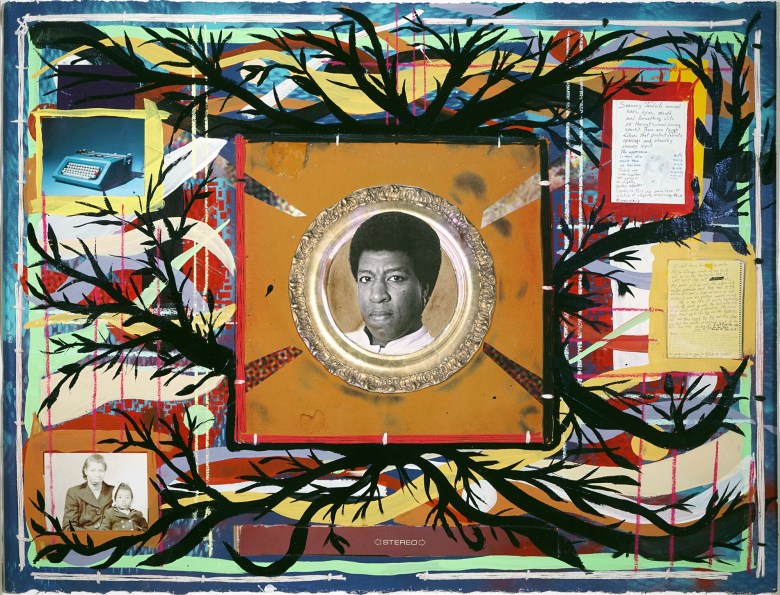
“When I was younger in the museums, everything was European. I didn’t see a lot of things that reflected myself,” he said. “That absence pushed me to use the work to preserve and pass down stories, kind of like being a griot chosen to record stories of my tribe.”
That mission now centers on ownership. Hodge, who also collects art, said he wants Black Houstonians to see collecting as an investment and legacy, not luxury.
“Collecting is so important because you have to physically buy a piece from an artist,” he said. “It does nothing but enhance your life. The first thing is meeting the artist and establishing a relationship, and doing a studio visit.”
That message resonates with Tierney Malone, a Houston visual artist, curator, and longtime friend of Hodge’s. Malone hosts KPFT’s “Houston Jazz Spotlight” and founded the Jazz Church of Houston. He knew Hodge as a young artist at HSPVA, and their bond deepened years later at Khon, a Midtown wine bar whose owners exhibited Hodge’s work.
“Guys like Robert are doing a steward’s service to the community, bringing collectors and artists together,” Malone said. “He’s not an art dealer. He is a visual artist, but he cares about the community.”
Staying rooted in Houston has come at a cost. Hodge has spent more than two decades building his career here, even as friends moved to New York and Los Angeles.
“It’s been a roller coaster ride,” he said. “Some years are great, and I’m like, ‘yeah, I’m glad I stayed here.’ And sometimes you feel like, man, I should be in LA a little bit more.”

Malone said the work of reaching everyday collectors is far from finished. “We live in a country that doesn’t really appreciate the arts the way that it should,” he said. “But Robert’s doing an incredible job.”
He pointed to one of his favorite projects by Hodge, Two & 1/2 Years: A Musical Celebration to the Spirit of Juneteenth, an album Hodge executive-produced in 2016 with roughly 60 Houston artists and producers, including Malone. It’s a musical document designed to bring the real story of Juneteenth to a younger generation.
“I didn’t see a lot of things that reflected myself. … It’s kind of like being a griot chosen to record stories of my tribe.”
Robert Hodge, Contemporary Artist
This push comes as Houston’s major institutions increasingly spotlight Black artists and Third Ward history. The Museum of Fine Arts, Houston, founded in 1900, ranks among the largest art museums in the country. The Houston Museum of African American Culture (HMAAC) drew some of the biggest crowds of its career this summer for “Bayou City Stewards: America From Our Perspective,” which Hodge co-curated this summer.
Hodge views museums and grassroots groups as collaborators in building a real market for local Black art.
“I’m thinking increasingly about legacy. What the next 20 years look like and making sure my work lives on in institutions globally,” Hodge said. “Some of that future is already visible with my daughter, who is now a freshman at HSPVA.”