South Africa’s ‘manganese queen’ suffers fresh court setback in $530 million debt battle
South African mining executive Daphne Mashile-Nkosi has suffered another court setback in a six-year battle over approximately $530 million (R8.5 billion) in debt tied to one of the world’s largest manganese deposits.
 Black News


South African mining executive Daphne Mashile-Nkosi has suffered another court setback in a six-year battle over approximately $530 million (R8.5 billion) in debt tied to one of the world’s largest manganese deposits.
- South African mining executive Daphne Mashile-Nkosi has suffered another court setback over Kalagadi Manganese’s $530 million debt.
- The Supreme Court of Appeal struck out Kalagadi’s latest challenge to the IDC’s business-rescue proceedings.
- The ruling does not place Kalagadi into business rescue or resolve its underlying debt dispute.
- The company’s manganese assets are among the world’s largest, making the six-year dispute significant for South Africa’s mining sector.
South Africa’s Supreme Court of Appeal struck from the roll an application brought by Kalagadi Manganese and related companies seeking reconsideration of an earlier refusal of permission to appeal.
The court also ordered Kalagadi and its co-applicants to pay the legal costs incurred by the state-owned Industrial Development Corporation.
The judgment was delivered on 25 August.
Mashile-Nkosi, who has been described as South Africa’s “manganese queen”, leads the black women-founded mining company and effectively controls its majority shareholder.
A fight over who authorised business rescue
The latest judgment concerns whether the IDC had the necessary corporate authority to begin proceedings intended to place Kalagadi into business rescue.
The IDC is both a lender to Kalagadi and a 20% shareholder in the mining company.
It began the business-rescue proceedings in 2020 after arguing that Kalagadi was experiencing severe financial difficulties and needed a debt moratorium, temporary supervision and restructuring.
Kalagadi challenged whether the officials who initiated the case had been properly authorised by the IDC’s board.
DON'T MISS THIS: Africa holds a quarter of the world’s critical minerals powering AI and clean energy, but less than 10% of mining projects are moving ahead
The Gauteng High Court rejected that challenge in August 2023. Kalagadi subsequently failed to obtain permission to appeal and then asked the Supreme Court of Appeal to reconsider that refusal.
In its majority decision, the appellate court found that the IDC board had decided to pursue business rescue. It also found that subsequent board resolutions confirmed the actions taken by IDC officials.
The court concluded that Kalagadi had not met the exceptional threshold required for its reconsideration application to proceed.
What the ruling does not mean
The decision does not place Kalagadi Manganese into business rescue.
It concerns a procedural challenge to the IDC’s authority to institute the proceedings. The underlying application to place the mining company under supervision remains a separate case.
The Supreme Court of Appeal also struck the latest application from the roll. It did not dismiss the substantive business-rescue case or rule that Kalagadi was insolvent.
A minority of judges believed the reconsideration application should have been dismissed. The majority’s order, however, was to strike it from the roll.
That distinction should be maintained when describing the outcome.
DON'T MISS THIS:US, South Africa revive mining talks as Trump seeks to counter China’s grip on critical minerals
A $530 million debt struggle
Kalagadi received loans from the IDC, the African Development Bank and Absa to develop its manganese operation in South Africa’s Northern Cape province.
The outstanding loans were initially reported at more than R7 billion.
By June 2025, accumulated interest had reportedly increased the debt to approximately R8.5 billion, equivalent to about $530 million, according to Business Day.
The IDC was owed approximately R3 billion. The African Development Bank was owed a similar amount, while Absa’s exposure was reported at nearly R1 billion.
![South Africa’s Supreme Court of Appeal struck Kalagadi’s latest reconsideration application from the roll but did not place the mining company into business rescue. [Wikipedia]](https://ocdn.eu/pulscms/MDA_/b32c71fc242431246d7a8d34d9a1781a.jpg)
That $530 million figure is the latest widely reported estimate. The company and its lenders have not published a newer consolidated debt total.
Kalagadi has consistently opposed business rescue, maintaining that its assets exceed its liabilities and that restructuring the loans would be preferable.
The company previously said it was able to pay employees and operating creditors and accused the IDC of abandoning negotiations in favour of court action.
DON'T MISS THIS:South Africa emerges as major player in U.S. critical minerals supply chain
The mineral asset behind the dispute
Kalagadi’s importance extends beyond its debts.
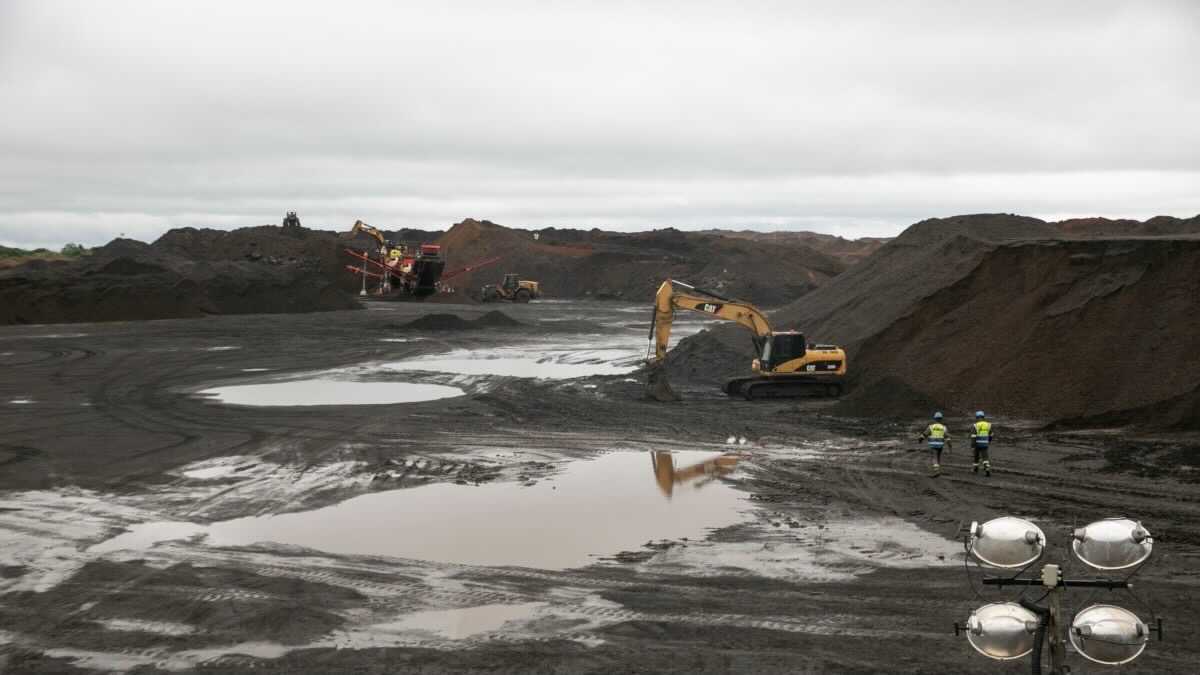
Its mine is located in the Kalahari Manganese Field, which is estimated to contain approximately 80% of the world’s known land-based manganese resources.
The company holds mining rights covering more than 960 million tonnes of manganese ore across three farms in the Northern Cape.
The original R11 billion integrated project was designed to include a mine capable of producing three million tonnes annually, a sinter plant and a ferromanganese smelter.
Manganese is principally used to strengthen steel. It is also becoming increasingly important in some electric-vehicle battery chemistries, placing major producing countries at the centre of the global critical-minerals race.
South Africa accounts for approximately 37% of global manganese production, according to African Business.
Mashile-Nkosi told the publication in March that Kalagadi was targeting production of four million tonnes in 2026 and employing approximately 2,800 people. Those figures represent the company chair’s claims and are not findings from the latest judgment.
Two legal battles surrounding the mine
Kalagadi is fighting its lenders on more than one legal front. In May 2025, the Supreme Court of Appeal ruled that its debt dispute with the IDC, African Development Bank and Absa should proceed to arbitration under the original loan agreements.
That arbitration matter is different from the business-rescue case covered by the latest judgment.
The new ruling removes another challenge connected to the IDC’s attempt to pursue business rescue, but it does not resolve the debt, determine control of the mine or establish whether Kalagadi can meet its obligations.
The company has not publicly stated whether it will attempt to restore the reconsideration application to the court roll or what the judgment means for ongoing negotiations with its creditors.