‘Tiny Brain’: Trump Gets Cornered, Starts Stammering and Flailing Over Iran Claim, Then Tries to Rewrite His Own Statement and It Totally Derails
Pressed on a claim he made last year — that Iran’s nuclear sites were totally “obliterated” — President Donald Trump didn’t snap back with the […] ‘Tiny Brain’: Trump Gets Cornered, Starts Stammering and Flailing Over Iran Claim, Then Tries to Rewrite His Own Statement and It Totally Derails
 Black News


Pressed on a claim he made last year — that Iran’s nuclear sites were totally “obliterated” — President Donald Trump didn’t snap back with the usual confidence.
Instead, he tried to move the goalposts with obvious contradictions and inconsistencies, his hands flailing as if he could shape an answer out of thin air. What should have been a simple rationale for bombing Iran a second time turned into an explanation that fell completely flat.
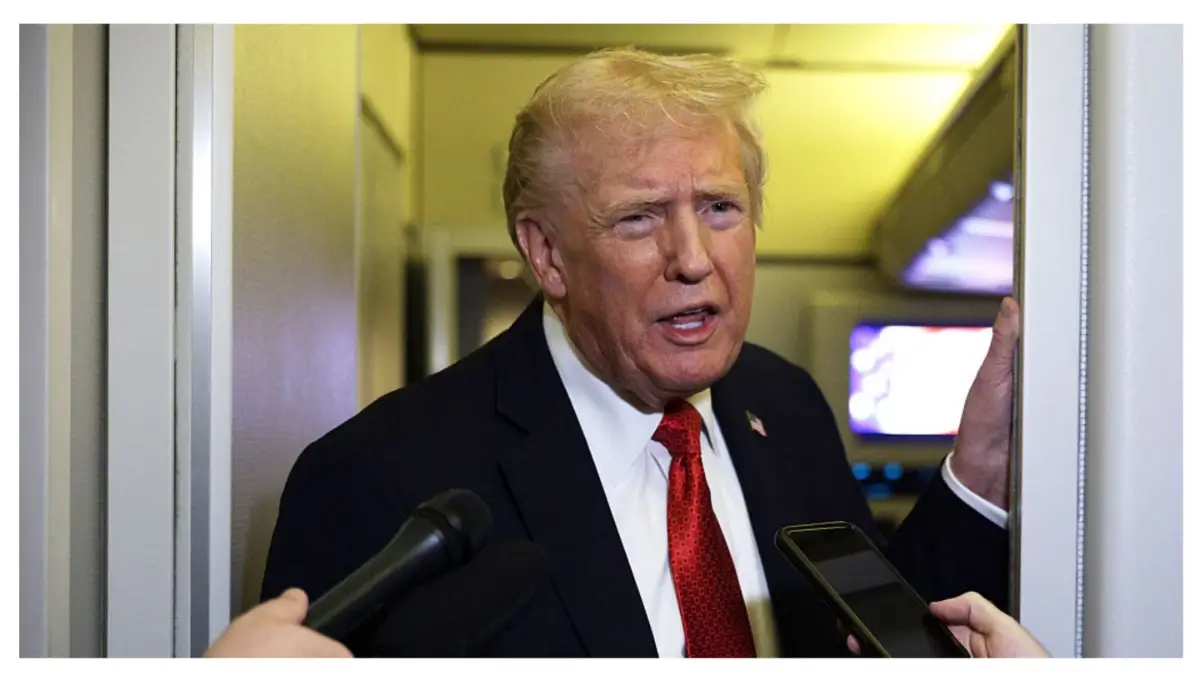
The moment, sparked by a pointed question from CNN’s Kaitlan Collins as the president talked to reporters outside of Air Force One on March 23, captured the central problem now surrounding Trump’s case for renewed action against Iran.
“If you obliterated their nuclear sites last summer with your strikes, then how can you argue it was an imminent threat now?” Collins asked plainly. The contradiction was difficult to square.
‘Did You Hear Me?’: Trump Rebukes Newsmax Reporter as ICE Agents Deploy to U.S. Airports
Rather than clarifying, Trump blended conflicting claims — total destruction on one hand, urgent danger on the other — while padding the response with side points and repetition.
“Oh, we hit them so hard, we oblited them, er, obliterated them,” Trump said before descending into his usual word salad. “But that doesn’t mean with the right equipment you can’t dig down and go get it. We don’t want that, and we won’t have that. But we obliterated that site. They still haven’t been able to get it. That was a complete success.”
View on Threads
“But if it wasn’t, they would’ve had, if we didn’t hit them, if we didn’t use the B-2 bombers, it’s, who are, which are unbelievable, we just ordered 22 more of them, modern version by the way, super modern version. If we didn’t hit them with the B-2 bombers, they would’ve had, within two weeks of that attack, that’s why we hit them. Because we knew, they would’ve had a nuclear weapon. They would’ve used it on Israel and the entire Middle East.”
Whether he meant to or not, Trump ended up reinforcing the very contradiction Collins was pointing out. He doubled down that the sites were destroyed — “we obliterated them” — but then immediately argued Iran could still recover the program and posed a near-term danger anyway.
Trump and his administration have spent months doing just that — insisting Iran’s capabilities had been crushed. Now, with a second, more aggressive operation underway, the justification for war hinges on the idea that the threat from Iran was urgent all over again.
The inconsistency stems from the administration’s own words. After last summer’s strikes, the White House declared in an official statement that “Iran’s Nuclear Facilities Have Been Obliterated — and Suggestions Otherwise are Fake News.”
Trump himself doubled down at the time, insisting, “Obliteration is an accurate term!” His team echoed that message in near lockstep.
Vice President JD Vance said the country was “much further away from a nuclear program today.” Defense Secretary Pete Hegseth went further, stating, “Our bombing campaign obliterated Iran’s ability to create nuclear weapons.” Secretary of State Marco Rubio called it “complete and total obliteration.”
Military and intelligence officials reinforced the same point.
Chairman of the Joint Chiefs of Staff Dan Caine said, “All three sites sustained extremely severe damage and destruction.” Even outside analysts largely agreed the program had been pushed back significantly, with some saying it could take years for Iran to rebuild.
That messaging matters now because it undercuts the rationale for the latest escalation.
According to new reporting by Reuters, Trump had already approved a fresh military operation against Iran before a late-February call with Israeli Prime Minister Benjamin Netanyahu, who argued there might never be a better chance to strike decisively — including targeting Iran’s supreme leader.
Intelligence suggested a narrow window to hit top Iranian figures, and the pitch landed as Trump weighed whether to move forward.
The operation that followed went far beyond last summer’s strikes. U.S. and Israeli forces launched coordinated attacks in late February, culminating in the killing of Iran’s supreme leader, Ayatollah Ali Khamenei.
The fallout has been severe: Iranian counterattacks, rising casualties, and broader instability across the region, including disruptions to global shipping routes and spikes in oil prices weighing down on U.S. consumers.
Trump has framed the decision as his alone, even as reporting shows Netanyahu’s arguments — and the timing of intelligence — helped shape the final push. The White House has said the goal was to “destroy the Iranian regime’s ballistic missile and production capacity” and ensure Iran could never obtain a nuclear weapon.
But Collins’ question cut through those shifting explanations by tying them back to the administration’s earlier certainty. If Iran’s nuclear program had already been devastated to the point of “obliteration,” the need for a second, riskier campaign becomes harder to explain.
Online, critics seized on that gap in real time, focusing less on the policy and more on how Trump handled the moment itself. One reaction mocked his physical response as he searched for an answer: “And the accordion hands are flying. Meaning the liar of all liars is wrecking his tiny brain to spews nonsense.”
Another questioned the substance behind his claims: “It’s like he knows nothing about how nukes are actually made. Then again he is getting his information about Iran’s nukes program from Israel.”
“So you can ‘obliterate’ a site but get a digger and drag up the weaponry and materials needed to make a nuclear weapon in just two weeks,” another commenter fumed. “Who is believing this sh-t. Seriously. Who.”