Traoré once stood ready to face a ‘standby’ army, as it came close to blows with its neighbours; now, it seems ready to listen to Nigeria’s proposal
Burkina Faso is seeking direct bilateral talks with Nigeria to review their relationship and discover new areas of collaboration, a move that might help calm diplomatic tensions between Abuja and Ouagadougou.
 Black News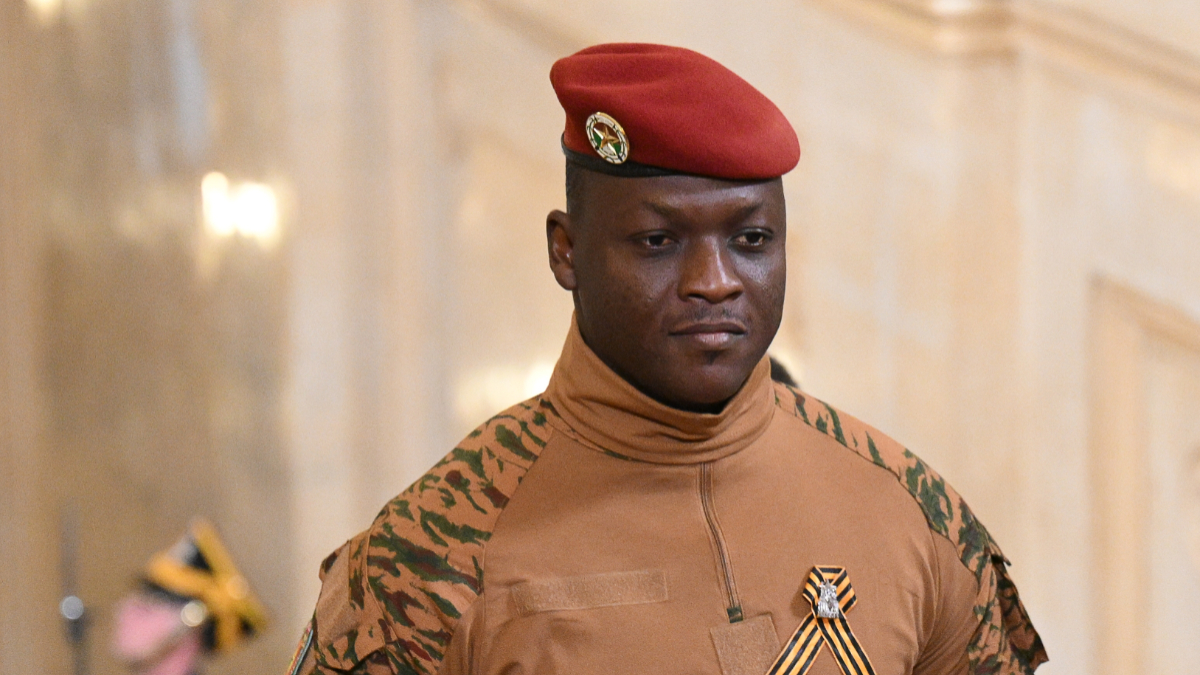

![President of Burkina Faso Ibrahim Traore arrives in the Kremlin for a gala concert for heads of foreign delegations attending the 80th anniversary of Victory in the Great Patriotic War, in Moscow, Russia on May 8, 2025. [Photo by Alexandr Kryazhev/RIA Novosti/Pool/Anadolu via Getty Images]](https://ocdn.eu/pulscms/MDA_/c2a44985fedef64f88a2a77df332355d.jpg)
Burkina Faso is seeking direct bilateral talks with Nigeria to review their relationship and discover new areas of collaboration, a move that might help calm diplomatic tensions between Abuja and Ouagadougou.
- Burkina Faso is seeking direct bilateral talks with Nigeria to strengthen their relationship and explore new collaboration opportunities.
- Tensions have risen between Nigeria and Burkina Faso due to differing alignments in the region, especially after Burkina Faso, Niger, and Mali left ECOWAS to form the Alliance of Sahel States (AES).
- Both sides have faced diplomatic and economic disputes, including reciprocal tariffs and accusations related to regional security and support for violence.
- Despite these issues, Burkina Faso and Nigeria's leaders emphasize their shared history and common security challenges, expressing willingness to resolve misunderstandings.
On Friday, Nigeria's newly appointed Ambassador to Burkina Faso, Syndoph Paebi Endoni, suggested this while presenting the Letter of Credence to Burkina Faso's Foreign Affairs Minister, Jean-Marie Karamoko Traoré, in Ouagadougou.
DON’T MISS THIS: ECOWAS hopes for a peaceful resolution with Niger as it sets D-day for military intervention
This is a particularly interesting development given the recent history between both countries.
Debacle between Burkina Faso and Nigeria
In the last few years, ECOWAS has expressed discontent with the geopolitical situation in the Sahel, given the shift from civilian rule to military government in a few countries in the region.
Of these new junta states, Niger, Mali and Burkina Faso decided to exit ECOWAS in favor of their own exclusive regional umbrella called the Alliance of the Sahel States, presenting a unique challenge to ECOWAS.
ECOWAS has since iterated its intention to reabsorb these countries, sometimes threatening the use of unconventional methods.
In certain instances, the president of Nigeria, Bola Ahmed Tinubu, while he served as president of ECOWAS, imposed economic sanctions on the breakaway states.
The threats of violence and economic sanctions led to an impassioned speech by the president of Burkina Faso, where he asserted that Burkina Faso was ready to fight, and revealed that ECOWAS’ actions had led to the death of thousands of its citizens.
“Do you think there are weak men who are in Niger? There are fighters over there. The Nigérien army is warlike. They have been fighting for years. It’s not an army of parade or a peacekeeping army. And the armies of the AES decided to unite,” Capitaine Ibrahim TRAORÉ said.
“We are waiting for that standby force (ECOWAS). Thousands of Nigériens died on their hospital beds because of a lack of electricity or lack of medicine. It is a crime! They are responsible for these sanctions; they are responsible for these deaths,” he added.
The debacle between both countries raged on until Burkina Faso managed to formally exit ECOWAS to ally with Niger and Mali.
Rift between AES and ECOWAS
Since the official withdrawal of Burkina Faso, Niger and Mali from ECOWAS in Janaury, 2025, all three countries have taken a deliberate path toward economic independence, enacting a series of coordinated policies aimed at fostering deeper integration within their own Alliance of Sahel States (AES).
One of the most notable moves in this approach is the introduction of a common AES passport, which is intended to ease the free movement of people, goods, and services throughout the bloc.
Additionally, the AES countries formally withdrew from the ECOWAS Trade Liberalization Scheme (ETLS), which had previously allowed tariff-free movement of goods across West Africa.
Over a year later, they enacted reciprocal economic measures against other West African countries by levying a 0.5% import tariff on goods originating from ECOWAS member states.
However, despite the rift, ECOWAS has sought to preserve some arrangements concerning the movement of people and goods while keeping diplomatic channels open with the three countries.
On the security side, early in 2025, intelligence agencies from the AES intensified regional security operations against insecurity in a move that could send shockwaves through Nigeria’s political class.
By targeting alleged political collaborators believed to be financing and facilitating arms flows across the Nigeria–Niger border, AES states aim to choke off the support networks that sustain violence across the region, a move that could deepen domestic investigations and strain diplomatic ties.
AES countries have consistently insisted that Western powers are attempting to use fellow West African states to infuse insecurity in the region.
By December of 2025, A C-130 aircraft transporting 11 Nigerian servicemen was detained in Burkina Faso following accusations of airspace violation.
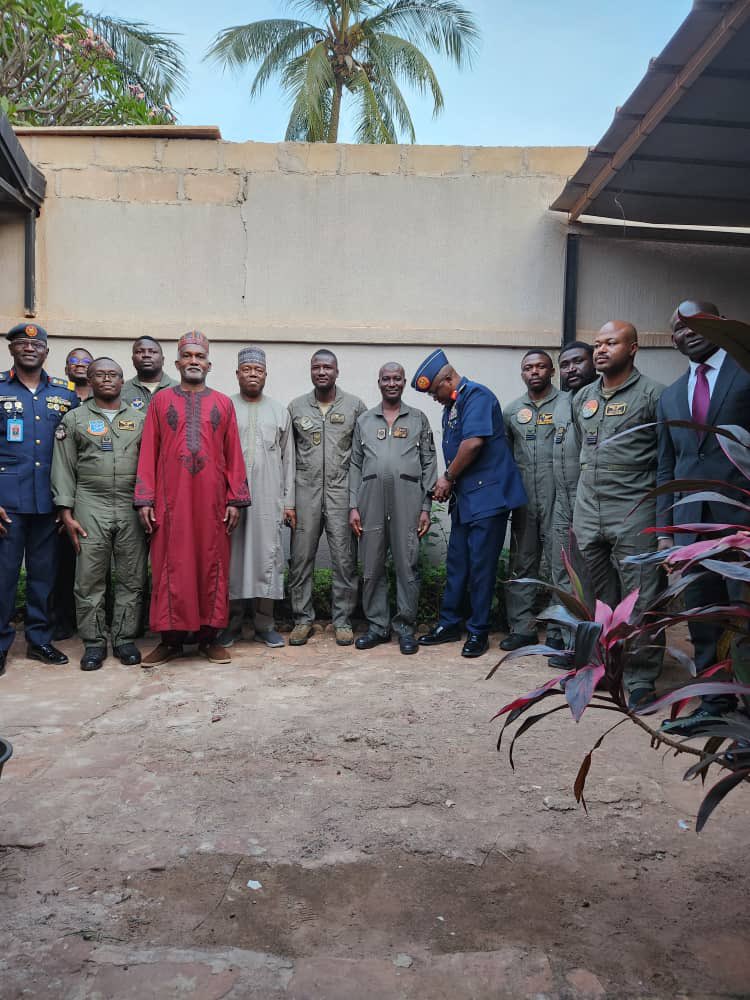
This came a few days after Nigeria launched airstrikes against coup plotters in the West African state of Benin.
Very recently, Nigeria’s current president, while addressing Nigerian traditional rulers, remarked that insecurity in the country was spilling over from Niger, Mali and Burkina Faso.
“Some of them [the terrorists] are not Nigerians. You see, the problem of insecurity in Mali, Burkina Faso and Niger is worsening our difficulties,” Tinubu said.
Burkina Faso’s Foreign Minister Karamoko Jean-Marie Traoré, speaking on behalf of the AES states, immediately rebutted, stating that the four countries instead faced a common security threat.
“Burkina Faso, Mali, Niger, and Nigeria face the same enemy,” Traoré said.
“We would have preferred a more accurate presentation of the security situation, rather than placing the blame for a complex situation on neighbouring countries, at the risk of fuelling misunderstandings and frustrations between peoples bound by history, geography, and fraternity,” he added.
The new economic reconciliation between Burkina Faso and Nigeria
The request for fresh interaction comes at a critical time in Nigeria-Burkina Faso ties, especially as tensions have grown between Nigeria-led regional bodies and the Alliance of Sahel States (AES), which includes Burkina Faso, Mali, and Niger.
The recent meeting on Friday demonstrated that both parties are committed to maintaining diplomatic lines open.
Traoré welcomed Endoni's arrival and hailed the new ambassador's accreditation as a chance to strengthen bilateral relations.
The Burkinabe foreign minister emphasized the two nations' historical and cultural ties, as well as the issues they confront in common.
He then offered a bilateral discussion in which officials from both countries may conduct a comprehensive review of current collaboration and explore ways to enhance the relationship, as seen in The Nation.
Endoni expressed Tinubu's appreciation to Burkina Faso's President for accepting his accreditation.
The Nigerian ambassador also thanked the Burkinabe government and foreign ministry for their hospitality.
“As Africans, we must learn to accept ourselves and make efforts to resist the urge to wash our dirty linens outside,” the Ambassador said.
The proposed bilateral consultations may thus provide a crucial chance for Abuja and Ouagadougou to reset their relationship at a time when political divisions are increasingly conflicting with common security and economic objectives.
Maintaining relations with Burkina Faso and the other AES members is especially crucial for Nigeria since the security challenges plaguing the Sahel and West Africa are cross-border in character.