
Why Trump’s war matters to us Blackfolk
Local experts discuss how the Iran conflict hurts Black Houston's economy and rights
 Black News




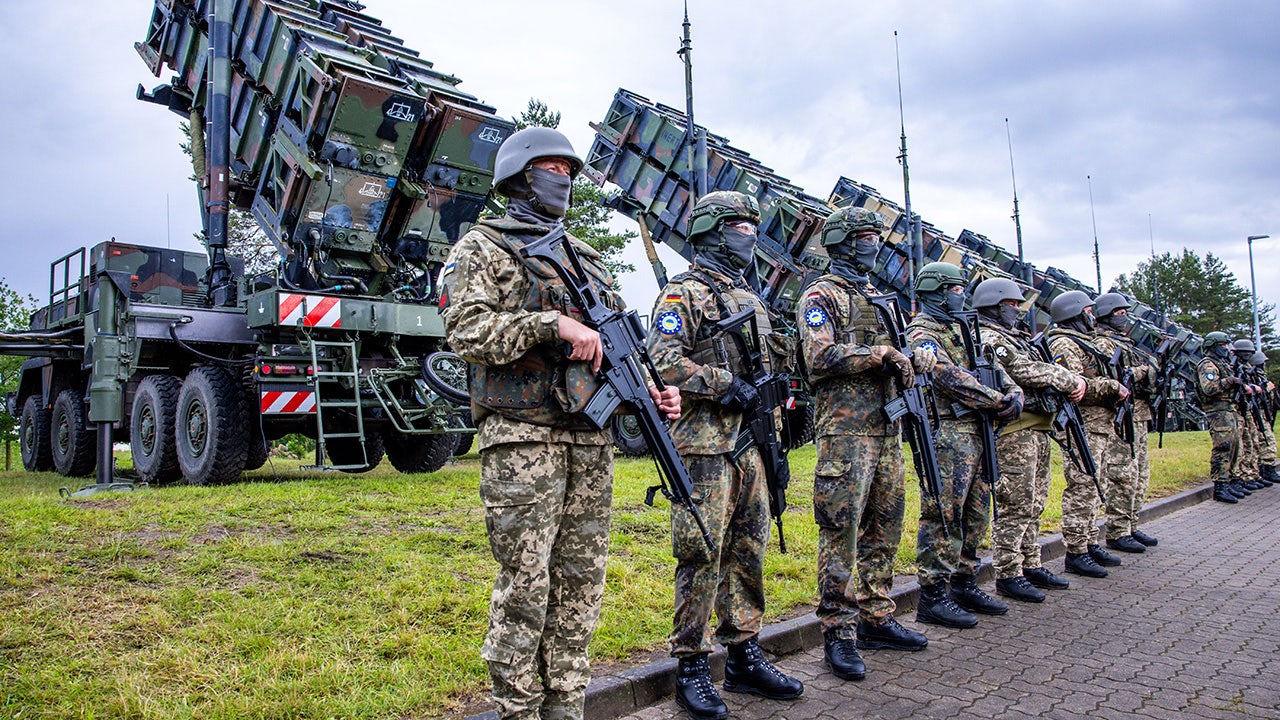
Every day, President Donald Trump offers a fresh justification for the month-long military engagement with Iran. Whether framed as preemptive self-defense against “imminent threats” or a move to destroy naval capabilities, the administration remains conflicted on justification.
Trump and Secretary of War Pete Hegseth have labeled it a “war,” yet also vehemently deny the term, calling the actions “targeted military strikes.” He’s then turned around and told the troops this is an “End Times” holy war. Lord, have mercy. Nothing good has ever come from white nationalists frontin’ as Christians. Ever.
Regardless of the label, the engagement is wildly unpopular. National polls show between 53% and 60% of Americans disapprove of the action. While 85% of Republicans support it, 89% of Democrats and 60% of independents oppose the “war/not war.”
But beyond the beltway debates, Trump’s threats of total annihilation, MAGA chest-beating chants of victory amid proof that says otherwise, and an Iran-Trump Lego rap battle where Iran is mos def Kendrick and Trump is Drake, a localized question is emerging: How will this conflict impact Black Houstonians?
Pain at the pump
As of April 10, 2026, the nationwide average for unleaded gas is $4.15 a gallon, up from $2.99 on February 26—just two days before the U.S. and Israel attacked Iran. In Houston, the current average cost is $3.86, with some stations spiking over $4.63.
For Black Houstonians, these numbers aren’t just statistics; they are a threat to their livelihood.
Houston is projected to have between 640,000 and 1.3 million people in the gig economy this year, and roughly 20% (up to 260,000) are Black. While the gig economy includes many sectors, Black workers in this city are concentrated in rideshare and delivery—the most gas-dependent roles.
Reports are already surfacing of drivers passing up shorter routes, desperately choosing only the most financially viable trips to offset the cost of fuel.
‘War economy’ vs. domestic needs
According to Fortune Magazine, the engagement—dubbed Operation Epic Fury—is costing U.S. taxpayers over $1 billion a day. Estimates for the first two weeks alone range from $11.3 billion to $16.5 billion. Secretary Hegseth is currently seeking Congressional approval for a $200 billion budget, should the conflict last six months.

Texas Southern University (TSU) Professor Michael O. Adams argues that this “war economy” actively drains resources from the community.
“We need more reinvestment into domestic kinds of issues,” said Adams. “I’m looking at healthcare, education, and economic development… the war economy takes away from those efforts.”
Adams, regarding his analysis, points to the historical precedents set by Dr. Martin Luther King Jr., who famously noted how the Vietnam War’s funding gutted the “War on Poverty.”
The ripple effect extends to the kitchen table. High fuel prices mean higher transportation costs for food. In a city where many Black neighborhoods are already considered food deserts, rising prices at the grocery store could worsen diets and exacerbate food insecurity—an area where Harris County already leads the nation.
“We need more reinvestment into domestic kinds of issues. I’m looking at healthcare, education, and economic development… the war economy takes away from those efforts.”
Dr. Michael O. Adams
Business and survival
The pressure is equally high for Houston’s roughly 120,000 Black-owned businesses. Higher freight and energy costs are shrinking already thin margins.

“I’m not sure people realize the tight margins small businesses operate within,” said Judson Robinson, president and CEO of the Houston Area Urban League. “When the price of oil needlessly skyrockets, the burden on Black people increases exponentially… it erases profit margins and can put you out of business.”
Robinson is blunt about the human and financial toll: “The cost is over a billion US tax dollars per day, and for what? For Donald Trump’s war against anything and anyone he doesn’t deem of value?”
TSU professor Carroll Robinson sees multiple levels to the Iran war’s impact on the Houston economy.
“High oil prices help oil companies but hurt consumers and other businesses. International instability hurts the Port of Houston, one of our region’s biggest economic engines,” said Robinson, a former Houston city council member. “Poor implementation of the nation’s immigration policies hurts families and employers in our city, region, and nationally, from construction to agriculture and health care.
Sacrificing our youth
Perhaps the most personal impact is the toll on Houston’s families. Between 2023 and early 2026, an estimated 14,500 Houstonians enlisted in the military. Of those, 24% to 27% were African American—significantly higher than the national average of 21%.

Dr. Gerald Horne, a professor at the University of Houston, notes a painful irony in these recruitment trends.
“On the one hand, you have this attack on diversity, equity, and inclusion by the Trump regime. On the other hand, they’re asking our youth to sacrifice their lives for the same regime. That is obviously a contradiction,” said Horne.
Civil liberties and the Black Press
History suggests that war often curtails rights. Horne warns that the Black community, which historically uses protest to address grievances, may face crackdowns. He cites the 1950s persecution of Paul Robeson as a cautionary tale.
Even the Black press could be targeted through “silent crackdowns,” such as aggressive IRS audits of journalists and outlets that speak out against the conflict.
Furthermore, Horne believes that because Houston is a hub for residents from Iran and Cuba, there is a fear of “scapegoating” similar to the treatment of Japanese citizens in the 1940s or Muslims after 9/11.
“For a community like ours… this crackdown on civil liberties is obviously very worrisome,” said Horne.
Faith and global conflict
Religious leaders are also weighing in. DZ Cofield, Senior Pastor of Good Hope Missionary Baptist Church, views the conflict through a lens of global racial dynamics. While many faith leaders condemn the “war of aggression,” Cofield notes that Trump’s base often remains unmoved.

“Trump is consistent,” Cofield says. “And he’s arguably creating a global white versus Black and Brown war, the likes of which the world has never seen. And he’s couching it by putting Israel in the middle.”
A path forward
Despite the grim outlook, local experts suggest there are avenues for action:
- Political Pressure: Horne emphasizes that Senators Ted Cruz and John Cornyn need to hear from constituents. “We need to pay attention to these upcoming elections in November,” he urges.
- Alternative Media: Staying informed through outlets like KPFT, the Activist News Network, and independent programs is vital to countering mainstream narratives.
- Representation in Policy: Adams encourages his students to take the Foreign Service exam. He believes Black Houstonians must be “at the table” to help shape foreign policy rather than just being the ones who suffer its consequences.
As Houston’s oil companies potentially see profit growth from rising prices, the question remains: will those profits reach the community, or will the cost of “Operation Epic Fury” be paid primarily by the Black residents of the Bayou City?










.png)


