2026 Mid-Term Election Results: Black Political Power Fuels Blue Wave Tsunami
By Dedrick Asante-Muhammad: On Tuesday, Democrats won control of both the House and the Senate in their strongest showing in nearly two decades. A less publicized story is what the election did for Black political power. Voters expanded that power at nearly every level, even after the Supreme Court’s weakening of the Voting Rights Act. …
 Black News
By Dedrick Asante-Muhammad:
On Tuesday, Democrats won control of both the House and the Senate in their strongest showing in nearly two decades. A less publicized story is what the election did for Black political power. Voters expanded that power at nearly every level, even after the Supreme Court’s weakening of the Voting Rights Act.
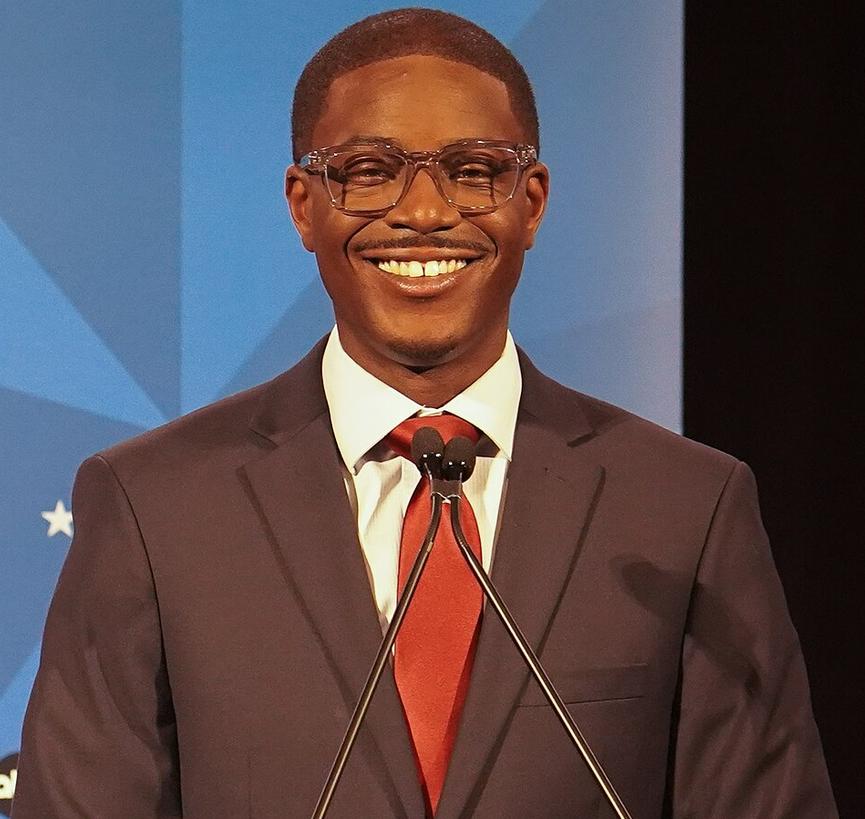
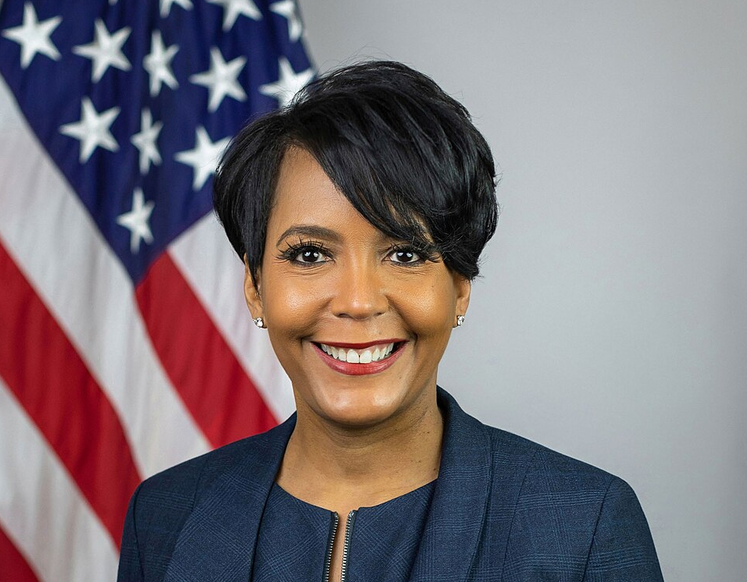
Start with the governors’ mansions. Keisha Lance Bottoms won Georgia and became the first Black woman ever elected governor of any state. Byron Donalds won Florida and became the state’s first Black governor and the first Black Republican elected governor anywhere. David Crowley (above) became Wisconsin’s first Black governor. Aaron Ford unseated an incumbent to become Nevada’s first. Wes Moore was re-elected in Maryland. Before Tuesday, only three African Americans had ever been elected governor, and none served at the same time. In one night, voters more than doubled that number. In January, five will serve together.
In the Senate, Juliana Stratton won in Illinois, becoming the fifth Black woman ever elected to that chamber. Cory Booker was re-elected in New Jersey. The Senate will now have at least a record six Black members, including, for the first time, three Black women serving at once. In Mississippi, Scott Colom’s race is still too close to call. If he wins, he would be the state’s first Black senator since Reconstruction, and the number would rise to seven. Five of the six African American senators will serve in the majority.
These gains matter more because of how hard they were to win.
Black Americans first entered Congress during Reconstruction, when Joseph Rainey of South Carolina was seated in 1870. Attacks on African American voting rights stripped Black voters of the ballot, and Black lawmakers were pushed out with them. When George White of North Carolina left the House in 1901, he called it “the Negroes’ temporary farewell to the American Congress” and promised that, “Phoenix-like, he will rise up some day and come again.” No Black member served again until Oscar De Priest of Chicago in 1929 almost 30 years later, who was elected with the help of the Great Migration. In the South, the wait lasted more than 70 years, until the Voting Rights Act of 1965 made possible the 1972 elections of Barbara Jordan and Andrew Young.
By 2025, Black members held about 14 percent of House seats, roughly matching the Black share of the population. Then, in Louisiana v. Callais, the Supreme Court weakened Section 2 of the Voting Rights Act, and several states quickly redrew their maps. In Louisiana, Rep. Cleo Fields’s district went from majority Black to roughly one-quarter Black, and he chose not to run. In Texas, Rep. Al Green’s district was redrawn into a Republican seat. In Tennessee, the historically majority-Black Memphis district was redrawn, and Justin Pearson lost there on Tuesday.
Those losses are real, and they are a direct result of the Court’s ruling. But they are far smaller than many feared. Instead, Black voters turned out in force. In Alabama, legislators cut the Black voting-age population of Rep. Shomari Figures’s district from nearly 48 percent to about 40 percent. He won anyway, by nearly eight points. In North Carolina, Rep. Don Davis held a district Republicans had redrawn to flip. In Georgia, Black voters cast about 30 percent of early votes in a record midterm turnout.
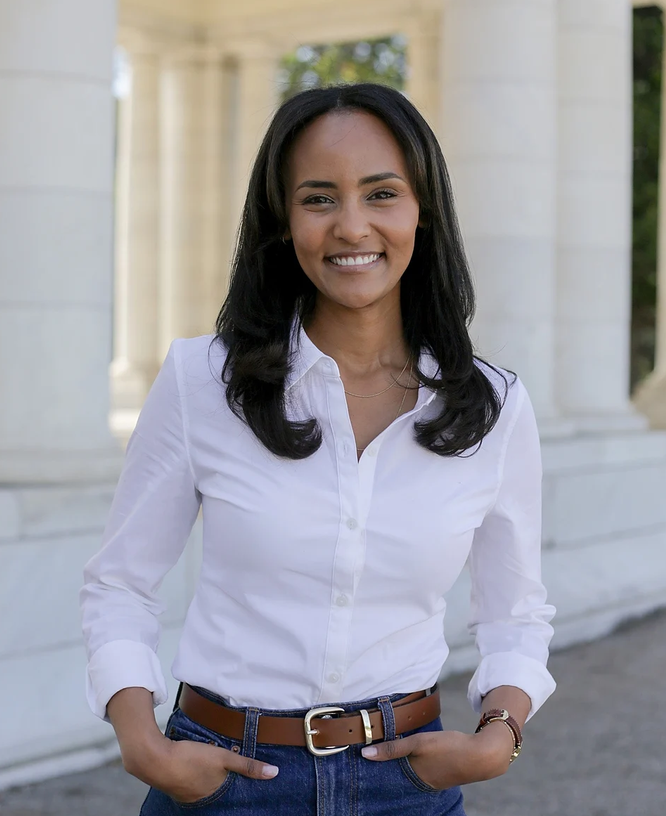
A new generation of Black members also won: Jasmine Clark in Georgia, Oliver Gilbert in Florida, Frederick Douglas Haynes III in Dallas, Donna Miller and La Shawn Ford in Illinois, Adrian Boafo in Maryland and Melat Kiros in Colorado. Veterans including Bennie Thompson, James Clyburn, Terri Sewell and Alma Adams were re-elected. The net result appears to be a loss of about five House seats with four losses stemming from Black Republicans not running for their former seat.
Just as important, Black members will now serve in the majority in both chambers, and that is where power sits in Congress. Hakeem Jeffries, re-elected Tuesday, is positioned to become the first Black Speaker in the House’s 237-year history. Senior Black members are in line to chair some of the House’s most powerful committees: Bennie Thompson on Homeland Security, Gregory Meeks on Foreign Affairs, Maxine Waters on Financial Services and Bobby Scott on Education and the Workforce. Chairs set hearings, issue subpoenas, decide which bills move and shape who is hired to write them. Joint Center research shows that Black committee leaders are far more likely to hire Black senior staff, so the gains reach deeper into the institution.
A Congressional Black Caucus that holds the Speaker’s gavel and key committee chairs can wield more influence than a larger caucus in the minority. In 2025, a record-size caucus had little power to set the agenda. In 2027, a slightly smaller one may have the most power in its history. When Democrats last won back the House in 2006, the Joint Center wrote that the caucus was likely to have more influence in the next Congress than “at any time in its history.” The 120th Congress should match or surpass that moment.
None of this means the threat has passed. The Court’s ruling stands. Maps drawn under it remain in force, and future redistricting could go further. Six to seven Black senators is a record, but it is only 6 to 7 percent of the chamber. Progress built on turnout alone is fragile.
A new Democratic Congress built in large part on Black votes should use its power to make these gains last, and with both chambers in hand, there is no excuse for delay. That means passing a John Lewis Voting Rights Advancement Act rewritten for the post-Callais era. It means restoring federal review of discriminatory maps and banning the partisan gerrymanders the Court now allows states to use as cover for diluting Black votes. It means making sure Black members hold real power in committee chairs and leadership. It means Black staff are appointed throughout all Congressional offices at the highest levels. It also means that economic policy must be rapidly enacted to address the concerns of all American voters and bridge the racial economic divide in particular.

Dedrick Asante-Muhammad is president of the Joint Center for Political and Economic Studies.